
Affordable Dining Room Curtains: My Tablecloth Turned Test
I’ve been hunting for an affordable solution for dining room curtains for a while. I thought I’d found the answer when I discovered beautiful blue fabric tablecloths priced at just $6 each. I pictured them transformed into curtains—an easy, budget-friendly way to add color and charm to the space.
I brought one home and draped it over the curtain rod to get a quick sense of how it might look.
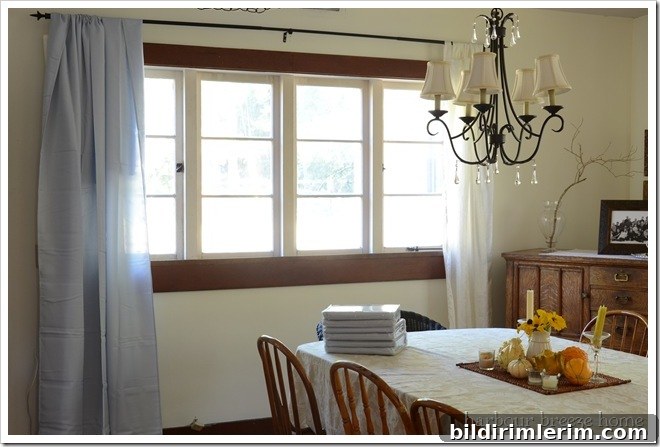
It didn’t work. The fabric looked fine as a tablecloth—but as a curtain it felt heavy and out of scale with the room. Sometimes what seems like a perfect idea in the store doesn’t translate to your home. That’s one of the realities of decorating on a budget: experimentation is part of the process.
What I Learned from This Experiment
First, don’t be discouraged if a DIY idea falls short. There are practical reasons a tablecloth may not make a good curtain: fabric weight, pattern scale, size, and how the fabric hangs. Lightweight, flowing fabrics usually perform better for full-length curtains, while heavier textiles can look boxy or shorten windows visually.
Second, always plan with return options in mind. If you aren’t sure whether an item will work as a curtain, check the store’s return policy before you buy, and keep your receipt. Many stores accept returns on unopened or reusable items, and that safety net makes it easier to try creative solutions without committing.
Tips for Converting Tablecloths into Curtains
- Measure accurately: Know your rod length and desired curtain drop before purchasing. A tablecloth may be too short or too narrow unless you plan to hem or join panels.
- Consider fabric weight: Lightweight tablecloths can drape nicely; heavier ones may need pleating or a liner to hang well.
- Use curtain clips or rings: If sewing header tape isn’t an option, clips can attach a tablecloth to the rod quickly and create a casual look.
- Plan for seams: If you need more width, join two tablecloths with a clean seam or decorative trim to achieve full coverage.
- Iron and treat: Ironing or steaming removes creases, and using fabric spray or a light starch can help the material hang more like a curtain.
In my case, most of the tablecloths are going back to the store—except for one. I can use a new tablecloth at the dining table, and that’s a perfectly good outcome from a small experiment.

Smart Shopping and Return Strategies
Before you try a similar project, here are a few practical shopping tips:
- Read return policies carefully. Know whether an item can be returned open, whether you need the original packaging, and how long you have to return it.
- Keep receipts and documentation. Many stores require proof of purchase for returns or exchanges.
- Test before committing. If possible, pin or clamp a sample piece in place for a day to see how it looks at different times of day and under room lighting.
- Ask staff questions. Store associates often know which fabrics and products perform well for specific uses.
Trying inexpensive solutions is a great way to explore decor options without overspending. Even when an idea doesn’t work out, you gain useful information about fabric behavior, scale, and practical considerations for future projects.
So yes—back they go, with one exception—and I now have a new tablecloth ready to use. With a little trial and error, you’ll find the right balance between creativity and practicality for budget-friendly dining room curtains.

For more ideas on budget-friendly decor and easy DIY updates, consider experiments that let you test looks before you commit—and always check return policies before you buy.