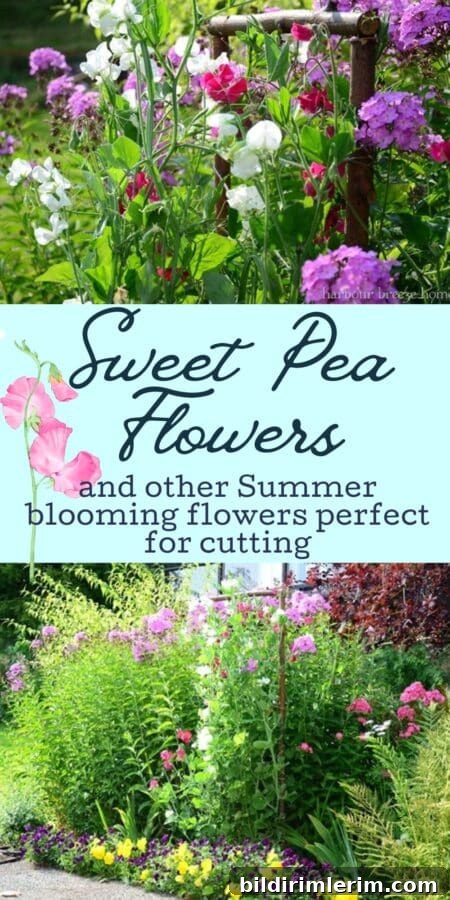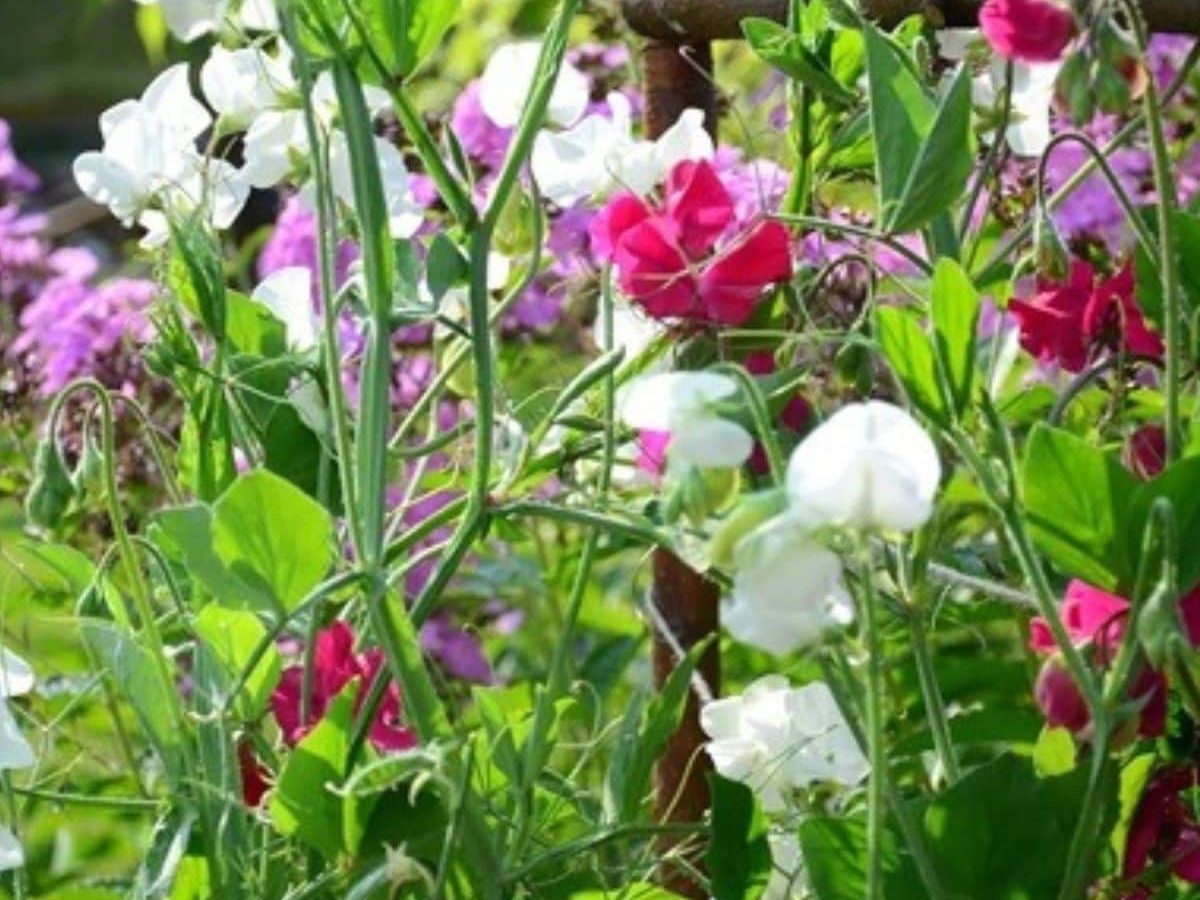
See the “before and after” of my sweet pea flower bed—photos from when the plants were first placed in the soil through their full summer display—and take a look at other summer blooms that are perfect for fresh cut-flower arrangements.
I originally wrote about this garden when we lived in our previous home with a very large yard and numerous flower beds. These days our small backyard patio holds just a few containers, such as these hydrangeas in pots, but I still enjoy revisiting memories of that compact cutting garden. I hope you’ll enjoy a short stroll through those summer blooms and a few practical notes about growing sweet peas and other favorites for bouquets.
This spring I worked on a small front patio makeover. One goal was to add flowers that would provide bright splashes of color throughout the summer months. Now that summer is here, I’m sharing how the plantings developed and what I learned along the way.
Sweet Pea Flower Bed
Sweet peas (Lathyrus odoratus) are hardy annuals prized for their fragrant blooms and delicate, papery petals. They are available in an array of colors and are especially valued in cut-flower gardens because of their scent and graceful stems.
You can sow sweet pea seeds directly in the ground in mild-winter climates between February and June, or start them in pots or a greenhouse and transplant later. For this bed, I bought small plants from a local greenhouse and planted them in early spring.
Here was the “Sweet Pea Bed” in spring:
To support the climbing tendrils, we built a simple trellis from branches and jute twine in a zig-zag pattern. Providing support early helps the vines climb and produces a fuller display later in the season.
And here are the established sweet peas in full bloom:
This was my first time growing sweet peas, and for several weeks I worried they might not thrive. Fortunately they recovered and rewarded us with abundant blooms. Their fragrance fills the garden and they hold well when cut—typically lasting about a week in a vase on the kitchen table if you change the water regularly and trim the stems.
It’s striking how several months of growth transformed the small planted area:
Into a lush, exuberant display:
My mom used to warn that gardens can take over a yard if you’re not careful, and in some areas a vigorous plant will spread quickly. With sweet peas, regular cutting for arrangements actually encourages more flowering and helps keep growth in check.
Coleus
Beside the Japanese maple you can see colorful foliage plants that were meant to add contrast to the bed. These are coleus, valued for their striking leaf color and patterns.
Although coleus can be dramatic in mixed beds, they prefer dappled light or shade. In our sunny spot they struggled and eventually died back, serving as a reminder to match plant selections to the light conditions in your garden.
Rudbeckia
Other plants in that bed thrived. Rudbeckia—commonly called coneflowers—flourished in the sunny location and produced cheerful, bold blooms that feel like a dose of summer happiness.
Rudbeckia plants are forgiving and drought-tolerant once established, and their flowers add long-lasting color to bouquets. They multiplied more quickly than I expected and created a bright, abundant border around the tree.
Over time my little cutting garden evolved almost by accident. I hadn’t planned every plant as part of a bouquet scheme, but several beds supplied a steady stream of flowers to bring inside. The regular list of blooms I cut for arrangements included:
- pansies
- hydrangeas
- sweet peas
- phlox
- rudbeckia
If you’re thinking about starting a cut-flower patch, consider mixing fragrant climbers like sweet peas with sun-loving perennials such as rudbeckia and seasonal fillers like phlox. Regular harvesting encourages reblooming and keeps the bed productive throughout the season.
I’m tempted to go cut a few stems right now—there’s nothing quite like fresh flowers at home. Have a happy day and enjoy whatever blooms you have nearby.
For more Flower Tips
- Tips forhydrangea care in pots
- How to make your own flower arrangements
- Spring flower arrangement ideas
- See mid-Summer flowers on a small patio
- Simple arrangements with daffodils