Yesterday I shared a glossary of the spaces we use. Today I’m describing some of the essential tools and pieces of equipment that keep this kitchen running smoothly.
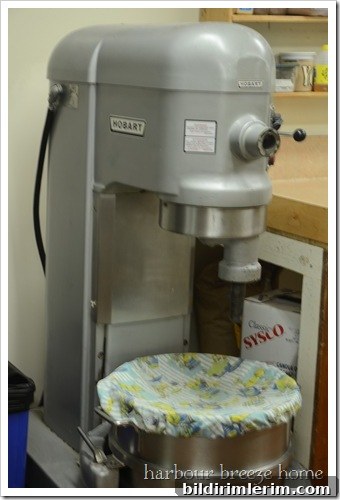
Meet “Big Hobart.” He’s a commercial stand mixer with a very large bowl, and he handles heavy-duty mixing tasks day after day. We use Big Hobart for doughs, cake batters, cookie mixes and any recipe that needs sustained, powerful mixing. Its size and capacity make it ideal for preparing large batches efficiently.
“Little Hobart” is Big Hobart’s smaller counterpart. She’s perfect for medium- and small-batch jobs, like chilled cheesecakes and delicate desserts. Her bowl is more manageable for lighter tasks, and she’s indispensable when we need consistent results without the volume of the larger mixer. 
“The Big Trays” are the workhorses tucked beneath the ovens. We keep several on hand and use them multiple times throughout the day: roasting breakfast meats, baking sheet cookies, preparing large batches of roasted vegetables, and more. Their size and durability make them ideal for high-volume cooking and sheet-pan service.
The “Rack n Rolls” are mobile shelving units that hold our large trays. They’re indispensable for staging food, cooling baked goods, and organizing prep items. We keep a couple near the bakery and additional racks in the cooler and freezer so trays can be easily stored, transported, or accessed as needed.
“Hotel pans” come in three common depths—shallow, medium and deep—and are extremely versatile. We use them for fruit and vegetable displays, dessert trays, and warm or cold casseroles. Their standard sizes make them compatible with steam tables, refrigerators and transport racks.
Information hubs are vital in a busy kitchen. On our bulletin board, located just inside the main door, we post the weekly menu with the current group’s schedule beneath it. That single visual reduces repeated questions and helps everyone stay on the same page about meals and setup.
“What’s for dinner?”
and
“What cutlery should we set on the tables for this meal?”
Posting this information has greatly reduced interruptions and confusion during service, and it helps kitchen and front-of-house staff prepare appropriately for each meal.
The large whiteboard is where we list detailed daily tasks. It’s visible to the whole team and updated regularly. As tasks are completed, the person responsible checks them off. This keeps accountability clear and ensures nothing important is overlooked during busy shifts.
I prepare the whiteboard list the night before so I know exactly what the next day requires. This planning ritual saves time, reduces stress, and helps assistants and volunteers understand priorities before they arrive.
Chef jackets are surprisingly practical. They protect clothes from spills and splatters and reduce the risk of minor burns to the arms. The sleeve pocket is perfect for keeping a marker, pen and a small thermometer within reach—valuable tools during service. The jacket’s design also allows a clean-looking side to be presented when serving, even if the other side has seen a busy shift.
Our food handlers wear the chef jackets, while dish and utility staff use aprons that suit their duties. Clear roles, the right equipment, and visible communication tools like the menu board and daily checklist help the kitchen operate efficiently and consistently.
These are just some of the core pieces we rely on: mixers for consistency, trays and racks for organization, hotel pans for versatility, and simple systems—bulletin boards and whiteboards—to keep people informed and tasks completed. Together they create a practical, orderly environment that supports good food and smooth service.