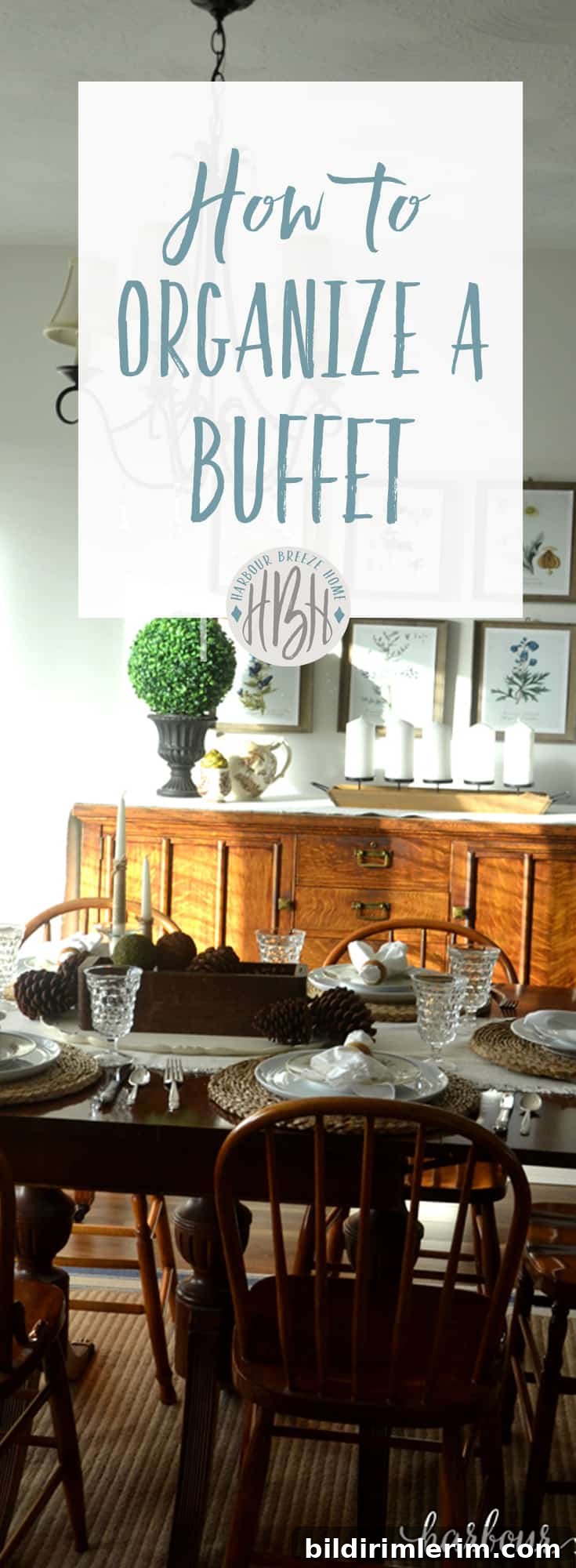
A compact dining area can work far better with a well-organized buffet. Read on to learn how a quick, under-30-minute refresh made ours much more functional and pleasant to use.
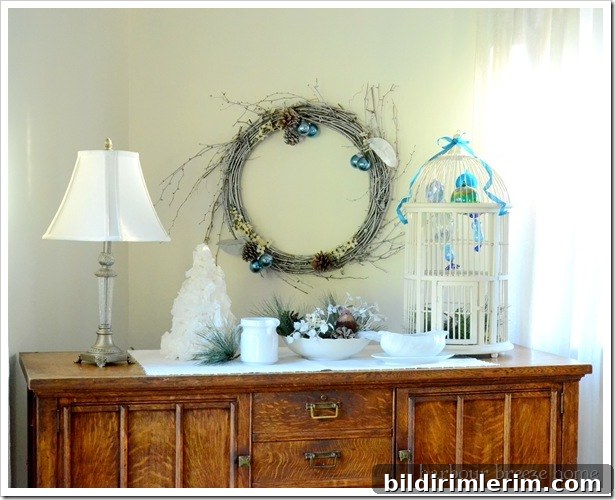
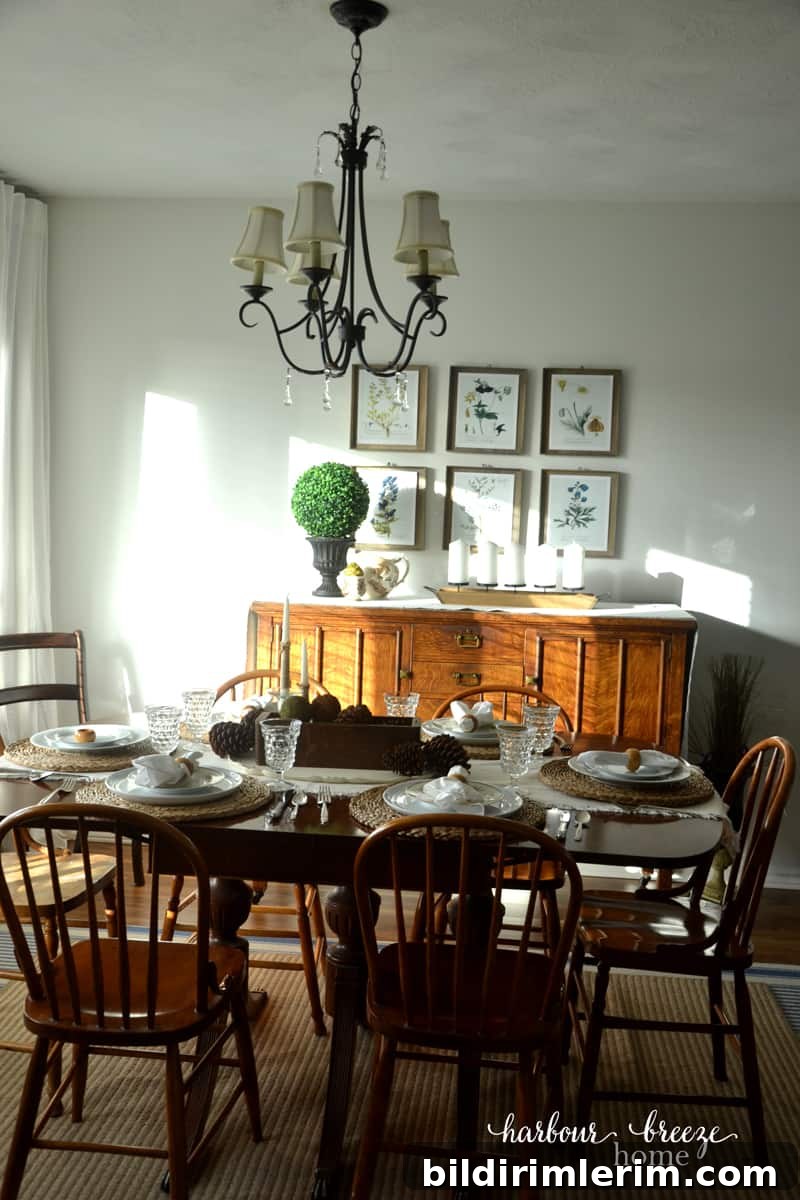
My small dining room is tucked into a corner between the living room and the kitchen, so every piece of furniture needs to earn its keep. The antique oak buffet is my favorite element of the space—along with the table and chandelier—and it plays a crucial role in keeping dishes, linens, and serving pieces within easy reach.
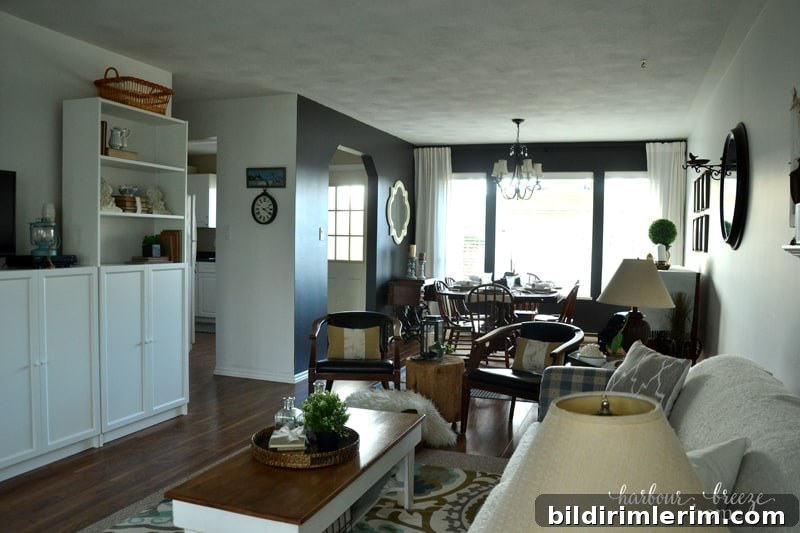
The buffet came from my childhood home, so it has real sentimental value. When my family and I were house hunting, I made one must-have demand: the dining table and this buffet had to fit. In a small home, sentimental and practical needs meet—and the right storage solution makes everyday life smoother.
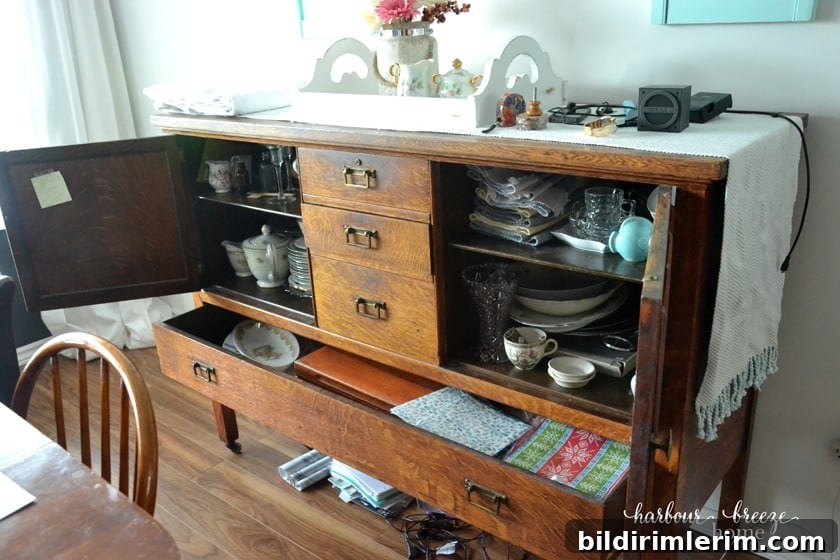
Over time the buffet can get cluttered. An organization challenge motivated me to set a timer and tackle the mess, and I was pleasantly surprised at how fast the transformation went. I started by handling the drawers that contain office supplies, and then moved on to the rest of the cabinet.
How to Organize a Dining Room Buffet
-
Empty everything and sort like with like.
Remove all items from the buffet and lay them out so you can see what you have. Group similar items together—china, serving bowls, platters, napkins, tablecloths, placemats, and miscellaneous entertaining tools. Decluttering is easier when you can view the full collection and decide what you truly use versus what’s only taking up space.
-
Return items in clear, functional groupings and prioritize accessibility.
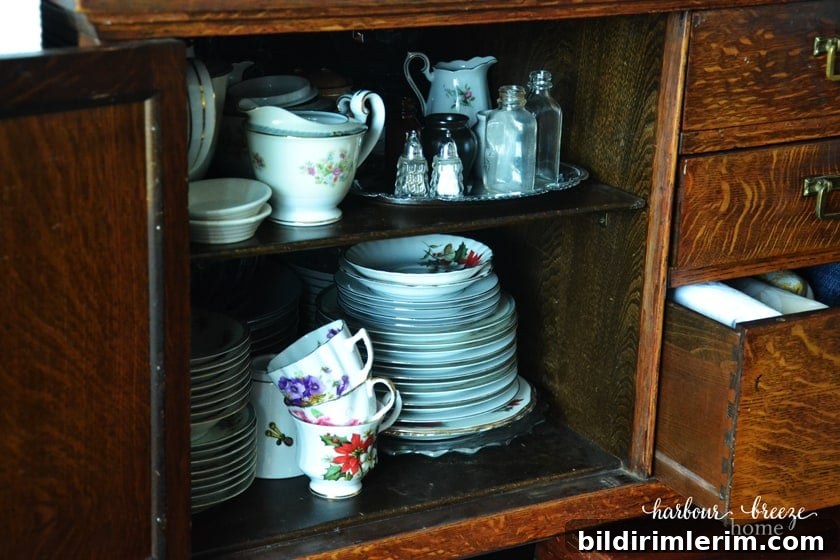
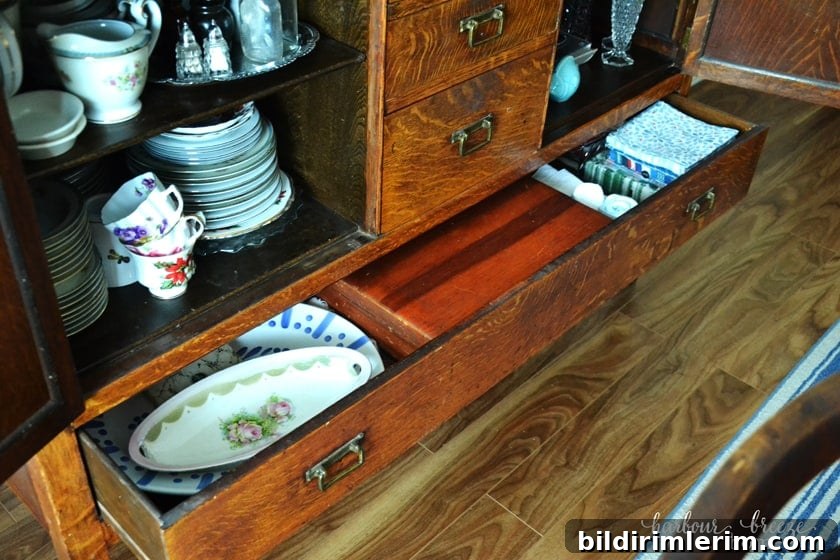
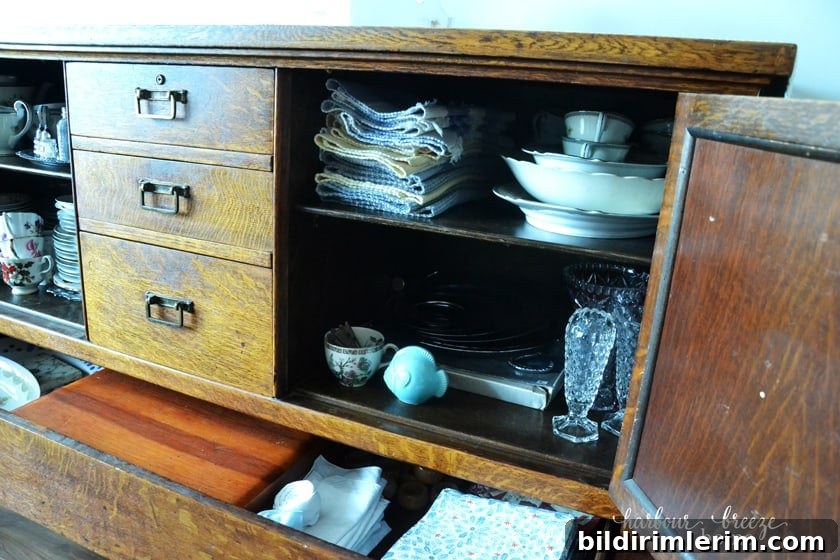
Place frequently used items where they’re easiest to reach: everyday placemats and napkins should go on the top shelf, while heavy platters and the silverware chest can live in the lower drawer. Store delicate or occasional-use china higher or toward the back. Small vases for flowers or practical accessories can be kept at the front of a shelf for quick access.
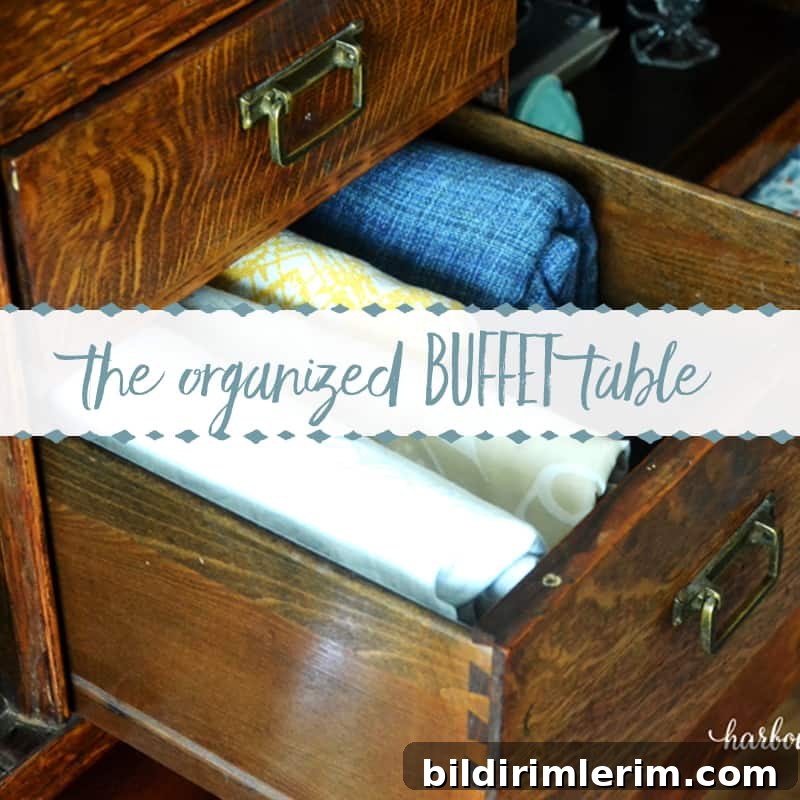
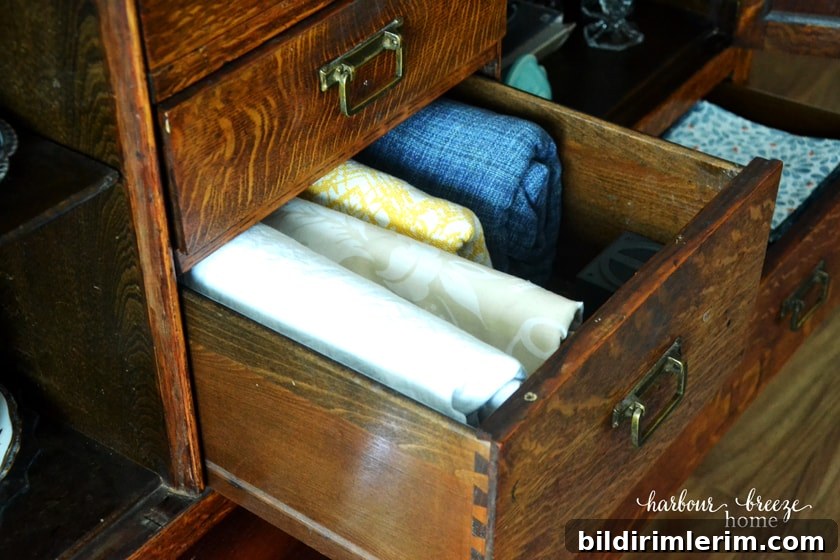
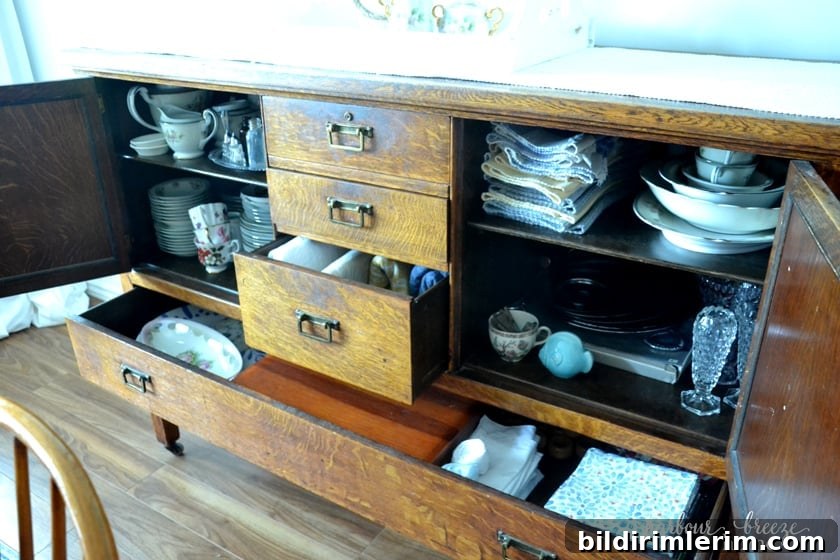
For example, I grouped my occasionally used china on one side and kept small, frequently used vases in front so they’re ready for a quick centerpiece. Large platters, the silverware chest, and extra napkins fit neatly into the bottom drawer, where weight and accessibility are balanced. Everyday placemats are stored on the top shelf beside decorative serving bowls, and tablecloths and runners are folded accordion-style so I can instantly see the options available.
Practical Tips for Small Dining Room Storage
– Use clear visual groupings: Organizing by function (serving, dining, decorating) reduces the time you spend hunting for items.
– Prioritize daily-use items: Keep what you use most within arm’s reach and reserve less accessible spaces for special-occasion pieces.
– Fold fabrics so patterns and colors are visible: Accordion folding for tablecloths and runners makes it easier to choose a look without unfolding everything.
– Make use of drawers for heavy or flat items: Platters and silverware chests stack well in drawers where weight is supported.
– Keep small decorative items in front: Vases, candle holders, and frequently used serving utensils should be at the front for quick access.
This quick tidy-up took less than half an hour, but the difference was dramatic—the buffet feels organized and much more user-friendly. Clearing and grouping items makes preparing the table faster and keeps the dining area visually calm, which is especially valuable in a small space.
After refreshing the inside of the buffet, I moved on to update the dining and living room décor for the season. A tidy storage system makes decorating simpler and helps the whole area feel cohesive. I’ll share a tour of the refreshed rooms soon—stop by again to see the finished look and how the organized buffet supports the new styling.