Can the Faster Way to Fat Loss program truly help someone lose fat quickly, and does it work specifically for a menopause belly? Below is my personal story and an honest review of the Faster Way program based on nine weeks of experience.
My entry into menopause was sudden after a hysterectomy. With limited knowledge about menopause and its effects, I embarked on a mission to learn how to thrive during this stage of life. Menopause can feel like a complete transformation—hot flashes, sleep disruption, fatigue, and the frustrating accumulation of abdominal fat commonly referred to as a menopause belly are familiar struggles for many women.
Hormone replacement works for some people, though it remains a controversial and personal decision. Many clinicians receive little formal training about menopause and hormones, which can make navigating options confusing. Meanwhile I focused on finding a nutrition and lifestyle approach that fits my age and hormonal status. Calorie counting had worked before menopause but no longer suited my body after surgery.
I experimented with different plans and reported what didn’t work for my mid-life diet. At that time I had just started the Faster Way to Fat Loss program. After nine weeks, here is an honest review of what I learned, what worked for me, and what was challenging.

Main pillars of the Faster Way to Fat Loss program
I first heard about the Faster Way program through friends on social media and watched sustainable changes in their health and body composition. That consistency convinced me to try it. I’m not a fan of fad diets; I wanted something sustainable that supported daily health without leaving me hungry all the time.
The FASTer Way program pairs effective workouts with science-backed nutrition strategies and expert coaching. The holistic approach promotes wellness and a leaner physique through a set of guiding pillars.
- Whole-food nutrition — emphasizing minimally processed foods.
- Intermittent fasting — my coach recommended a simple 12-hour window (for me, 7 pm to 7 am), which has been manageable; longer fasts did not suit me.
- 30-minute workouts — adaptable routines; my coach suggested lower impact and shorter sessions because I manage fibromyalgia.
- Macronutrient tracking — daily tracking of proteins, fats, and carbs through the program app.
- Carb cycling — planned variation in carbohydrate intake to support training and fat loss.
- Mindset and accountability — coaching and community support to encourage consistency.
A point of caution: marketing phrases like “in record time” can be misleading. This program supports steady, sustainable progress rather than instant, dramatic transformations. For women over 40 or in menopause, realistic expectations are especially important.
Features I appreciated
If you care about the details, these are the features I valued most:
- An app that calculates personalized macro goals based on your details.
- Daily meal and snack suggestions plus recipes tailored to hitting macros.
- Daily exercise videos with options for gym, low-impact, or standard workouts.
- Access to a coach for questions and troubleshooting.
- A private community that offers teaching, encouragement, and accountability.
Optional products like branded supplements or apparel are offered, but they are not required to follow the program.
My 6-week experience
I began with the 6-week program, intending to continue into the VIP option afterward. The timing was imperfect—I was traveling to Hawaii during weeks 3 and 4—but I committed and adapted as needed.
What I liked:
- I could follow the workout videos and perform light strength training despite fibromyalgia-related limitations.
- Tracking food revealed I had been under-eating nutritious food and not meeting my needs.
- Daily prompts from my coach helped me adopt the program step by step rather than trying to change everything at once.
- The coach responded to questions reliably, which helped when I felt unsure.
- Active participation in the private community increased my accountability and focus.
Challenges:
- Meal planning to meet macro targets took time and felt like a puzzle while I learned.
- Consistently hitting macro numbers, especially balancing carbs, protein, fat, and fiber, required practice and patience.
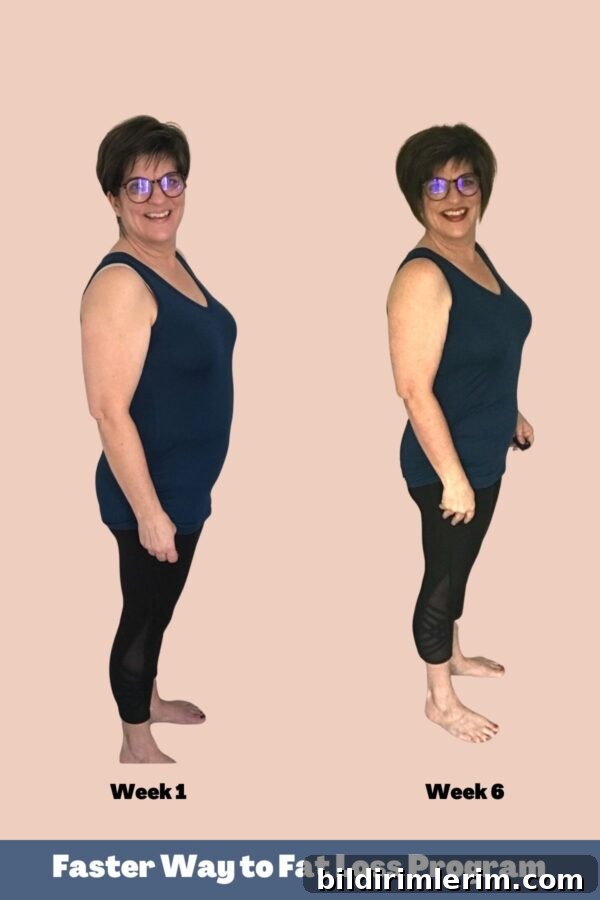
Results after six weeks were encouraging: I lost about 4½ pounds overall (including two weeks spent traveling), experienced reduced daily muscle aches, and saw a noticeable reduction in my abdominal area—the menopause belly began to shrink.
Status at nine weeks
At nine weeks, I’m still following the program and still committed. Progress has not been perfectly linear—illness, travel, and busy work periods have interrupted routines. Learning new eating and exercise habits is hard work, and setbacks are normal.
When I felt discouraged I reached out to my coach. That reminder to use available support helped a lot. I adjusted expectations, shortened some workouts to 15 minutes when needed, prioritized hydration, and leaned on the app to guide daily macro goals. Small, consistent actions are key—progress over perfection remains the guiding principle.
Is this right if you’re dealing with menopause and diet struggles?
If you’re navigating nutrition in mid-life, know that structured guidance, tracking, and community support can help you regain control. The Faster Way framework—whole-food focus, intermittent fasting, macronutrient tracking, adjustable workouts, and coaching—offers practical tools. It won’t produce overnight miracles, but it can create sustainable improvements in energy, muscle tone, and abdominal fat when followed consistently and adapted to your individual needs.
If you’ve faced similar challenges, consider what part of your routine feels hardest—meal planning, hitting macros, or maintaining movement—and seek targeted support to address that area. Small, repeated changes add up.
I’d love to hear about your experiences and solutions. Share your biggest struggle with nutrition in menopause and any strategies that have helped you—let’s encourage each other as we build healthier habits for mid-life.