
Simple, Budget-Friendly Window Treatment: From Bare to Comfortable
I don’t like naked windows. A bare window can make a room feel cold and exposed, and at night those panes become dark, stark squares in the wall. For that reason I prefer to add a simple treatment that brings warmth, privacy, and a finished look without a lot of expense or effort.
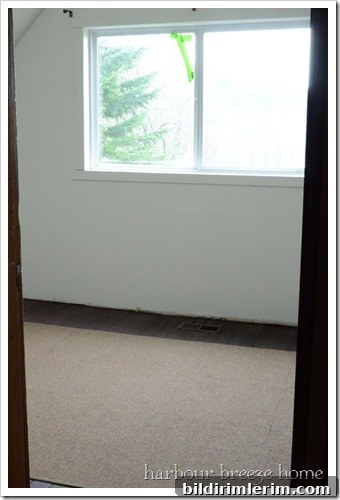
When I first looked at this window, I considered several fabric options. I even made my family sit in the car while I walked slowly through the fabric store, hunting for something that would truly catch my eye. With prices approaching $18.00 per meter for some fabrics, I needed a choice that was worth it—something that would not only look good but also feel right for the space.
In the end I chose a trusted, budget-friendly solution that I return to again and again: painter’s drop cloth. It’s an affordable, durable material with a clean, neutral look that works in many styles of décor. For a little added visual interest, I paired the drop cloth with a striped fabric panel along the top of the curtain. That stripe added height and personality without overwhelming the room.
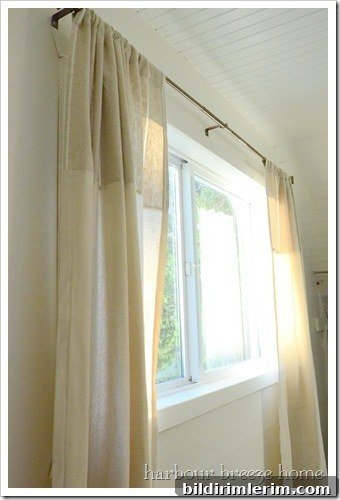
The striped panel I used came from a single discounted curtain panel I found on clearance. Since there was only one, I cut part of it to make a coordinating pillow, maximizing the use of the fabric and tying the room together. Using leftover or single-panel finds is a great way to get a custom look while keeping costs down.
Installing the curtain rod presented a small challenge: the ceiling height wasn’t consistent across the window. One side of the frame was a full foot higher than the other, which made it tricky to decide where to place the rod for a balanced look. We chose to follow the window frame rather than the ceiling, which created a clean, intentional line and avoided awkward slanting curtains.
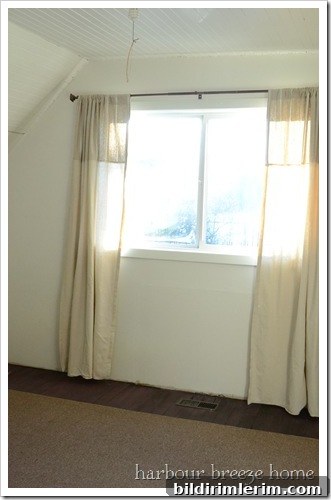
The finished look is soft and welcoming. The curtain panel drapes nicely over the window and adds both privacy and a decorative element that improves the room’s overall feel. Small details make a difference: I replaced an unsightly strip of green duct tape—originally covering a crack in the window frame—with clear packing tape while I wait for warmer weather and a better repair solution. It’s a temporary fix, but it looks cleaner and less distracting now.
For hardware I bought an affordable curtain rod in a coppery finish for about $14.97. It was the only one left in that color, and while I initially chose it to mimic the tone of older stained boards in the room, I genuinely like how it complements the fabric and the window frame. When shopping for rods, a simple, budget-friendly option often gives the best return: it ties the look together without stealing attention from the curtains themselves.
If you’re considering a similar upgrade, here are a few practical tips based on this project:
- Choose neutral, inexpensive base fabrics like painter’s drop cloth for an affordable, durable curtain that can be customized with trims or panels.
- Use a single accent panel or scrap fabric to create coordinating pillows or small accents that make the overall room design feel intentional.
- When ceiling heights or frames are uneven, follow the window frame to create a consistent look rather than trying to force symmetry with the ceiling.
- Temporary fixes are okay while you wait for a proper repair—just aim for the cleanest temporary option to keep the visual impact minimal.
This project proved that a simple curtain treatment can transform a cold, bare window into a warm, inviting focal point—without breaking the budget. Small, thoughtful choices in fabric and hardware deliver a professional-looking result that feels personal and lived in.