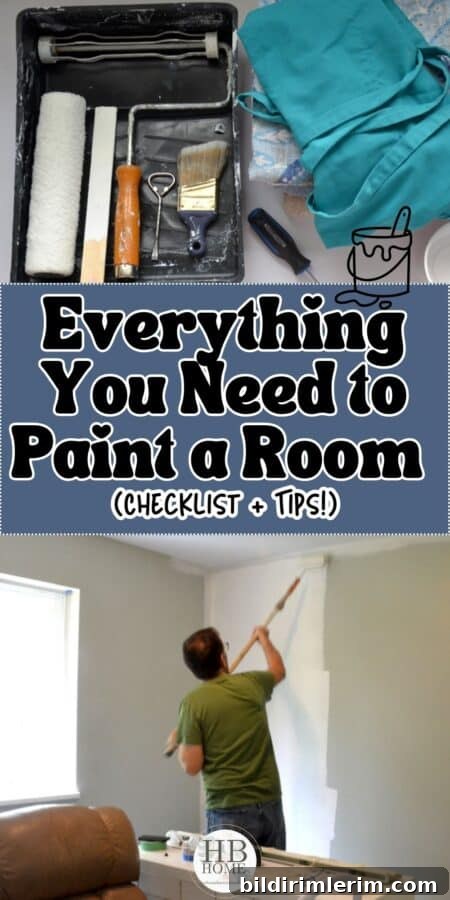
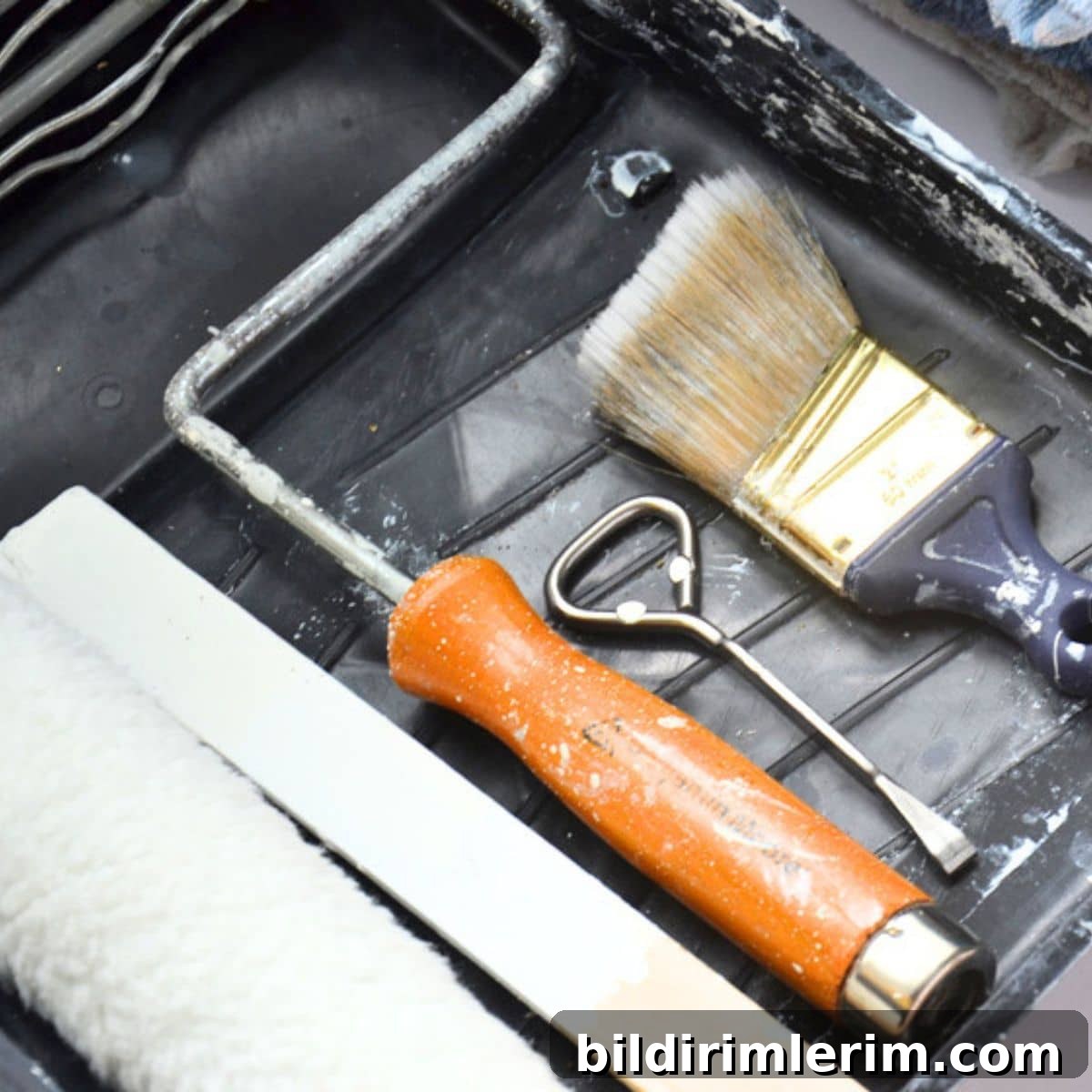
After painting countless rooms over the years, these are the exact supplies I reach for every single time — plus the practical tips that make the whole job go quickly and smoothly.
There’s nothing like the fresh, clean feeling of a newly painted room. Right now I’m refreshing our townhouse room by room, giving our walls a fresh coat of Simply White after a decade of everyday life. As I gathered my tools recently, I noticed I always choose the same reliable supplies and use the same simple techniques for a great result.
Your Painting Supplies Checklist
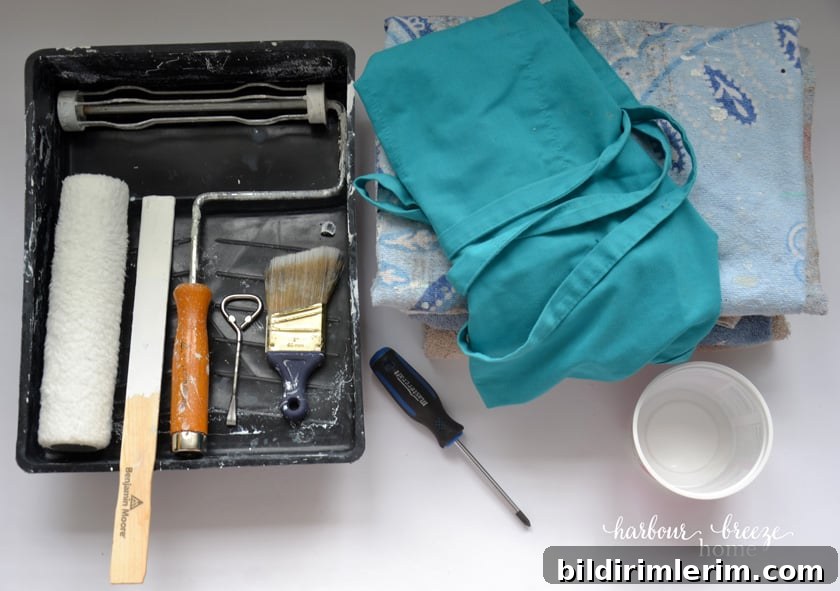
Gather these essentials before you begin. Having everything at hand saves time and keeps the project moving.
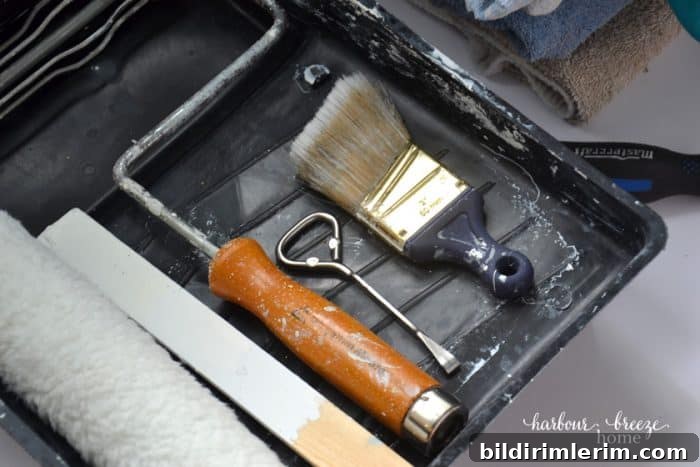
- Paint tray and liner
- Paint roller and roller handle (choose the right nap for your wall texture)
- Paint roller extension rod for reaching high walls and ceilings
- A reliable paintbrush — a quality angled brush for cutting in is worth the investment
- Painter’s tape for trim and detailed areas
- Stir stick
- Paint can opener
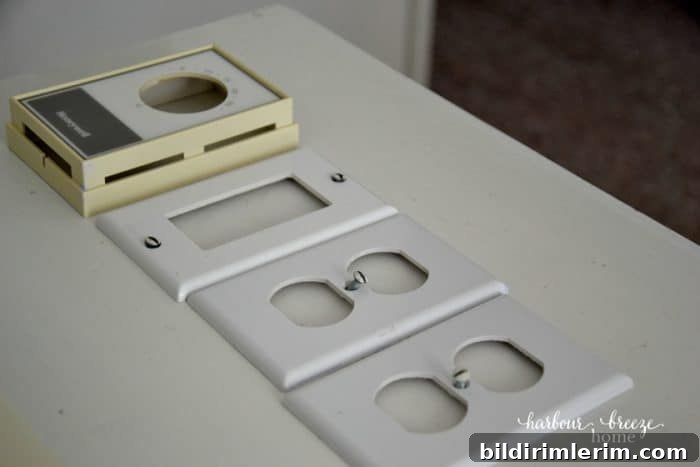
- Screwdriver for removing switch plates and outlet covers
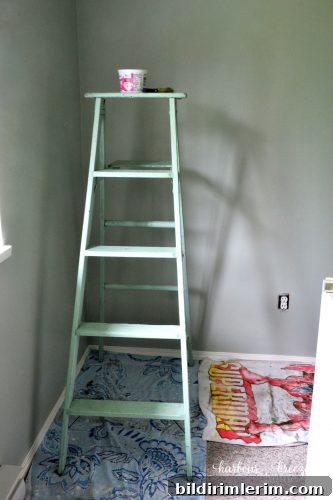
- Sturdy ladder
- A small disposable container (an empty cottage cheese tub works great for cutting in on a ladder)
- Old towels or washable cloths for drop cloths
- Painting apron or clothes you don’t mind getting paint on
- Plastic wrap or cling film to keep brushes moist during short breaks

Practical Tips That Make Painting Easier
Remove switch plates and outlet covers first
Before you open the paint, remove every switch plate and outlet cover. Keep each cover and its screws together — a small container or a labeled pile on a shelf works well. When the paint is dry you’ll be able to reinstall everything quickly without searching for tiny screws.
Use a small container on a ladder
When cutting in along the ceiling or trim, pour a little paint into a lightweight disposable container. It’s much easier and safer to carry up and down a ladder than a full can. If it spills, the mess is smaller and easier to manage.
Old towels work better than plastic for drop cloths
Towels stay in place and won’t slide like thin plastic sheeting. They absorb small drips and can be washed afterward. If you prefer, you can also use canvas drop cloths, but towels are an economical and effective option.
Wrap your brush in cling film between coats
If you’re taking a short break while the first coat dries, wrap the brush tightly in cling film to prevent it from drying out. For the end of the day, thoroughly clean brushes with soap and water (for water-based paint) or the recommended solvent for oil-based paints.
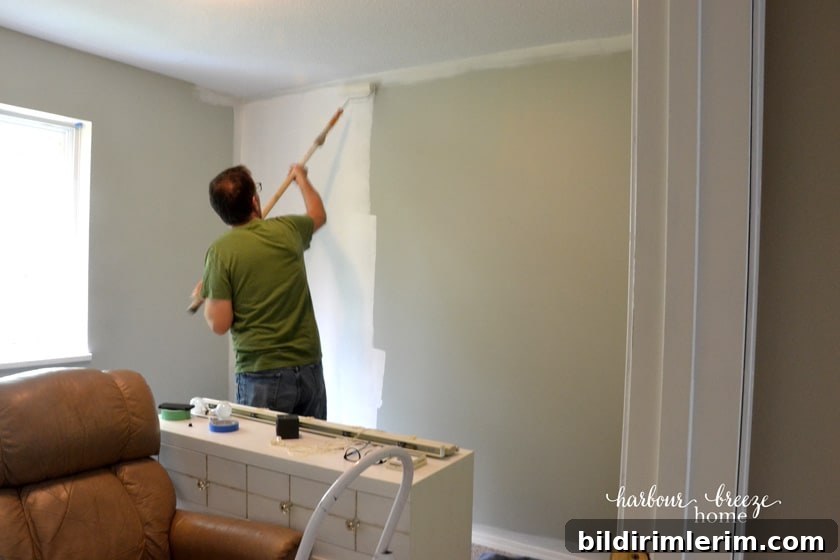
Invest in a sturdy extension pole
A good extension rod lets you roll in long, even strokes without overreaching. It makes finishing large walls faster and reduces fatigue from stretching or standing on the ladder too often.
More Painting Advice
With the right supplies and a bit of preparation, painting a room is one of the most rewarding DIY projects. A few hours and a fresh can of paint can transform the look and feel of any space. Plan your day so you have time for two coats when needed, and keep your workspace organized for the best results.
Choosing color, sheen, and primer
Spend time selecting the right color and sheen for the room’s purpose and lighting. Flat and eggshell finishes hide imperfections well and suit bedrooms and living rooms; satin and semi-gloss are more durable and easier to clean, making them better for kitchens, baths, and trim. Depending on the surface and the color change, a primer may be necessary to ensure even coverage and long-lasting results.
How long does it take?
For an average-sized room, expect to spend most of a day: cutting in, rolling the first coat, waiting for drying time, and applying a second coat if needed. Prepping the room and having all supplies on hand will make the process faster and less stressful.
FAQ’s About Painting a Room
What is “cutting in”?
Cutting in is painting a neat border along ceilings, trim, doors, and windows with a brush—areas a roller can’t reach. It takes practice but creates a crisp professional edge when done well.
Do I need painter’s tape when cutting in?
Many professionals and experienced DIYers can cut in freehand with a good angled brush and steady hand, but painter’s tape is helpful for intricate details, hardware, or if you want extra protection for surfaces you don’t want painted.
Does the surface need prep work?
Yes. Clean walls free of dust, grease, and grime before painting. If the existing finish is glossy, lightly sand or scuff it to help the new paint adhere. Proper preparation prevents peeling and improves the final appearance.
How do I pick paint type and sheen?
Match the paint type and sheen to the room’s demands. Flat or eggshell works for low-traffic areas; satin or semi-gloss for high-traffic rooms and trim. If you’re unsure, consult the paint professional at your local store for recommendations based on the surface and room use.
Ready to Paint?
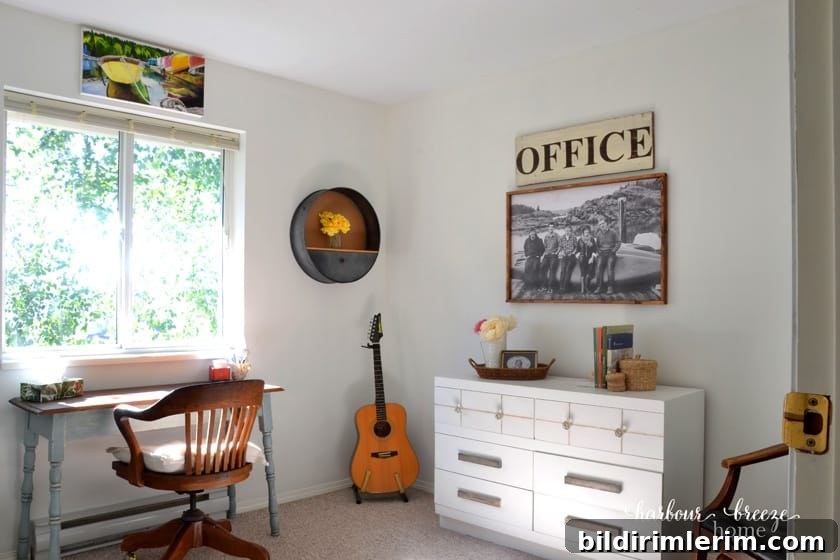
A little planning and the right toolkit make painting a manageable and satisfying project. Lay out your supplies, prep the space, and enjoy the transformation—new paint can refresh any room in a single weekend.
For printable checklists and seasonal home project ideas, consider subscribing to a home newsletter or resource library to keep helpful tips and templates on hand.

Pin this to remember it later!