Practical Kitchen Conversion Tips and Printable Charts
This week I spent quite a bit of time at the kitchen counter with a calculator in hand, updating and scaling a few recipes. When you multiply ingredient amounts by 10, small measurements like tablespoons and teaspoons quickly add up, so getting conversions right becomes essential. To make the process easier, I looked for attractive conversion charts to print and keep nearby — Pinterest offered plenty of options — and I ended up collecting a few helpful examples and practical tips.
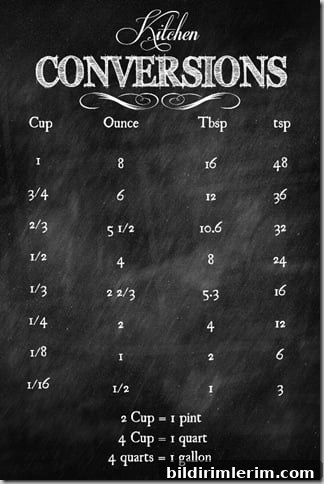
One charming design is a chalkboard-style conversions chart that visually groups common measures. Its layout makes it quick to find equivalents when you’re juggling tablespoons, teaspoons, cups, and ounces. A clear, single-sheet chart can save time and reduce errors when scaling recipes or converting between household and metric units.
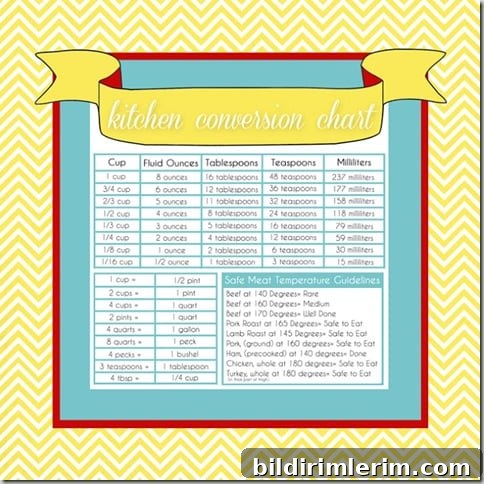
Another useful design is a colorful chart that includes millilitres alongside cups and tablespoons. Including metric measurements is especially handy in regions that use millilitres more commonly, and it makes it easier to follow recipes from different countries. I liked that this style highlights millilitres (ml) because I often switch between cups and ml depending on the recipe.
Here are some straightforward conversions and practical reminders that I relied on while revamping recipes:
- Basic volume: 1 cup = 16 tablespoons = 48 teaspoons.
- Tablespoons and cups: 4 tablespoons = 1/4 cup; 8 tablespoons = 1/2 cup; 16 tablespoons = 1 cup.
- Common metric equivalents: 1 tablespoon ≈ 15 ml; 1 cup (US) ≈ 240 ml (note that cup sizes can vary slightly by country).
- Liquid egg equivalents: 1 large egg ≈ 3 tablespoons of liquid egg (about 2 fl oz). Three whole eggs are roughly 1/2 cup of liquid.
A specific detail I noticed while refreshing a recipe: some instant beef stock concentrates or bouillon bottles include a recommended dilution that lists a small measurable amount in millilitres. For example, 80 ml of beef stock concentrate (roughly one-third cup) is sometimes used to flavor 2 litres of hot water when making broth. If you’re ever unsure, the packaging often includes guidance for dilution, which makes scaling easier.
Working with liquid egg products takes a little getting used to. When a recipe calls for five eggs, estimating by sight can lead to inconsistent results. Measuring liquid eggs by volume avoids guesswork: since one large egg is roughly 3 tablespoons of liquid, you can multiply accordingly to get the amount you need. If a recipe lists eggs by count, convert to tablespoons or cups before scaling to keep proportions accurate.
Some additional kitchen conversion tips that help me maintain consistency when modifying recipes:
- When scaling recipes up or down, convert small measurements (teaspoons/tablespoons) to a single unit before multiplying, then convert back to the most practical measures.
- If precise baking is required, weigh ingredients in grams whenever possible. Weight measurements are more consistent than volume for dry ingredients like flour and sugar.
- Keep a laminated conversion chart near your prep area. A quick reference for tablespoons, cups, ounces and millilitres speeds up batch adjustments and reduces errors.
- Write the conversion you used on the adapted recipe so you’ll remember the changes the next time you make it.
Converting measurements doesn’t need to be intimidating. With a few clear references — a printable chart, a small scale for baking, and a handful of reliable conversions memorized — you can confidently scale and adapt recipes. Happy converting!