

Can the Faster Way to Fat Loss program truly help someone lose fat quickly, and can it specifically reduce a menopause belly? Below is my personal experience with the Faster Way program and an honest review of what worked—and what didn’t—for me.
My entry into menopause was sudden after a hysterectomy, and I had to learn fast how my body would change. As someone navigating midlife, I’ve been focused on finding practical nutrition and lifestyle strategies that work with menopausal hormones and age-related shifts. Like many women, I’ve dealt with hot flashes, a growing abdomen, low energy, and disrupted sleep.
Some people choose hormone replacement, and I respect that it’s a complex, personal decision. Many of us also discover that conventional medical training doesn’t always cover menopause in depth, so finding reliable approaches for diet and movement becomes essential.
Before menopause, counting calories used to be effective for me. After surgery, however, that method stopped working. I tried several plans and shared what failed on my mid-life diet journey. At the time I first wrote about it, I had just begun the Faster Way to Fat Loss program. After nine weeks, here is my updated, honest review.

Main pillars of the Faster Way to Fat Loss program
I first heard about the Faster Way program from friends on social media and watched sustainable transformations that held up long after the initial program. I’m not into fad diets—I wanted a sustainable approach that didn’t leave me hungry all the time. The program centers on a few core principles:
- Whole-food nutrition — focusing on minimally processed foods, plenty of vegetables, lean proteins, healthy fats, and fiber.
- Intermittent fasting — flexible fasting windows; my coach recommended a simple 12-hour fast (for me, 7 p.m. to 7 a.m.), which felt manageable compared with more extreme windows.
- 30-minute workouts — short, efficient sessions with options for low-impact or more intense training; my coach advised adapting intensity to accommodate my fibromyalgia.
- Macronutrient tracking — personalized macro goals based on your needs, tracked in the program’s app.
- Carb cycling — alternating higher- and lower-carb days to support energy and fat loss.
- Mindset and accountability — daily coaching, encouragement, and a community to support habit changes.
A note on promises: marketing sometimes suggests “rapid” or “record time” results. While the program can produce meaningful change quickly for many, lasting results require consistency. I prefer realistic expectations—steady progress that fits into daily life.
Features I found useful
Details matter when choosing a program. The elements that stood out to me were practical and supportive:
- An app that calculates individualized macro targets and helps track meals.
- Daily recipe ideas and meal/snack suggestions to meet those macros.
- Daily workout videos with modifications for gym, home, and low-impact needs.
- Access to a coach to ask questions and get personalized guidance.
- A private community for accountability, daily lessons, and encouragement.
Optional products like branded supplements or apparel are offered, but they aren’t required to follow the plan. I later joined the program’s affiliate option because I genuinely believed in the approach and wanted to share it with others.
My 6-week Faster Way to Fat Loss experience
I began with the six-week program, planning to continue into the ongoing VIP option afterward. The timing was imperfect—I traveled to Hawaii during weeks three and four—but I committed and stayed consistent where I could.
What I appreciated:
- I could follow the workout videos and do light strength training despite fibromyalgia, thanks to the low-impact options.
- Tracking in the app revealed I wasn’t eating enough nutrient-dense food to meet my needs—something I corrected quickly.
- Daily coaching prompts introduced new habits gradually, so I didn’t feel overwhelmed.
- My coach was responsive and helpful whenever I had questions.
- The community kept me accountable and motivated to learn and apply healthy habits.
What was challenging:
- Meal planning to hit macro targets was time-consuming. It’s getting easier, but it took practice to become efficient.
- Hitting precise macro numbers felt like a puzzle at first—balancing carbs, protein, fats, and fiber requires planning.
The outcomes after six weeks:
- I lost weight—about 4.5 pounds—despite two weeks of vacation during the program.
- General muscle aches and daily pain decreased significantly, which improved my quality of life.
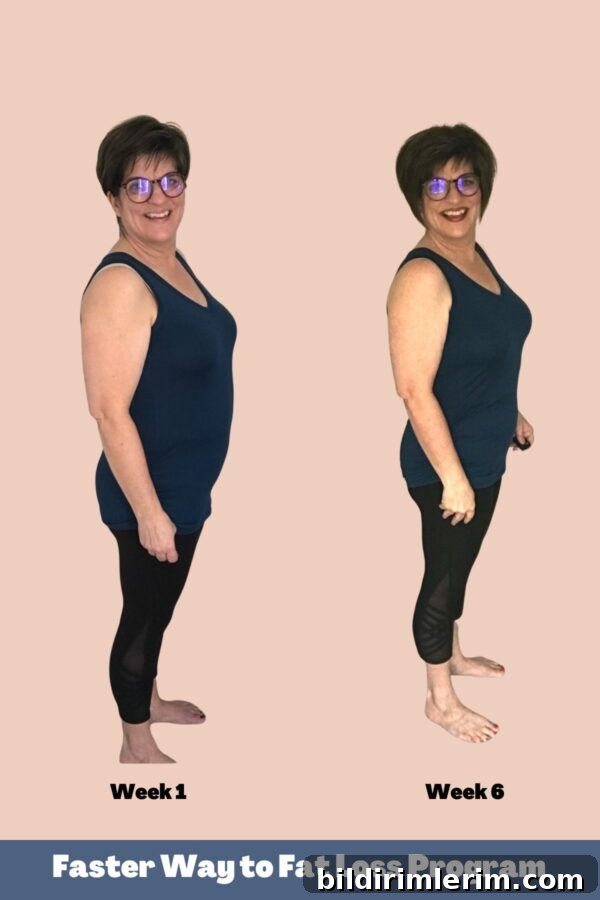
- My abdomen improved; the menopause belly began to soften and shrink, which was encouraging.
I shared progress photos with my community at six weeks and felt proud of the meaningful changes I’d achieved while learning new habits.
Update at 9 weeks: is it still working?
At nine weeks, I still value the program and plan to continue. That said, progress isn’t always linear. I’ve hit rough patches: illness, busy deadlines, and the ongoing work of forming new habits. Others in the community report similar ups and downs—that’s normal when making lifestyle changes.
I don’t have a dramatic transformation to present—what I do have is steady, realistic improvement. When I felt stuck, I reached out to my coach for encouragement and practical suggestions. That support helped me recommit: shorter workouts on hard days, more water, and a renewed focus on hitting macros without perfectionism.
The program’s motto—progress over perfection—resonates. Small, consistent steps are what create lasting change, and the tools provided (app tracking, coaching, workouts, and community) make it possible to keep moving forward.
Are you dealing with nutrition challenges in menopause?
If you’re facing similar struggles, I’d love to hear what you find most frustrating. What solutions have helped you? Share your experiences so we can encourage one another—midlife can be a time of renewed health and strength with the right tools and community support.