
Transforming a Gloomy Fixer-Upper Basement: A Personal Renovation Journey
I’ve always loved old fixer-uppers—the kind of homes that creak and whisper stories of the past. To me, they’re like a determined little engine that could: with a little coaxing, paint, and patience, they can be shaped into warm, comfortable spaces. Over the years I’ve learned a lot about taking on these projects. Most of the time I enjoy the challenge and the creative problem solving. But every renovation has its low moments, and I still remember one day when the challenge felt like too much.
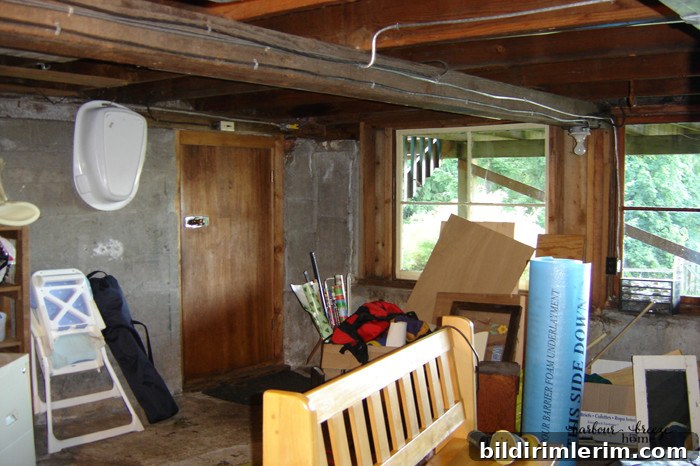
We had just moved into the house we live in now. It was, I think, our very first morning here. I went down to the basement to fetch something, and the moment I looked around I started crying. The room wasn’t dirty—the previous tenants had left it as clean as possible, and for that I was grateful—but the atmosphere was one of the gloomiest spaces I’d ever seen. No amount of optimism could change how overwhelmingly bleak it felt in that instant.
Within a couple of days my in-laws arrived to help, and my father-in-law graciously painted the laundry room walls the sunny yellow I had chosen. It was a small change, but it brightened the space immediately and gave me hope that the basement could be transformed into something livable and even cheerful.
Over the years we invested a lot of sweat equity into that basement. We rearranged storage shelves, added drywall where we could, replaced pieces that had been rotting with more solid supports, and painted the concrete floors. Bit by bit we created a craft and laundry room and carved out a family sitting room. Each small improvement felt like progress, and each project taught us something practical about the mechanics of home improvement.
Still, there came a time when reality set in: the basement needed more substantial work than our small budget could afford. Structural issues and broader finishes required more expertise and resources than we had. At that point we stopped trying to renovate every problem and accepted the space for what it was, focusing instead on making the most of what we could manage. That decision was freeing. It allowed us to use the basement functionally while saving energy and resources for the projects we could complete well.
Recently we spent two days packing and cleaning the basement in preparation for a move. Moving always feels bittersweet—there is the excitement of new beginnings alongside the ache of leaving familiar corners behind. I found myself tugged in different directions emotionally, often surprising my family by bursting into tears in one room or another as memories settled over me. Even small spaces like the basement hold a lot of history and meaning when you’ve worked on them with your own hands.
After a long afternoon of dusting, sweeping, and sorting, I paused to wipe cobwebs from my face and laugh at the absurdity of how emotionally attached I’d become to a place I once called “utterly gross.” The truth is, I’ll miss some things about that basement—the sense of accomplishment after each small improvement, the quiet corners where projects began, and the memories of family members pitching in to help. But I’m not going to miss the gloom, the unfinished ceiling, or the days spent feeling overwhelmed by what needed to be done.
If there’s a takeaway from this little renovation story, it’s that fixer-upper projects are as much about learning patience and prioritization as they are about paint and drywall. Start small, celebrate the wins, and know when to accept a space as-is while planning for what’s realistic next. Whether you’re turning a basement into a craft room, a laundry space, or a cozy family area, the transformation is a process—and often an emotional one. Even if you don’t finish every task, the steps you take will matter, and the memories you make along the way are worth keeping.