
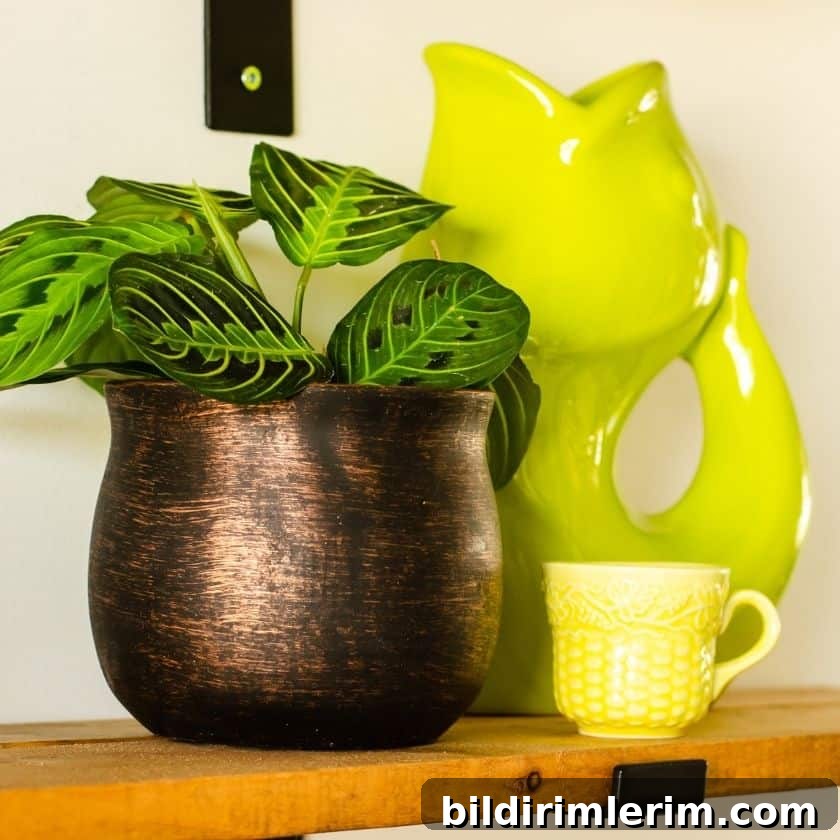
Add a fresh, new look to a space and decorate farmhouse shelves with easy-care houseplants.
One of my favorite DIY projects is the farmhouse shelves we installed in the dining room. They were quick and easy to build and have added a lot of style and personality to the space.
I change the display seasonally, and this spring I decided to refresh the dining room shelves using houseplants as the main focal point. Living greenery brings texture, color, and life to the shelves while keeping the look relaxed and approachable.
Tips for Decorating Shelves with Houseplants
Decorate farmhouse shelves with houseplants by choosing plants suited to the room’s lighting
I’m fairly new to houseplants, but I’ve been enjoying experimenting and learning what works in my light conditions. This room gets very little direct sun but benefits from a nearby bank of windows that provide bright, indirect light. When selecting plants for shelves in similar rooms, prioritize varieties known for tolerating low or indirect light and forgiving watering habits.
Here are a few low-light houseplants that are beginner-friendly
- Snake plant – Extremely tolerant of infrequent watering and low light. Water only when the soil is thoroughly dry to avoid root rot.
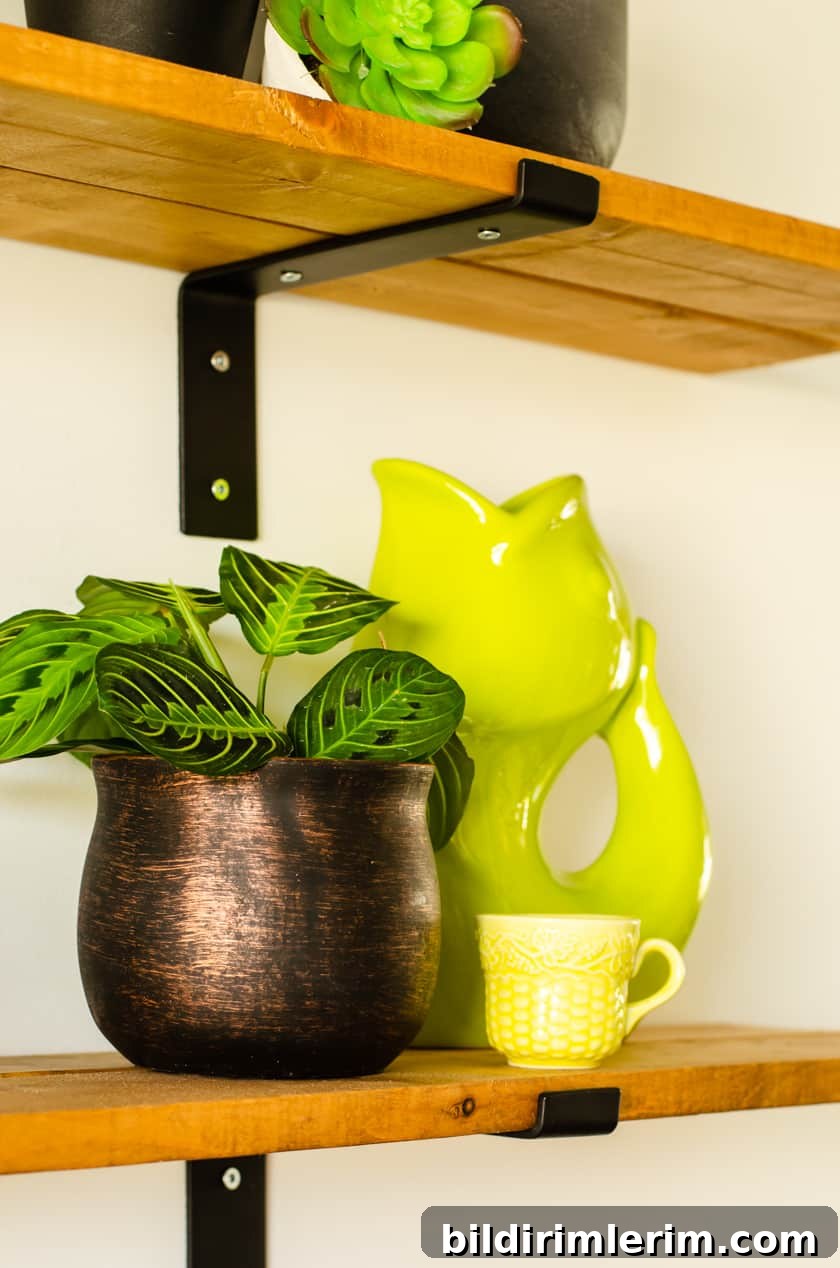
- Prayer plant – Loved for its textured, striped foliage and nighttime leaf movement. It prefers bright, indirect light and consistent, moderate humidity.
- Coffee plant – Can do well in lower light if kept evenly watered and free of brown, damaged leaves. New growth is a good sign it’s happy.
- Money tree – A popular choice for a larger shelf or nearby stand. It tolerates moderate light and responds well to routine weekly watering, though some seasonal leaf drop can be normal.
For larger floor plants, a separate planter stand or a low table beside the buffet creates a layered look and keeps the shelves from feeling overcrowded.
Alternate heights of plants on the shelves
Start by placing taller plants near the edges or at the back of a shelf and smaller pots toward the front or on a lower shelf. Varying heights creates depth and draws the eye along the display. Try balancing a tall plant at one end with a cluster of shorter pieces toward the center to maintain visual interest.
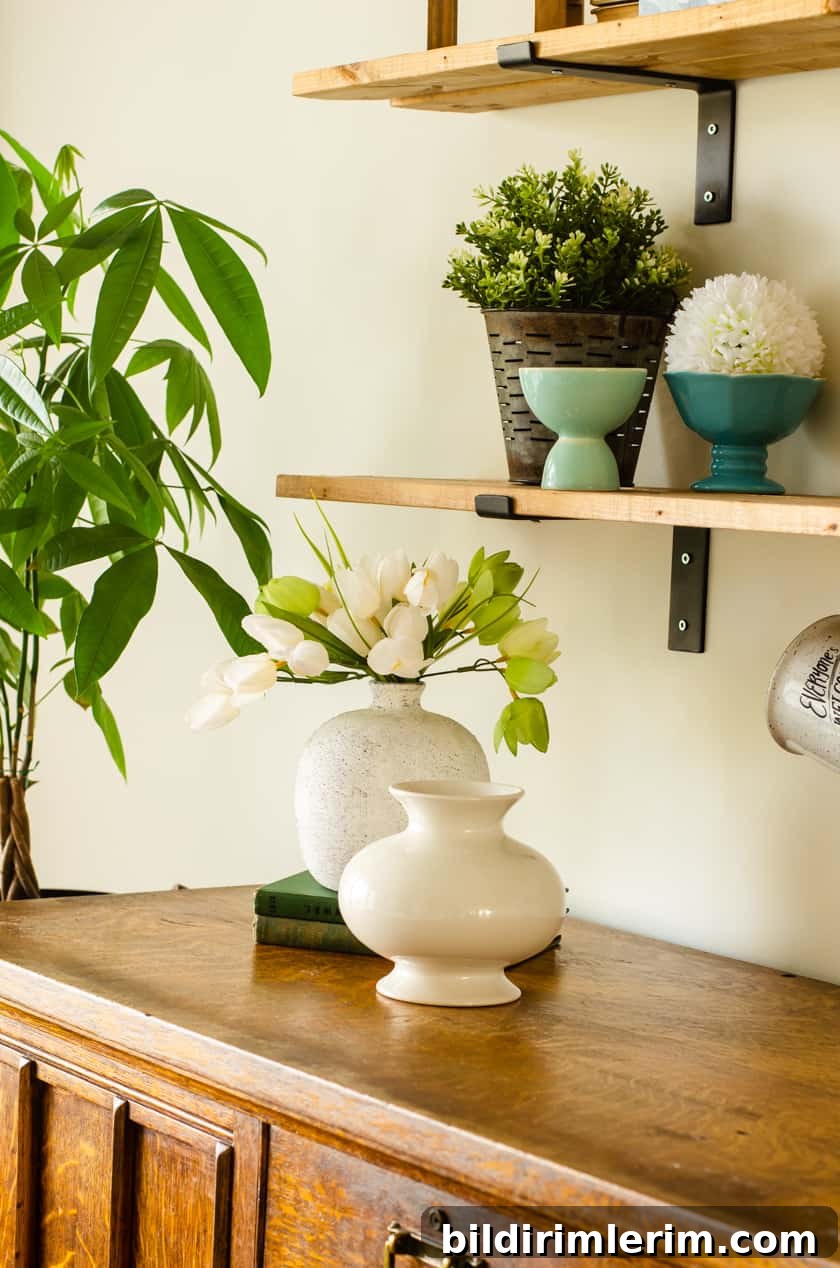
It’s okay to mix faux plants with real houseplants
Before I tried live plants, I used faux greenery exclusively and loved the no-maintenance aspect. Mixing a few high-quality faux stems with live plants can help fill gaps and maintain a balanced composition while minimizing care requirements. Faux elements are great fillers in hard-to-water spots or places with very low light.
Group arrangements in threes, mixing colors and textures
The rule of three is a helpful styling principle: group items in odd numbers, especially threes, and vary their heights and textures. Combining ceramics, woven baskets, glass vases, and plant foliage keeps the arrangement visually engaging. Try one taller item, one medium, and one small to create a pleasing cluster.
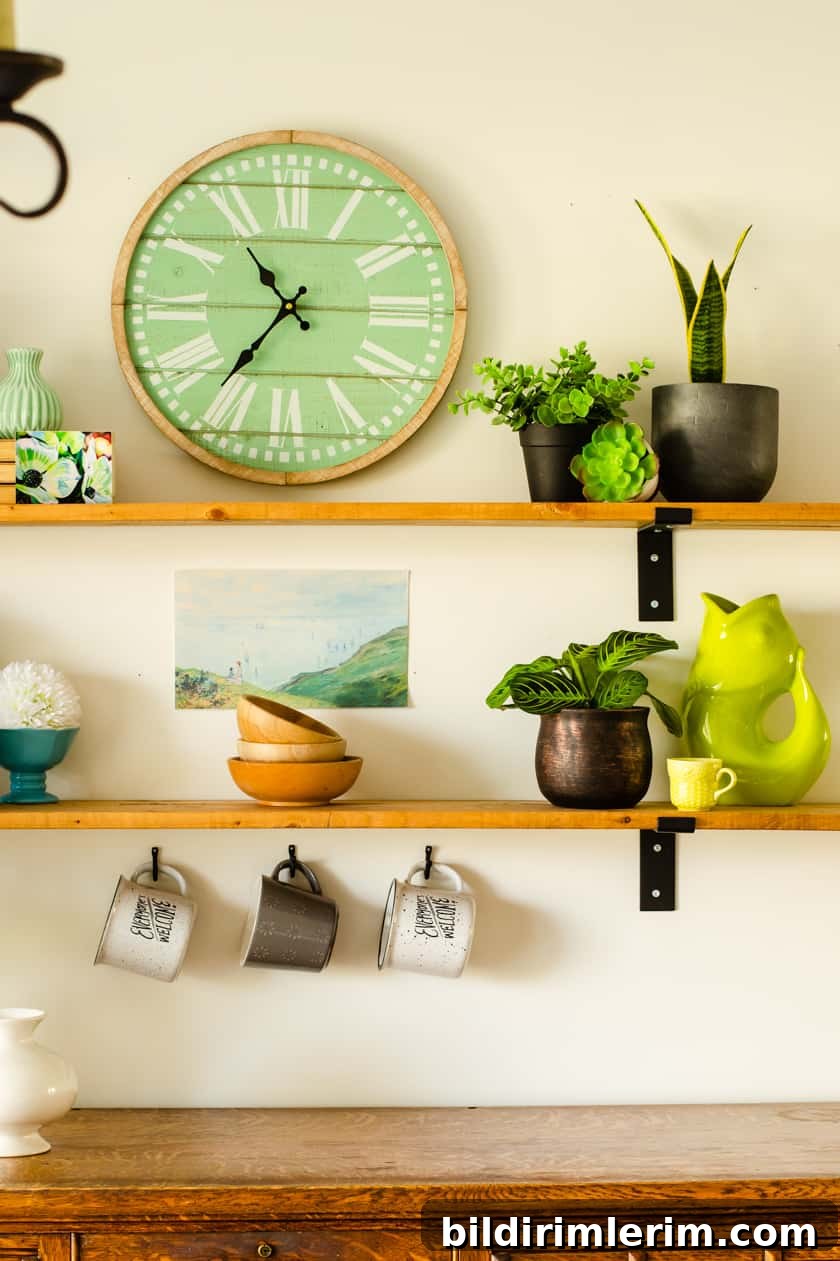
Add art to the shelf arrangements for additional color and interest
Framed prints or small canvases add color and personality to shelves. If you don’t have a frame that fits, lightweight prints can be leaned against the wall or temporarily attached while you decide on a permanent display. Artwork helps anchor the shelf visually and can complement the tones of your plant containers.

Printing art on heavier paper or cardstock gives it a more finished, gallery-like appearance. If you prefer, have prints produced at a local shop for a polished result.
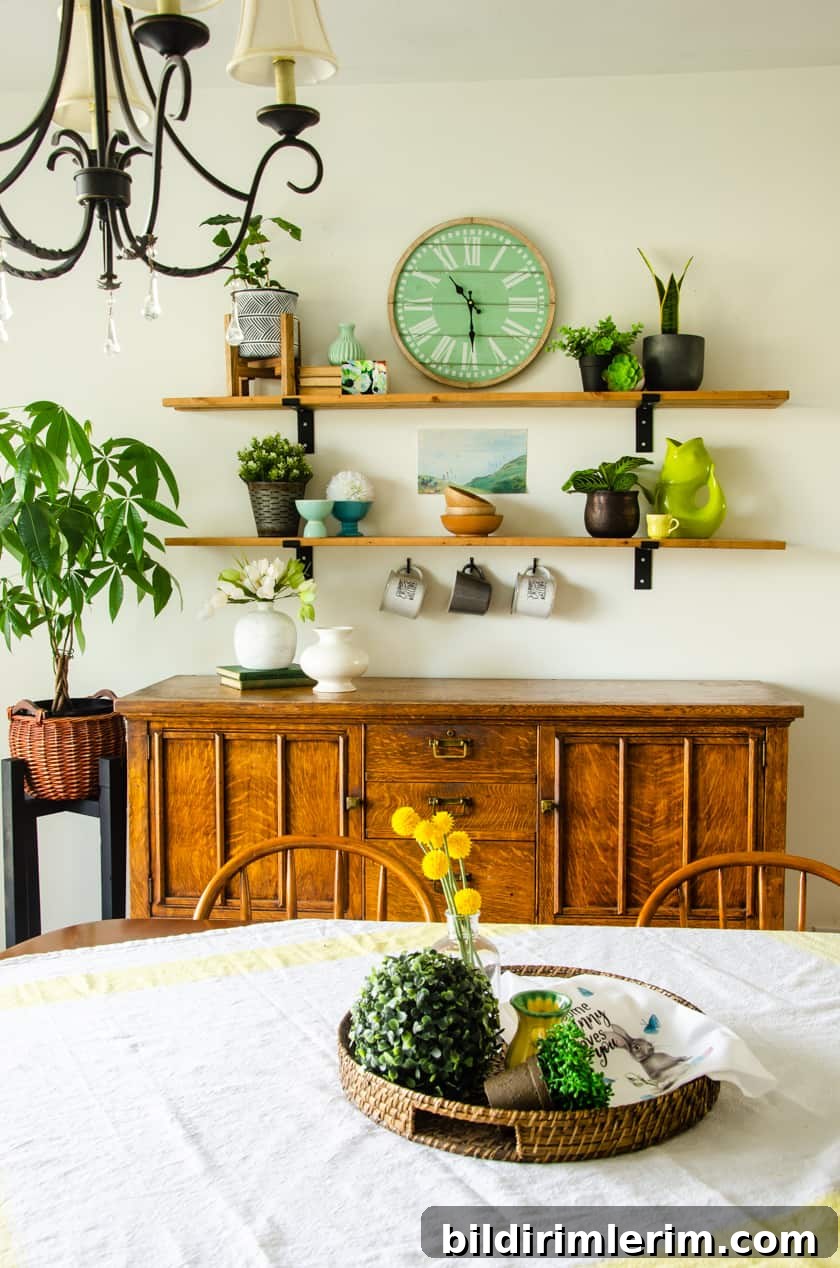
Stand back and assess the overall arrangement often
Styling shelves is a personal process—there’s no single correct approach. Step back frequently as you arrange pieces to check balance, spacing, and scale. Move items around until the composition feels harmonious and reflects your style.
Houseplant containers are an important part of the decor
Many plants arrive in plain plastic nursery pots. Swapping those for decorative planters—ceramic, terracotta, woven baskets, or metal pots—unifies the display and complements your shelving. Neutral containers create a calm, cohesive look, while colored pots can be used as accents to introduce contrast.
Simple maintenance tips to keep shelf plants happy
Rotate pots occasionally so each side of a plant gets even light. Check soil moisture before watering and avoid overwatering by allowing topsoil to dry to the appropriate depth for each species. Wipe leaves periodically to remove dust so plants can photosynthesize efficiently and look their best.
More ideas for bookshelf and shelf styling
- Use a mix of books and decorative objects to create levels and visual anchors.
- Add a small lamp or candle for warmth and ambiance.
- Introduce seasonal accents—fresh florals, seasonal ceramics, or holiday decor—to keep the shelves feeling current.
If you enjoy shelf styling and seasonal decorating, consider keeping a simple checklist of plant care routines and a list of favorite decor items to rotate through each season. Small changes—swapping a pot, adding a print, or rearranging groupings—can make the shelves feel fresh without a major overhaul.

For behind-the-scenes updates and more decorating ideas, follow the creator’s social channel and consider joining the VIP newsletter for printable art and styling resources. Enjoy styling your farmhouse shelves with plants and make the space your own!