
What follows is a slightly embarrassing travel tale—one of those “silly tourist” moments that ends with a grateful “I’m glad I didn’t get hurt.” My husband and I debated whether to include this story in our Maui Memories series, but decided that sharing it might help others looking for practical beach safety tips before their trip.
We had read a lot about Maui before we left, but the specific issue we encountered—shorebreak waves and shore rip currents—was rarely described in the guides we consulted. This account may help you recognize and avoid risky spots.
In yesterday’s post I described our upcountry drive to the Haleakala crater. By the time we descended from the mountain it was late afternoon and we wanted to find a beach to swim and relax.
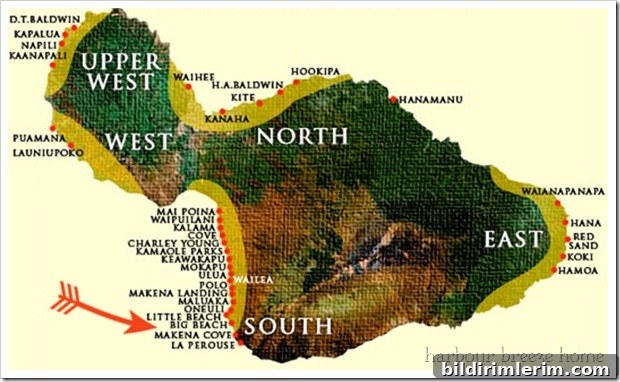
As the map below shows, Maui offers a multitude of beaches to choose from.
We followed Fodor’s recommendations and drove to what sounded like a perfect spot: Big Beach. The guide’s description made the place sound idyllic, so we kept driving past other shoreline stops until we arrived in the late afternoon. The parking lot was neither packed nor empty.
Walking the wide, tree-lined sandy path to the shore, we passed a young man carrying a boogie board. Near the water stood a large lifeguard stand. No lifeguard was on duty—there was a posted sign stating they went off duty at 4:30.
Signs similar to the one below were posted at every beach entrance. At the time I didn’t fully register their warning.
As we approached the water my stomach tightened. The waves looked powerful.
We set our things down among other beachgoers: a nearby couple on towels, a family with small children splashing at the shoreline, and the boogie-boarder who had walked in with us. Past him, a couple floated happily, neck-deep in surf. I, however, felt apprehensive.
My husband waded out to about waist depth and drifted gently with the swell, encouraging me to join. Determined not to be timid, I walked in. A wave immediately knocked me to my knees and splashed over my head. We chuckled at that—until another, much larger wave arrived.
I turned my back to it, which was a mistake. From the corner of my eye I saw a wall of water rise and realized it towered above my 6-foot husband’s head. I remembered the old advice to “jump the wave” and tried to do so. I landed hard on the sand just before the wave hit, then the surf smashed my face into the bottom and dragged me up onto the shore.
It was terrifying—one of the scariest moments I’ve experienced. I was shaken, covered in sand, and too frightened to go back out. My husband came in when he saw how distressed I was.
We left soon after. I felt foolish and unsettled—worried that this would be my last memory of Maui’s beaches. A few days later, when we told our snorkel guide about the incident, he grew serious and said, “That’s one of the most dangerous beaches here. We call it ‘Break Neck Beach.’ People get injured there.” A little online research later confirmed that Big Beach has powerful shorebreak and can be hazardous, especially when lifeguards are off duty.
I’m sharing this not to scare you away from Maui’s beaches—Big Beach is beautiful and worth visiting—but to stress the importance of choosing your spot carefully and recognizing hazardous conditions.
Tips from our experience:
- Watch the surf before you enter. If waves are breaking very close to shore or the sand shows a strong, cut-out channel, those are signs of shorebreak and possible dangerous currents.
- Heed posted warnings and lifeguard instructions. Many signs are posted at every beach precisely because conditions can change quickly.
- Ask locals—lifeguards, guides, or experienced swimmers—where it’s safe to swim and where to avoid. They know about strong waves, rip currents, and the safest areas to enter the water.
- For rough surf, choose beaches known for gentler waves and protected coves suited to floating or snorkeling rather than head-on shorebreak.
We didn’t take any photos at Big Beach—the cameras stayed locked in the car that day—but we did have better beach experiences later in our trip. On our last morning we swam at Kaanapali Beach, which became our favorite spot. We found a calm place to relax, bob in the waves, and watch the clouds—no terrifying waves involved.
More posts from our Hawaii trip
-
- Over the Rainbow
- The First Glimpse | Flying into Maui
- Visiting Upcountry Maui
- Kaanapali Beach and Eating Hula Pie
- Snorkel Trip to Molokini Crater and Discovering New Beaches
- Day trip to Honolulu and Waikiki Beach
- The Road to Hana
- Things to Note when Travelling to Hawaii + The Highlight Reel Video