DIY Drop Cloth Curtains: A Simple, Budget-Friendly Window Treatment
I don’t like naked windows. They feel cold and stark, and at night they turn into giant black squares in the wall. Bare glass draws attention to flaws and makes a room feel unfinished.
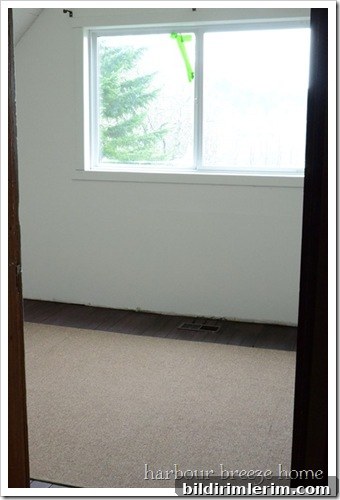
Sometimes a small, quirky detail helps—like the green duct tape I once used to cover a crack. It added a bit of personality (and a laugh), especially when I noticed a tiny sticker on the glass that proclaimed the window “virtually unbreakable.” If only that test had been tried in a teenage boy’s bedroom, right?
Choosing a window treatment can be surprisingly difficult. I wandered through the fabric store with my family in the car while I looked for something that would “jump out” at me. For the prices they were asking—often around $18 a meter—a fabric needs to be love at first sight. Nothing called to me, and I didn’t want to overspend just to fill the space.
I opted for a reliable, affordable solution I knew I would like: a painter’s drop cloth. Drop cloths make excellent DIY curtains because they are thick, neutral, and inexpensive. To add a little visual interest, I paired the drop cloth with a striped fabric along the top of the panel. I also found a single discounted curtain panel and used part of it to make a coordinating pillow.
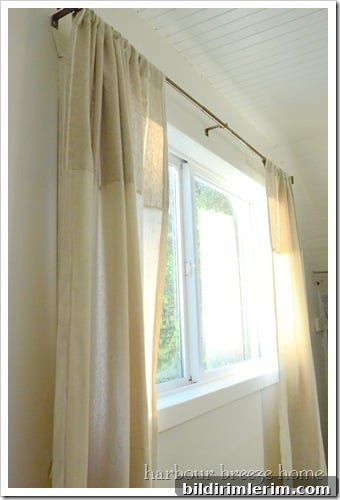
Installing the rod revealed an unexpected complication: the ceiling was a full foot higher on one side of the frame than the other. That made the usual approach—hanging the rod level with the ceiling—impractical. We decided to follow the window frame instead, placing the rod so the curtains would hang naturally from the top of the window rather than from the higher ceiling line.
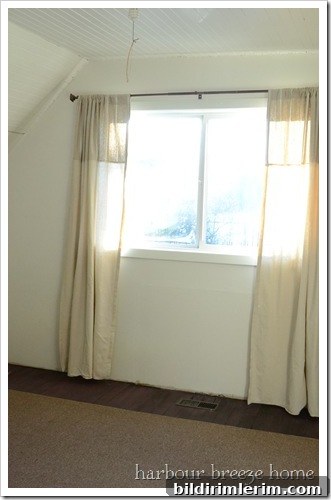
The result worked out well. The drop cloth curtains softened the starkness of the glass, added texture and warmth, and lightened the room without competing with other decor. They also provided privacy at night, when the window otherwise becomes a dark focal point.
Practical notes from this project:
- Painter’s drop cloths are an affordable base for curtains. They’re durable and have a natural, neutral look that suits many rooms.
- Accent the top of a drop cloth with a stripe or contrasting fabric to create a more finished, intentional appearance.
- If the ceiling is uneven, consider mounting the rod to the window frame or to a consistent horizontal element rather than following the ceiling line. This helps the curtains hang evenly and looks more deliberate.
- Small fixes like tape over a crack are fine short-term solutions. I replaced the green duct tape with clear packing tape until I can replace the damaged panel in warmer weather.
As for hardware: I purchased a simple curtain rod at a home improvement store. It was an affordable Levelor-style rod in a coppery finish—the only one left in that finish—and it suits the space nicely. A modest investment in a good rod makes a big visual difference.
In summary, if you’re facing a bare window and don’t want to spend a lot, consider drop cloth curtains. They’re budget-friendly, easy to customize, and forgiving when you need to adapt to oddities like uneven ceilings. With a few simple touches—a stripe of fabric, a matching pillow, and a sensible rod—you can turn a stark window into a warm, styled element of the room.