It struck me yesterday that almost exactly one year ago I walked into a local clothing shop to pick out a new outfit. I found a great pre-Christmas sale and later wrote about my cozy outfit that “chased the chills away.”

I loved that outfit, but the real reason I bought it was more practical: many items in my closet had become too tight and uncomfortable. Around the same time I was doing goal-setting exercises for my blog, and those prompts pushed me to face my personal goals, too. After some thought I set a clear objective and a game plan to address gradual weight gain.
Now, a year later, I returned to the store for a very different reason — to buy smaller jeans. That shopping trip felt a lot more rewarding. Small, consistent changes over the past (almost) 365 days added up: today the scale shows I’m 28 pounds lighter than I was on January 1st.
I’m not sharing these results to brag. My purpose is to encourage anyone in a similar situation by explaining what worked for me in the hope one or two ideas might help you, too.
Here’s How a New Year’s Goal Helped Me Lose 28 Pounds
I named a clear, meaningful goal.
Instead of setting a target like “lose X pounds by Y date,” I chose a broader, sustainable aim: to “develop healthy habits in my daily life.” Short-term diet fads had not worked for me—I’m talking about attempts like online Weight Watchers, the Military Diet, juicing, and the cabbage soup approach—so I shifted my focus to long-term change rather than instant results.
I defined the real reason behind the goal.
Motivation rooted only in clothing sizes wasn’t enough. I’ve always believed beauty isn’t defined by your size, so I looked deeper for a “why.” For me, family health risks were the driving force. Several immediate family members developed diabetes later in life, and I wanted to give myself the best chance to avoid that outcome. Eating healthier now felt like a proactive step to reduce long-term risk.
I created a practical, measurable game plan.
I spent time researching healthy habits on Google and Pinterest and boiled everything down to three daily actions that I could measure and track. I used a bullet journal to record progress and hold myself accountable. The three simple daily habits were:
- Drink two large cups of water each day.
- Weigh myself every morning.
- Log everything I eat using the MyFitnessPal app.
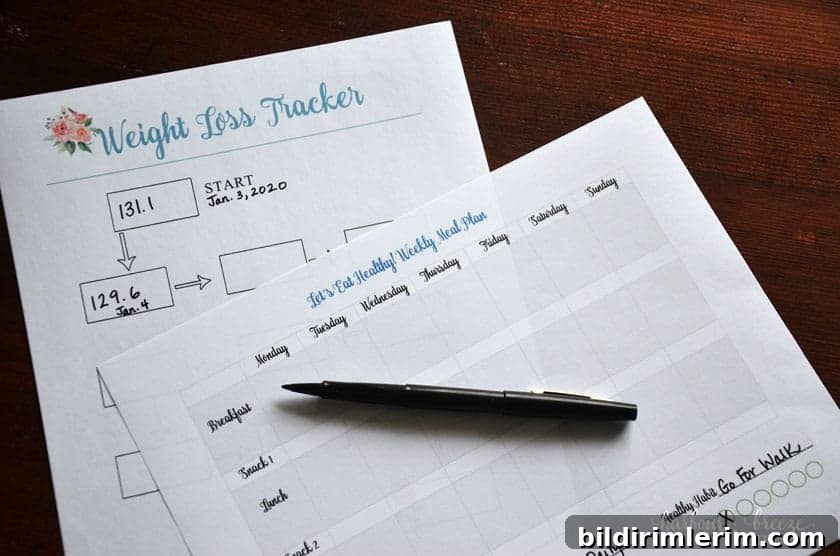
I also created printable trackers for my goals and meal planning to help stay consistent.
I researched and adjusted my meals to fit my calorie target.
MyFitnessPal calculates a daily calorie recommendation based on personal data; for me that number was 1,200 calories. Early on I learned how important it was to choose calories that satisfied me. Small, calorie-dense treats—like a little piece of fudge—add up quickly and don’t fill you up. In contrast, a large salad loaded with veggies and lean protein is low in calories but very filling.
I planned meals before I got hungry.
Planning ahead was essential. I wrote daily meal plans so I knew how to hit my 1,200-calorie goal without feeling deprived. To stay on track I found it helped to eat three main meals plus small snacks in the morning, afternoon, and evening. One useful habit I adopted was repeating breakfast and lunch every day — simple, predictable, and easy to prepare. My typical breakfast became one scrambled egg, one piece of turkey bacon, and half an English muffin; lunch was a large spinach-and-veggie salad with turkey deli meat. That routine saved decision energy so I only had to think about dinner.
I didn’t ban entire food groups.
I’m fortunate not to have food allergies, so I didn’t label any food as strictly forbidden. Instead, I focused on choosing better options most of the time and allowing small, satisfying treats. For example, I enjoy chocolate, so rather than cutting sweets out entirely, I treat myself to one small square of high-quality chocolate each day. It hits the sweet spot without derailing my calorie budget.
Support made a difference.
Support from others can be a powerful motivator. My husband has been tracking his food and exercise on MyFitnessPal for several years and has lost nearly 40 pounds; his experience and encouragement were invaluable. Coworkers and friends also offered consistent, kind support that helped me stick with new habits.
Here are a couple of images that show how our journeys looked at different times:


I see this as an ongoing lifestyle, not a race.
I don’t treat this like a goal with an end date. My aim is to keep these habits long term. There are times I get stuck at the same weight for a while, and seasonal temptations—like holiday treats—can be challenging. I remind myself that progress is rarely linear and that persistence matters more than perfection.
I’m also aware that exercise is an area I could improve. It’s likely the next habit I’ll commit to making consistent.
I once did a live workshop session where I shared how I used a bullet journal to organize goals and track weight-loss progress; those tools made the process feel manageable and repeatable.
If you’re working on healthy eating habits, I’d love to hear what’s helped you. Questions, tips, and suggestions are welcome in the comments — I’m always eager to learn from others.