
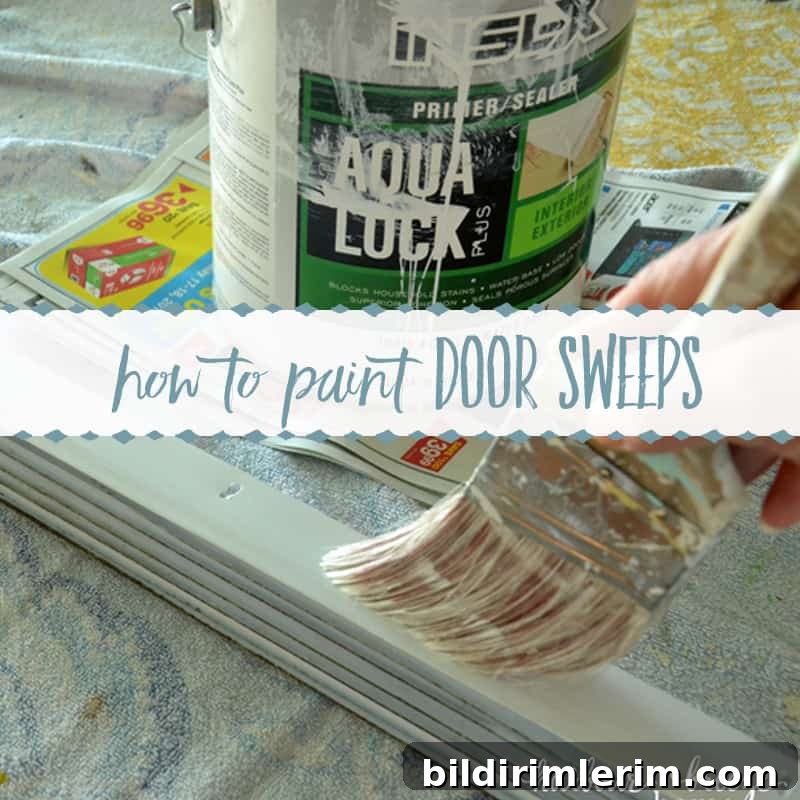
Refresh tired exterior doors by painting the vinyl door sweep to match your door color. This easy step-by-step guide shows how to get professional-looking results with minimal time and tools.
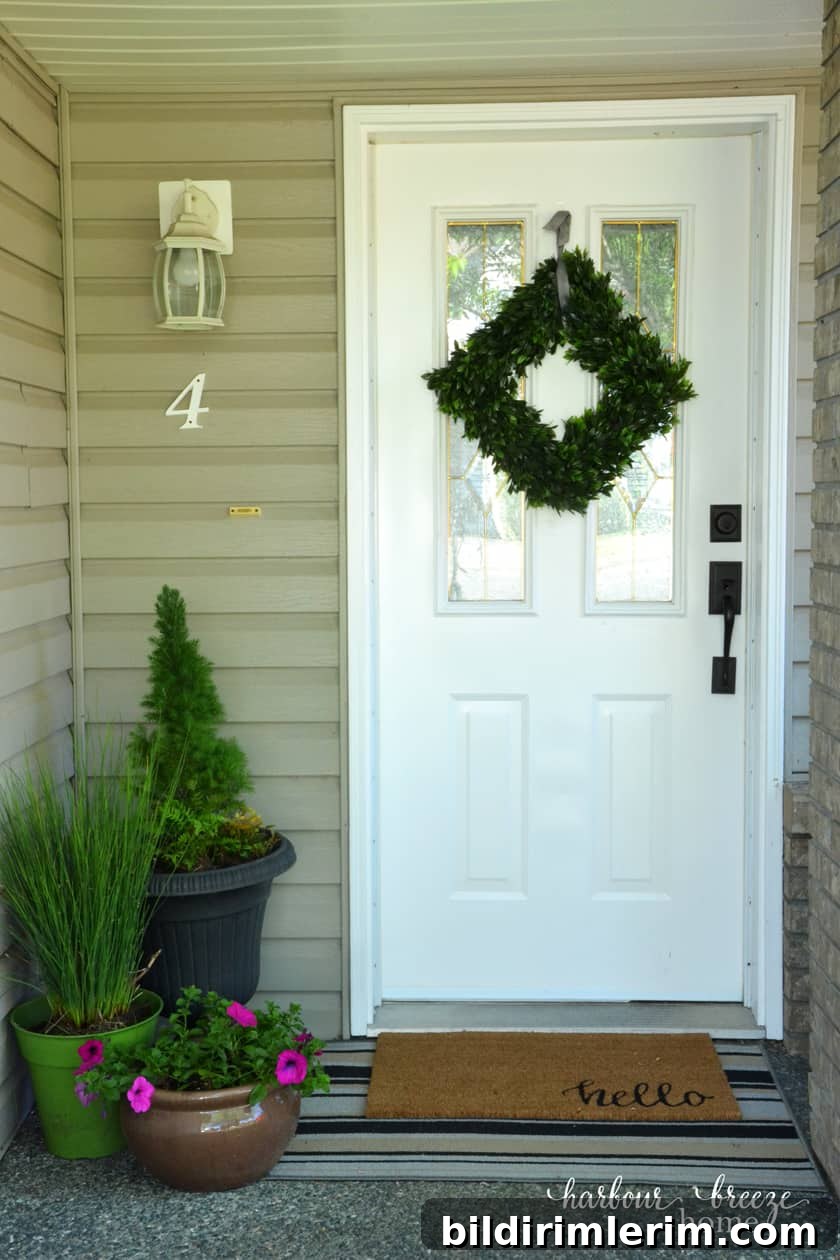
We recently updated two exterior doors as part of a front-door makeover. The project included painting the interior of the doors a rich dark gray, installing new hardware, and styling the entry with plants and a welcome mat. One small but important detail that improved the final look was painting the vinyl door sweep so it blended seamlessly with the door’s color.
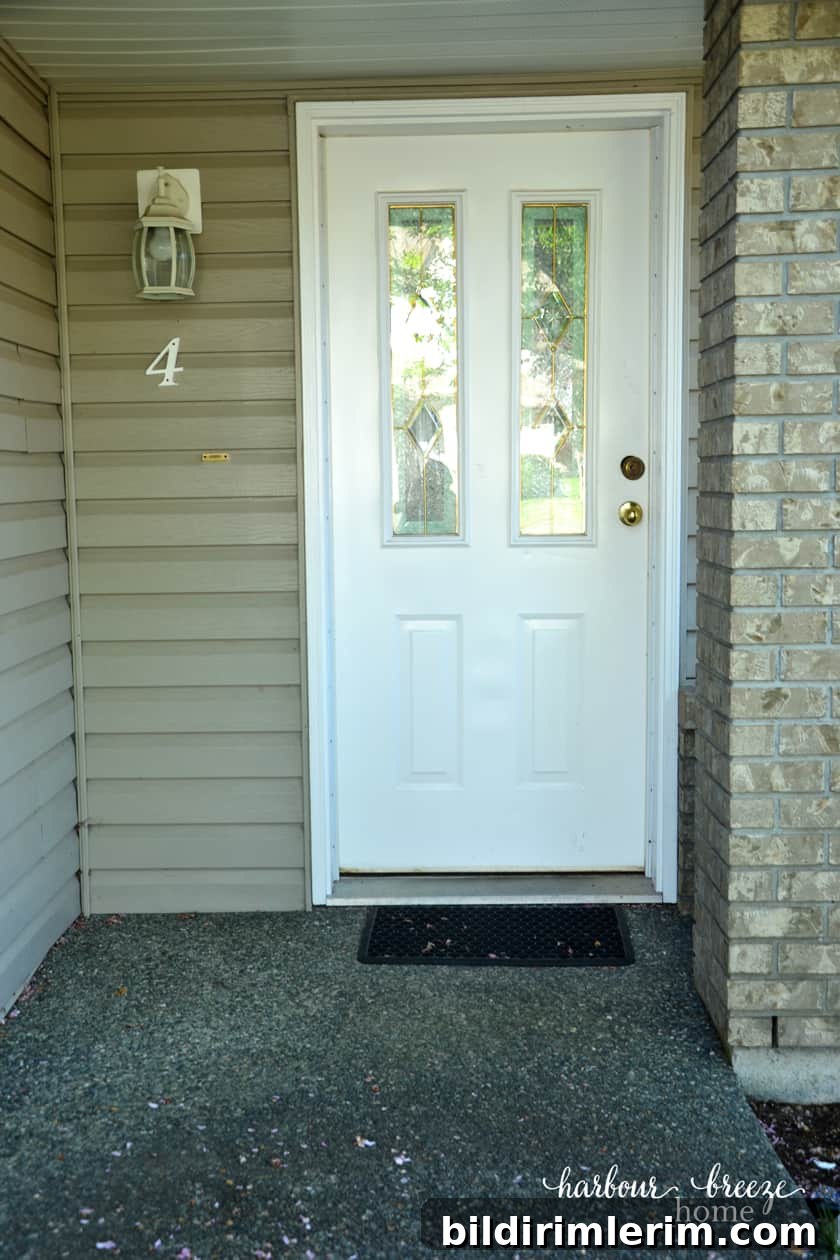
Before the update, the white door sweep at the bottom stood out and distracted from the fresh look. After painting the door and styling the entry, the white sweep looked out of place. Removing the sweep for painting revealed how important it is for sealing out drafts and light, but it also presented an opportunity to customize the color so it would coordinate with the new finish.
Why paint a vinyl door sweep?
A painted sweep visually integrates with the door and creates a more polished, cohesive entry. If the face of the door is a different color than the interior—or if you’ve painted one side a contrasting shade—painting the sweep lets you match whichever side is most visible from the exterior or interior. It’s a small detail that consistently elevates the final result.
Supplies needed to paint a vinyl door sweep
- Primer suitable for vinyl or plastic surfaces (use a primer specified for adhesion to vinyl)
- Paint in your chosen color and finish (durable satin or pearl finishes work well)
- Small paintbrush for edges and screw holes
- Foam roller (4-inch) and handle for smooth coverage
- Soap and water for cleaning, a lint-free cloth, and a small container for screws while removed
- Fine-grit sandpaper (optional, for light scuffing if recommended by the primer)
Step 1: Remove the door sweep
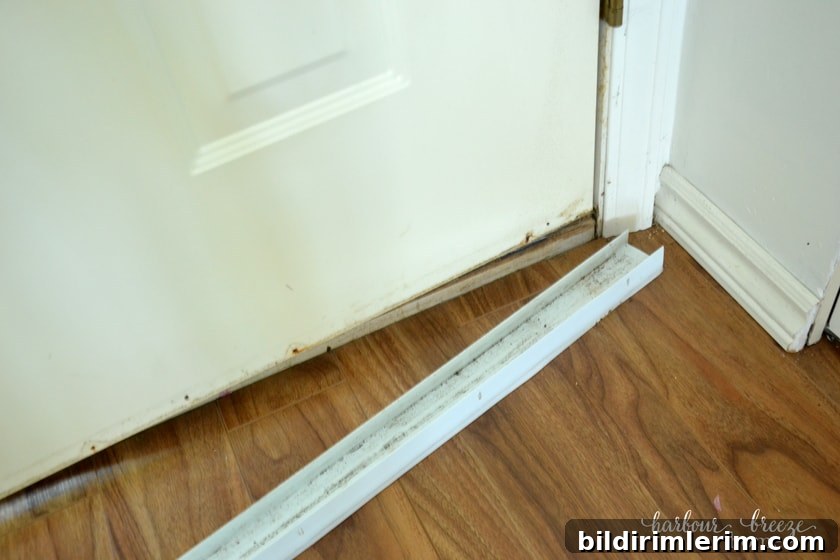
Unscrew the sweep from the base of the door and keep the screws in a small container so they don’t get lost. Laying the sweep on a protected surface makes painting easier and prevents drips onto flooring.
Step 2: Clean and prep the surface
Wash the sweep with warm, soapy water to remove dirt, dust, and wax. Rinse thoroughly and dry. Paint will not adhere well to soapy residue or greasy film, so take care to remove all soap traces. If the vinyl is glossy, a very light scuff with fine-grit sandpaper can improve primer adhesion—wipe away sanding dust before priming.
Step 3: Prime the side you will paint
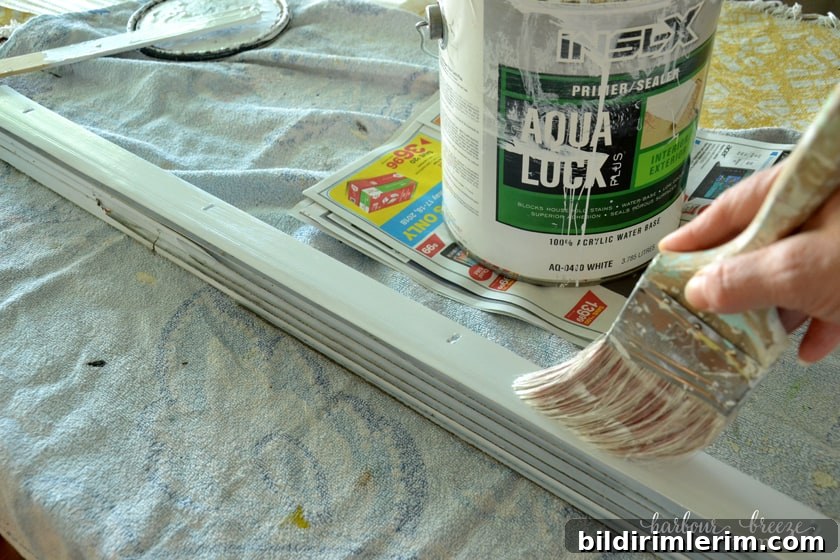
Apply an even coat of primer formulated for vinyl or plastic to the surface you want to color. For our door, we handled only the back side (the side with screw holes) so the front remained white. Allow the primer to dry fully per the manufacturer’s instructions before moving on.
Step 4: Paint the sweep
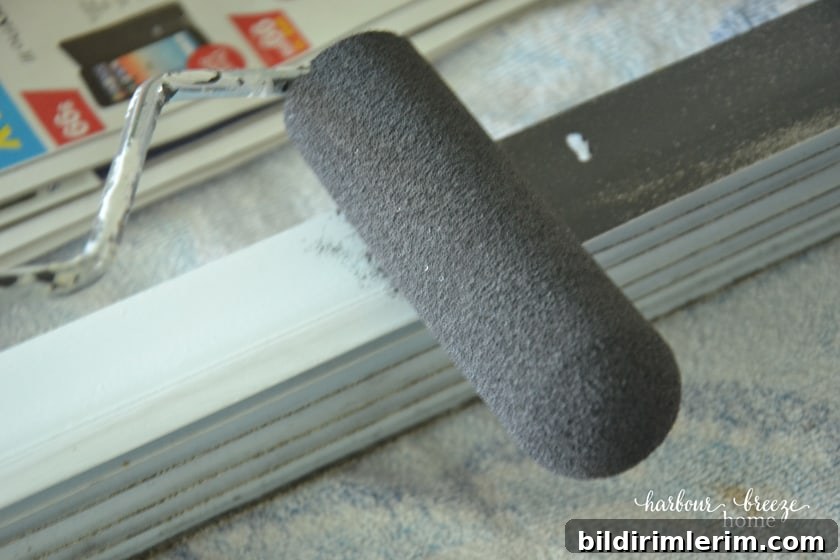
Use a small brush to cut in around screw holes and edges, then roll the larger surfaces with a foam roller for a smooth finish. Apply thin, even coats and let each coat dry completely before adding another. Two coats are usually sufficient for full coverage, though thicker or darker colors may require a third coat.
Step 5: Reattach the sweep
Once the paint is thoroughly dry and cured, line the sweep back up with the original holes and reinsert the screws. Check that the sweep seals properly against the threshold and that the door closes smoothly. A painted sweep should blend with the door color so well that it becomes nearly invisible.
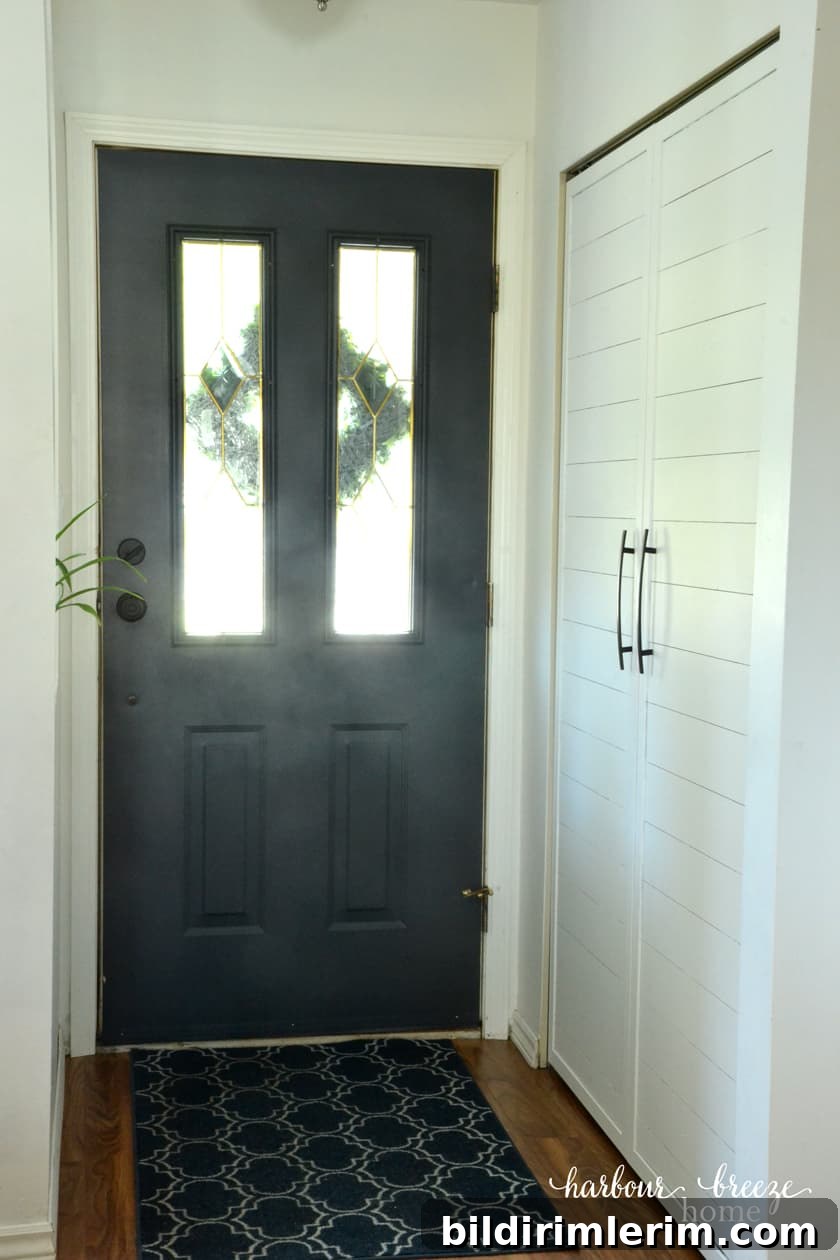
The result is a clean, coordinated entry that keeps the sweep functional while improving the overall appearance. If the visible side of the door is a different color, you can paint the sweep to match either side as needed.
Related painting tips
- How to paint metal doors with plastic trim
- Painting materials checklist for painting indoor walls
- How to paint an electric fireplace
- Front door makeover ideas and finishing touches
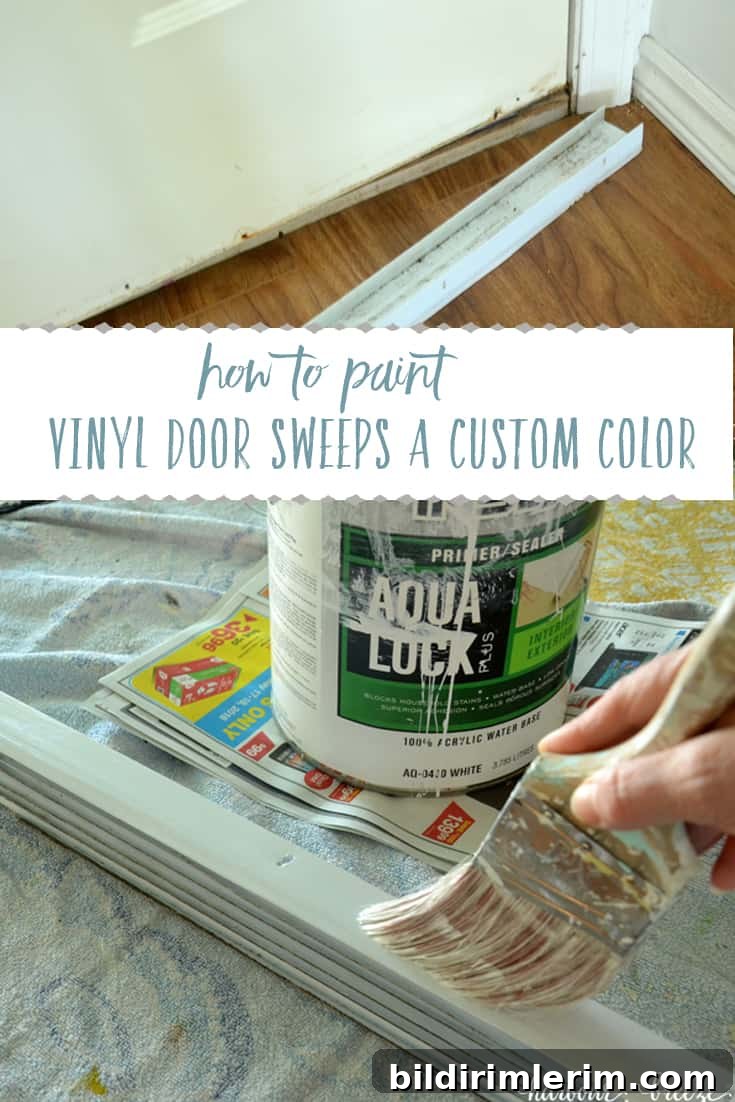
Painting a vinyl door sweep is a quick, affordable upgrade that makes a noticeable difference. With the right primer and paint, a few simple steps will give your door a cohesive, professional appearance while preserving the sweep’s function of keeping out drafts and light.