
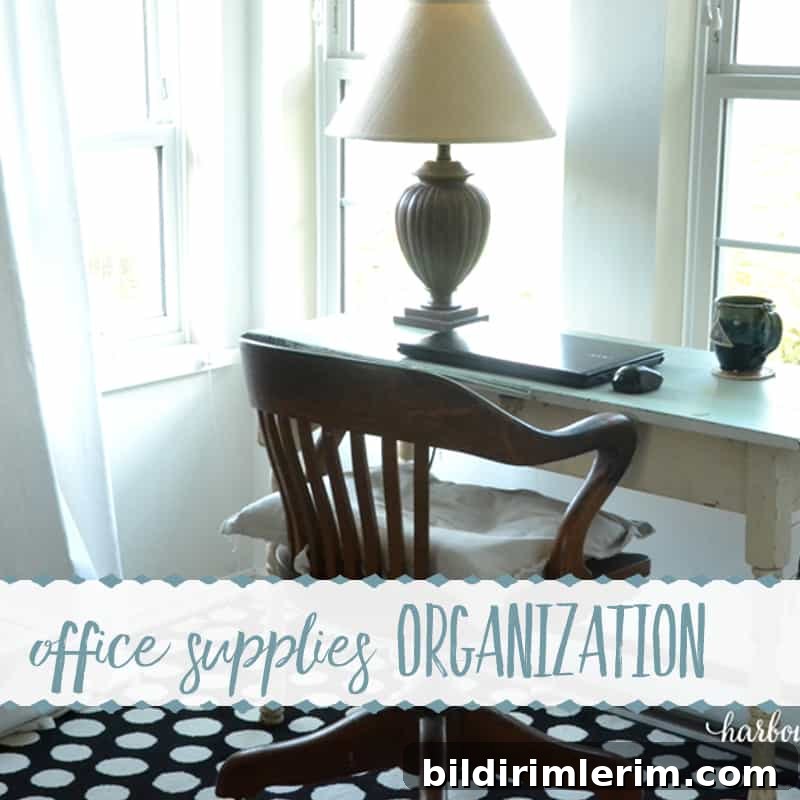
I don’t know what your office setup looks like, but over the years I’ve learned that placing a home office doesn’t have to follow a rulebook. Thinking creatively about where to work can yield functional and charming solutions—even in the most unexpected rooms.
In the past I converted our dining room into an office, and at another time I borrowed my son’s bedroom to use as a craft room and workspace. Right now, my office sits squarely in the middle of the living room. Each change taught me that flexibility, small-space thinking, and smart organization can make any spot work.
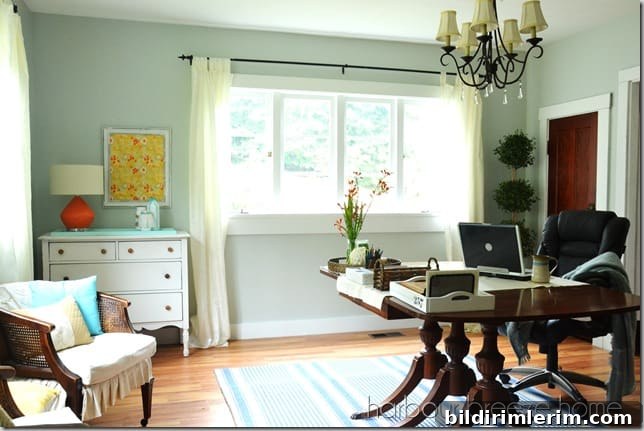
For this current setup I work at a simple table that doubles as a desk and is placed near the front windows beside the entryway. The table itself has no storage, so I relied on nearby furniture to keep office essentials hidden and organized. A buffet with drawers became the perfect solution for stashing supplies out of sight while keeping everything within reach.
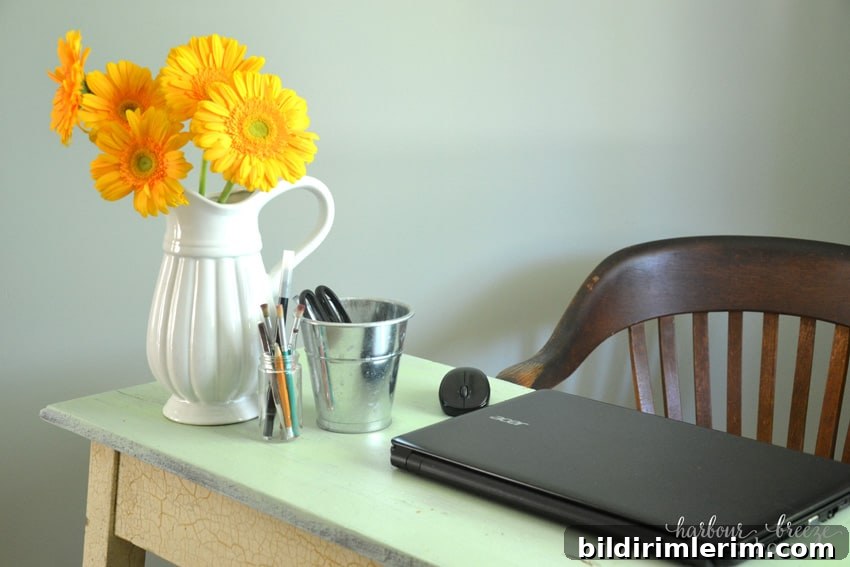

Because the desk is only a table, I borrowed the top two drawers from the buffet for daily office supplies. Drawers are ideal for corralling small items—paper clips, pens, tape, markers, and sticky notes—and they keep the tabletop clean and welcoming. Before organizing, those drawers had become a bit unruly and needed attention.

To tackle the drawer cleanout efficiently I used a simple strategy I recommend for any organizing project: set a timer. I gave myself 30 minutes and focused only on the task at hand. Working with a time limit prevents perfectionism from taking over and makes the process feel manageable.
I began by emptying both drawers completely and sorting like items together. Grouping similar objects—writing instruments, adhesives, tape, paper supplies, charging cords, and miscellaneous tech accessories—helps you see exactly what you have and what you no longer need. I tested each pen and marker and tossed any that were dried out. Old receipts, stray notes, and random scraps of paper were recycled.
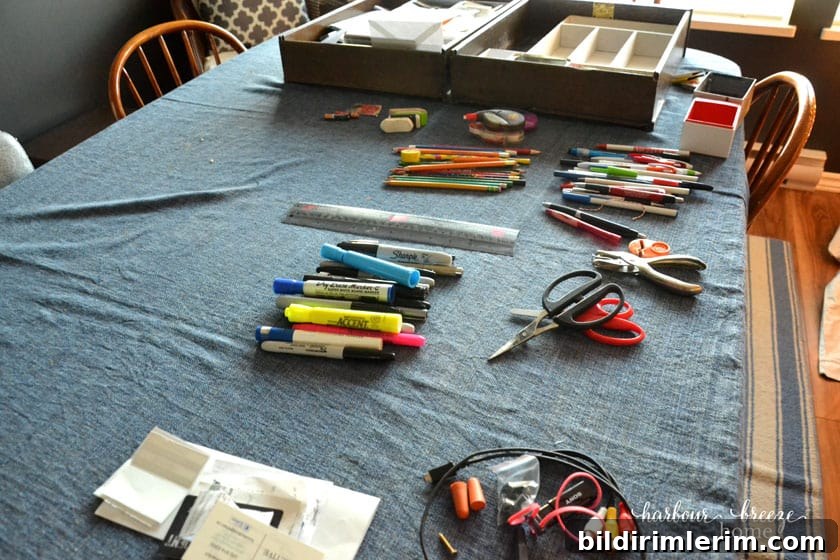
When everything was sorted, I used the boxes and dividers already on hand to create compartments inside the drawers. These organizers included purpose-built drawer trays from stores like Ikea, plus clever repurposed containers such as iPhone boxes, watch boxes, and specialty coffee boxes. Repurposing small boxes is a budget-friendly way to make tidy sections for tape, paper clips, small tools, and chargers.
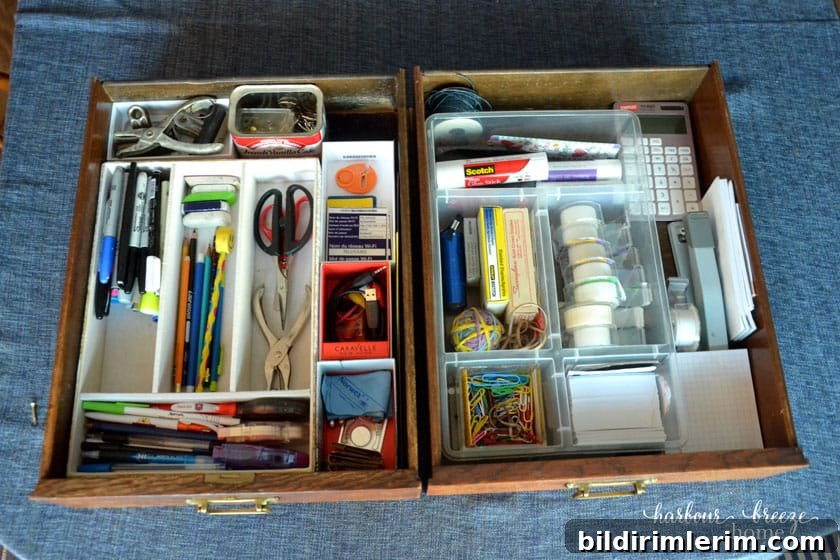
With items returned to their new homes the drawers looked and felt so much better. Decluttering made it obvious that I didn’t need to buy extra tape, markers, or supplies—I already had enough, just not organized. A few minutes of sorting eliminated duplicates and revealed gaps worth filling later if necessary.
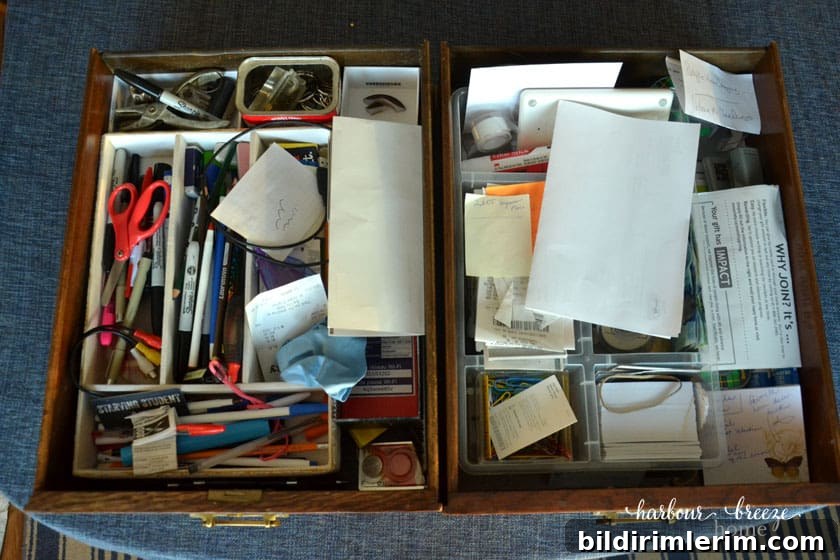
I finished before my timer went off—what I had been dreading for weeks took only twenty minutes. Small, focused organizing sessions like this are an easy, low-stress way to reclaim order in a home office space. Whether your workspace occupies a dedicated room, a corner of the living room, the dining table, or a borrowed bedroom, these principles apply: clear, sort, discard what’s broken or unnecessary, and use simple dividers or repurposed boxes to keep everything in its place.
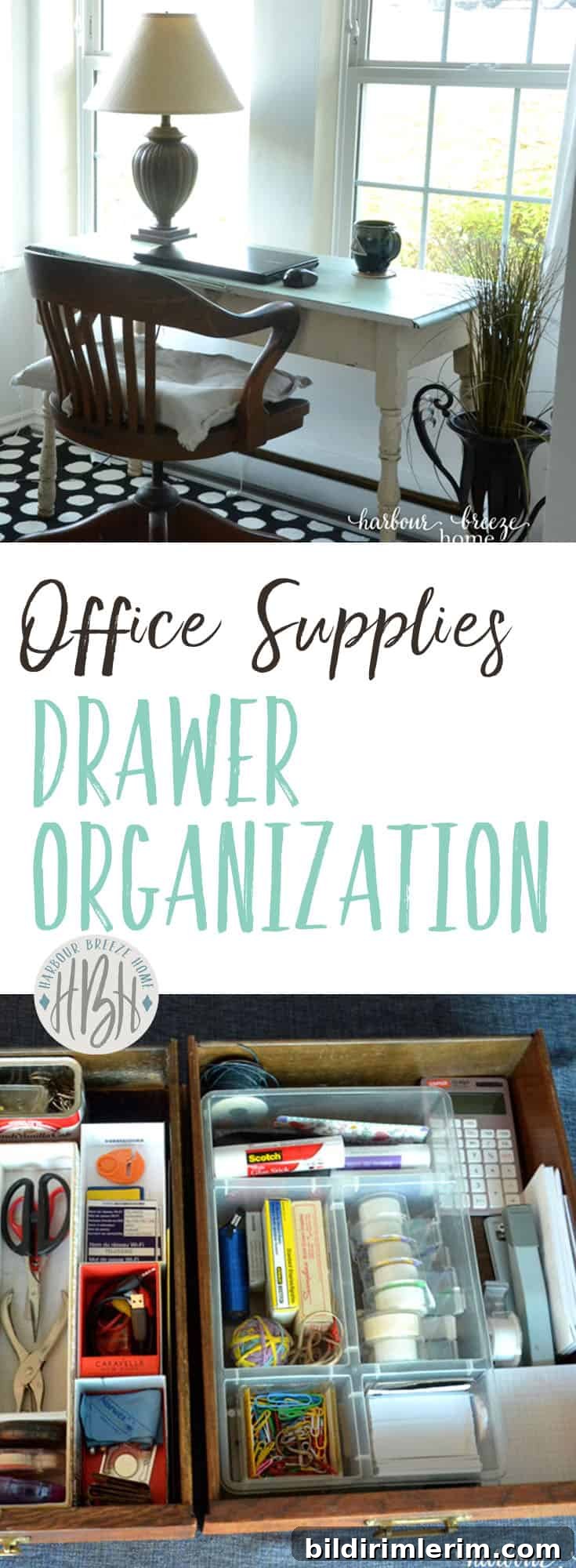
A few takeaways for home office organization: use nearby furniture to create hidden storage, try short timed sessions to avoid procrastination, repurpose small boxes and trays for compartmentalizing, and regularly purge unusable supplies. These simple steps can transform a makeshift workspace into a productive, neat, and calming environment—no dedicated office required.