
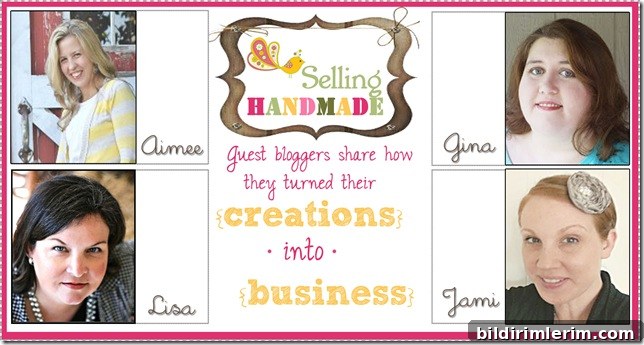
Happy Monday, everyone! After a weekend break, our mini-series continues. I’ve invited four guest bloggers to share the practical details of selling handmade goods online. If you missed earlier posts, you can start at the beginning of the series.
My Etsy shop grew directly out of this blog. One of my craft projects went viral on Pinterest, which led to requests for hand‑painted signs. That’s often how a creative business begins—one small success leads to another, and things can get exciting quickly.
That excitement can quickly become overwhelming, though. For me, the most confusing part has been promoting the business on social media. All the pinning, tweeting, sharing and liking can feel endless. I’ve been stumbling my way through it and still don’t feel like I’ve figured out a perfect system.
I asked our four guest bloggers to weigh in on how they handle promotion and social media for their handmade shops.
Day 6: Promoting Your Shop {Getting the Word Out}
Question: I’ll admit it—I’m overwhelmed by all the promotional and social media choices: Pinterest, RSS feeds, email, Twitter, StumbleUpon, Facebook, and more. How do you promote an Etsy shop without losing your mind? Where do you draw the line with all the social platforms?
Gina, from The Shabby Creek Cottage
Full disclosure: I get help with social media. I don’t spend hours tweeting, pinning, or posting every item myself. I focus on creating valuable blog content—when people read my posts, they discover my shop. An assistant keeps the Facebook and Pinterest activity consistent, which saved me a lot of time. I enjoy interacting with readers through comments and Twitter, but I accept that there are only so many hours in a day.
Jami from Freckled Laundry
Count me in as another overwhelmed person. Honestly, Gina’s approach is excellent: focus on what you do well. Right now I sell in a relaxed, sustainable way that fits my pace. My blog is the primary voice for my shop. I also post new items and sales on Facebook, and I’ve linked those posts to automatically update my Twitter—this automation is a real time‑saver. Etsy also offers quick sharing tools when you list new items, so a couple of clicks can broadcast your latest products.
Don’t be shy about asking friends and family to like or share your posts—that word‑of‑mouth still matters online. Blog collaborations and giveaways have worked well for me: I’ve hosted giveaways on other blogs and sent packages to bloggers who then wrote about my products, which brought traffic to my shop.
I’m still new to Pinterest and StumbleUpon and generally don’t pin or stumble my own listings. Fortunately, loyal readers and bloggers have pinned my items, and that organic momentum drives traffic too.
Email newsletters are a powerful tool I plan to use more in the future. My Etsy shop is currently closed while I develop a signature textile line and build inventory. When I reopen, newsletters and Pinterest will be priorities—and I’ll likely bring an intern on board to help with newsletters and other marketing tasks.
Speaking of interns, Reni at Bliss & Tell Branding Co. suggested hiring one. Many students seek internships in creative fields, marketing, or communications and can help with packaging, orders, tagging, and shipping. Outsourcing those routine tasks frees up time for creating and promoting. I personally love handling packaging, so I haven’t hired help yet, but it’s a strong strategy for growing your shop without burning out.
Bottom line: do what fits your comfort and capacity. The more consistently you engage in social media and content marketing, the more visibility your Etsy shop will get—but balance that with what you can realistically maintain.
Lisa from The Pennington Point
I’ve probably already lost my mind a few times over social media! I mainly use Twitter, Pinterest, and my blog to market products. One growth moment for my business illustrates that personal outreach still pays off: in my early days I had few sales, but after asking a larger blogger to feature my new product and sending her a sample, she wrote about it with photos—and orders followed. That feature helped my Family Number Pillow become a consistent bestseller and gave me momentum to design more products. Growth was gradual, which worked well for my family life and allowed me to balance homeschooling and business.
Aimee from My Pink Life
Pinterest has been my top traffic driver. I don’t currently run dedicated Twitter or Facebook accounts for my shop; I rely on my blog to showcase products. For many sellers, Pinterest and a well‑maintained blog are enough to bring steady visitors and sales.
I’m relieved to find I’m not alone in feeling overwhelmed by social media. The key takeaway for me is to focus on a few reliable channels—blog, Pinterest, and selective social sharing—rather than trying to be everywhere at once.
Thanks, Lisa, for sharing how your shop grew. Hearing real examples of gradual success is helpful and encouraging when growth feels slow.
Tomorrow we’ll wrap up the series with a final topic that connects well to today’s discussion: finding balance in our busy creative lives. Is it possible? Join us to explore how makers juggle work, family, and running a small business.