Small Entryway Shoe Storage: A Simple, Stylish Solution
Growing up on a Montana farm, my mother enforced one clear rule: wear shoes inside the house at all times. If we picked up a sliver from the closet floor or stubbed a toe on a chair leg, the reply was always the same—“You should have been wearing your shoes!” That habit stayed with me for years.
Then I married a Canadian and discovered a different custom: removing shoes at the door. I was surprised at first, but it changed the way I thought about entryways and how a small space needs to function. If you live in a house where shoes come off as soon as you step inside, your entryway has to solve a real storage problem—especially when the space is tiny.
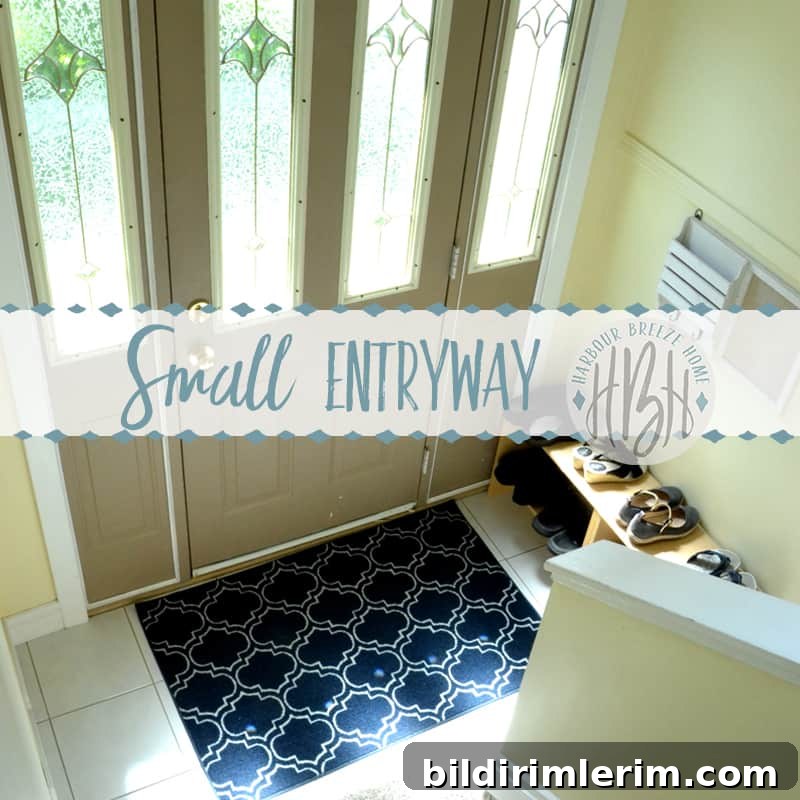
This house’s entryway has many positives: a door that’s begging for a fresh, bold paint color and a tall transom window that pours natural light into the area.
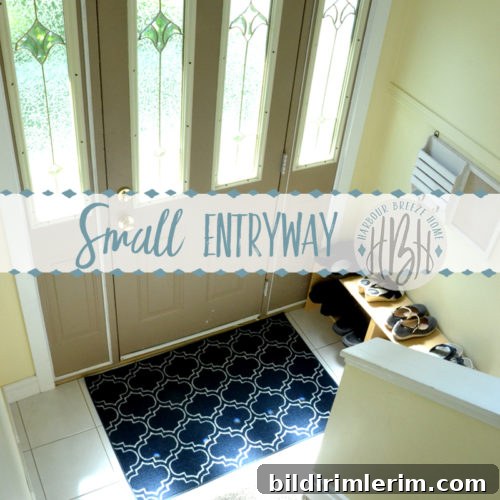
The trouble is scale. The footprint is essentially postage-stamp sized, so traditional benches or bulky organizers would overwhelm it. The challenge was to find a solution that stores shoes neatly, keeps the zone tidy, and still allows for hanging keys and a quick place to set down mail or a bag.
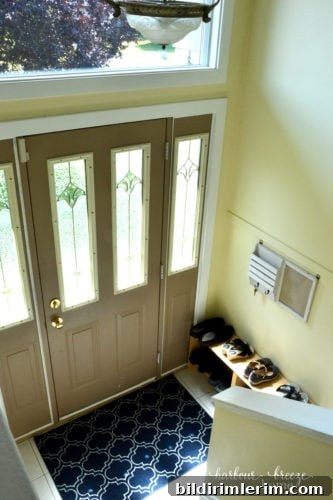
After several experiments—and a few trips over stray shoes—I found a clever, low-cost fix that makes use of an existing piece of furniture: a narrow hutch shelf that used to be part of an old desk. Repurposing this narrow shelf provides vertical storage without blocking the walkway or the door swing.
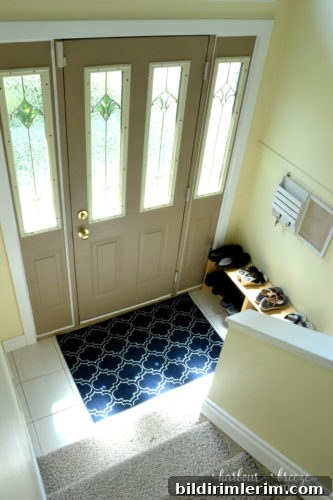
The narrow shelf unit is just the right width for the space, allowing pairs of shoes to be stored neatly on two or three tiers. It also leaves room for a small hook or key bowl above, so the entryway still performs its two main functions: storing shoes and keeping keys easily accessible.
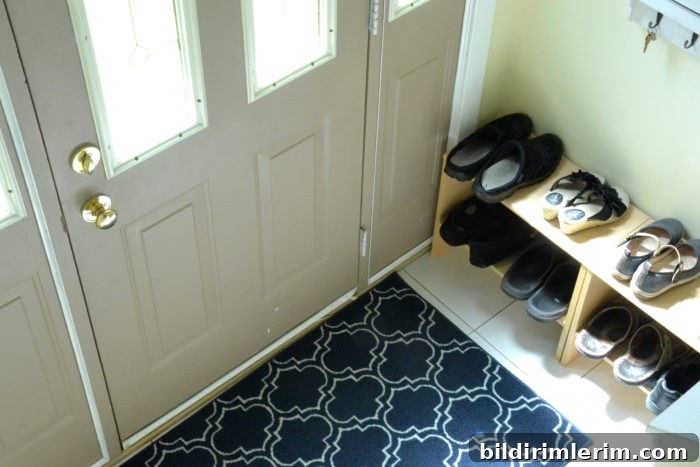
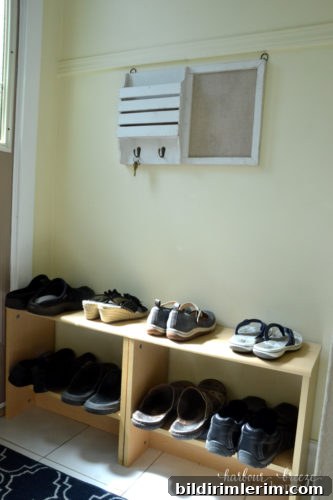
Why this works for small entryways:
- Compact footprint: A narrow shelf or hutch takes advantage of vertical space without cramping the flow of traffic through the doorway.
- Visible organization: Shoes are stored neatly and are easy to find, which reduces the clutter that accumulates when shoes get dropped by the door.
- Flexible styling: The shelf can be painted to complement the door color and entry decor, turning a functional piece into an attractive focal point.
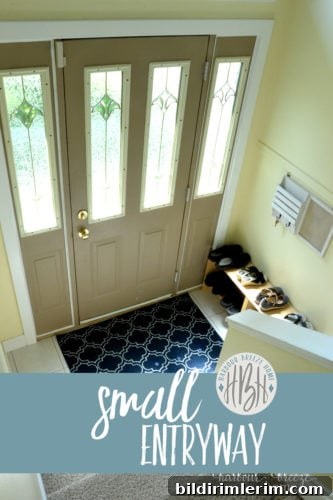
Practical tips if you’re facing a similar space:
- Measure carefully. Small differences in width determine whether a narrow console, shelf, or built-in will work without blocking the door.
- Think vertically. Tall, slim storage often works better than wide pieces in narrow entryways.
- Use multi-function pieces. A shelf that also holds baskets, hooks, or a small tray for keys and mail maximizes usefulness.
- Choose a durable surface near the door to make wiping dirt and salt from shoes simple—especially in climates where shoes come in wet or muddy.
- Consider color. Painting the door or shelf in a coordinating shade can visually expand the space and create a welcoming first impression.
If you enjoy seeing small-space solutions, I’ve previously tackled the challenge of a tricky entryway in other makeovers and experimented with paint colors until the final look felt right. Those experiments reinforced that creative repurposing—rather than buying large new pieces—often yields the best results for narrow entryways.
And on a personal note: my mom liked the shoes-off-at-the-door habit she discovered while visiting us in Canada. She tried it at home too, so family traditions can shift with a little practical adaptation. Whether you prefer shoes on or off, a well-planned entryway makes daily comings and goings easier and more pleasant.