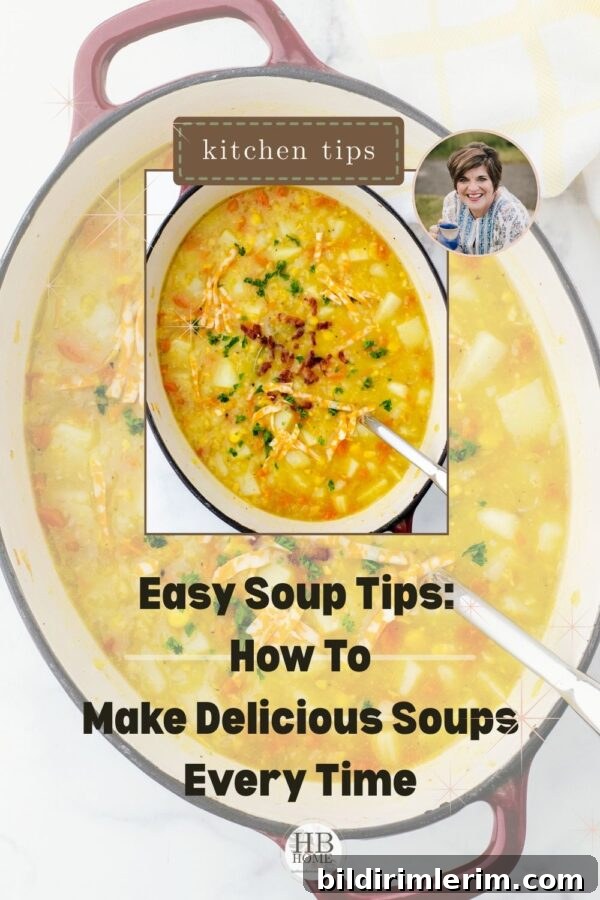
Practical soup-making tips to help your soups taste better, build kitchen confidence, and make freezer-friendly meals—with easy techniques and gentle encouragement for home cooks.
After more than 35 years cooking at home, many of the habits I rely on come from two women who influenced me most: my mother and my mother-in-law.
Both spent a lot of time in the kitchen, but they cooked in very different ways. My mother loved recipes—neatly written cards tucked in plastic sleeves inside a large recipe box, cookbooks on the shelf, and magazine subscriptions. My mother-in-law cooked mostly by feel, tossing ingredients together without measuring, relying on experience and instinct.
I loved watching both of them. I’d stand by as my mother-in-law mixed dough or assembled meals with no measuring cups, adjusting by touch until the texture felt just right. It was a lesson in confidence and trusting your senses.
Two Very Different Approaches to Soup
Those two approaches showed up in soup-making, too. My mom used to say she “couldn’t make soup” because hers seemed bland when she compared it to others. Saying you can’t do something often shuts down the desire to learn—so you never get better.
My mother-in-law grew up watching soups made from whatever was on hand, and she became skilled at pulling flavors together quickly. After years of watching and jotting down versions of her soups, I remember my mom visiting and tasting a pot simmering on the stove. She asked, “What did you do? This tastes so good.” She’d learned from watching, too.
Learning From Many Good Cooks
Over time I’ve studied many home cooks and recipes. The internet makes it easy to follow exact-measurement recipes, which is great if you want precise results. But once you understand the basic pattern of soup-making—build layers, season often, and taste as you go—you’ll be able to improvise with confidence.
Soup-Making Tips I’ve Learned Over the Years
1. Broth Is Your Friend
Water won’t do the heavy lifting that broth does. Whether you choose chicken, vegetable, or beef broth, it gives depth and richness that make soups taste full and satisfying. Stock, canned broth, or bouillon can all work—use what’s convenient and tastes good to you.
2. Season As You Go
Layer your seasonings as you build the soup: when you sauté vegetables, when you add meat, and again as the soup simmers. Tasting and adjusting at each stage yields a balanced, deep flavor. If a spice goes too far—say you added too much heat—a small amount of honey or a touch of dairy can temper the spice.
3. Practice Makes Progress
The more soups you make, the more comfortable you’ll become. Start with well-tested recipes to learn techniques, then experiment. You’ll notice patterns—how long to simmer vegetables, when to add acidity, and which textures work together. Over time you’ll be able to adapt recipes to whatever’s in the fridge.
4. A Little Wine Goes a Long Way
A splash of wine can lift and deepen flavors—most of the alcohol cooks off during simmering. Some ready-made broths include wine for that added complexity, or you can add a small amount while deglazing the pan after sautéing aromatics.
Tips for Making and Freezing Soup
Soups are ideal for batch cooking and freezing. Here are practical tips to make freezing and reheating simple and successful.
How to Cool Soup Quickly
To cool soup fast and safely before freezing, set the pot in a sink filled with cold water and ice (taking care that no water gets into the soup). Stir every few minutes to speed cooling and reduce time spent in the temperature danger zone.
How to Freeze Soup Efficiently
Freeze soup flat in freezer bags so they stack like file folders, saving space and making portions easy to grab. Label bags with contents and date for best results.
Freezing Do’s and Don’ts
- If your soup includes pasta, don’t add it before freezing—cook or add it when reheating to avoid mushy noodles.
- For creamy soups, freeze them before adding dairy. Stir in cream or milk when reheating and serving.
- Avoid freezing soups with large chunks of potato; they can become grainy or mealy after thawing.
Encouragement for Home Cooks
If you’re new to making soup, know that you can learn this. Whether you prefer strict recipes or a more intuitive approach, both paths lead to delicious results. Start with a simple recipe, practice seasoning and tasting, and then adapt as you grow more confident.
Happy soup-making—I’m cheering you on as you build flavor and kitchen confidence.
Favorite Soup Recipes to Try
- Potato Corn Chowder
- Chicken Noodle Soup
- Dumplings for Soup
- Sausage and Tortellini Soup
- Classic Chili
- Buffalo Chicken Chili
- White Chicken Chili
- Minestrone Soup
- Hamburger Rice Soup
Want more recipes & ideas for your home?
Sign up for a newsletter to get recipes and home ideas delivered to your inbox if you’d like regular inspiration.
Pin this to remember it later!