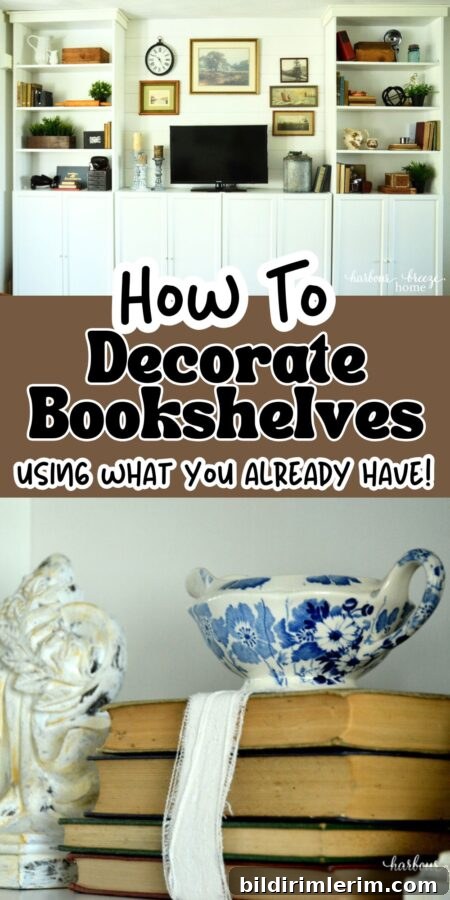
Struggling with shelf styling? Learn simple, practical ideas for decorating bookshelves using items you already own, plus an easy framework to make shelves feel warm, purposeful, and well styled.
When we moved into our townhouse, one of the first projects was building a wall of modified Billy bookcases that read like custom built-ins. I’ve come to love open shelving: it’s a place I update seasonally, and it brings warmth, character, and personality to a room.
Over time readers often tell me that styling bookshelves feels harder than it should. Where do you start? How do you make shelves look intentional instead of cluttered? And how do you get a cohesive look without buying a lot of new decor?
Below I’ll walk you through a simple, repeatable approach I used to style our shelves mainly with things we already had. This method reduces decision fatigue and makes shelf styling approachable and even enjoyable.
Start with a Single Inspiration Image
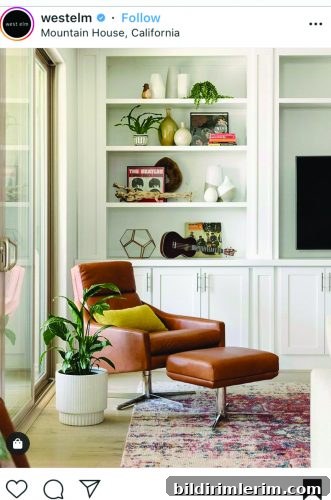
Before arranging anything, I look for visual inspiration. This time I searched Instagram and typed “#bookshelves.” Scrolling through dozens of images helped me find a single photo that captured the mood I wanted. Using one clear reference moves you past hesitation: instead of guessing, you ask, “What do I already own that gives this same look and feel?”
That one photo became my guide for color, scale, and overall vibe, and it helped me make confident choices as I worked shelf by shelf.
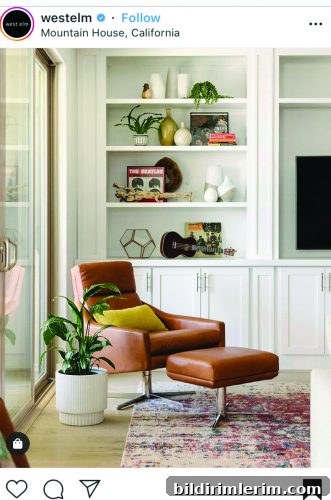
Photo credit: West Elm (inspiration image)
The Three Essential Elements for Decorating Bookshelves
I find it easiest to think of shelf styling the same way you arrange plants: three roles—thrillers, fillers, and spillers. Most homes already have plenty of each; the trick is combining them thoughtfully.
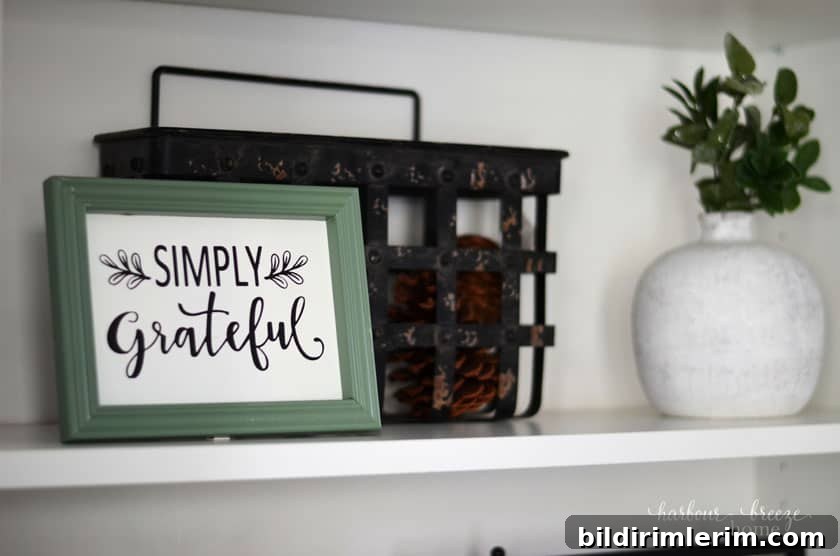
1. Thrillers: Anchor Pieces
Thrillers are the large, visually dominant items that anchor a shelf. Place them toward the back to provide structure and visual weight.
Examples we used:
- A large black metal basket
- A chalkboard or artboard mounted toward the back
- Grouped containers or taller vessels
These anchor pieces create contrast and prevent the shelves from looking scattered.
2. Fillers: The Supporting Cast
Fillers are mid-sized objects that pair with the thrillers. They add texture, softness, and help bridge the gap between large anchors and small accents.
Simple filler options:
- Stacks of books (horizontal stacks can double as pedestals)
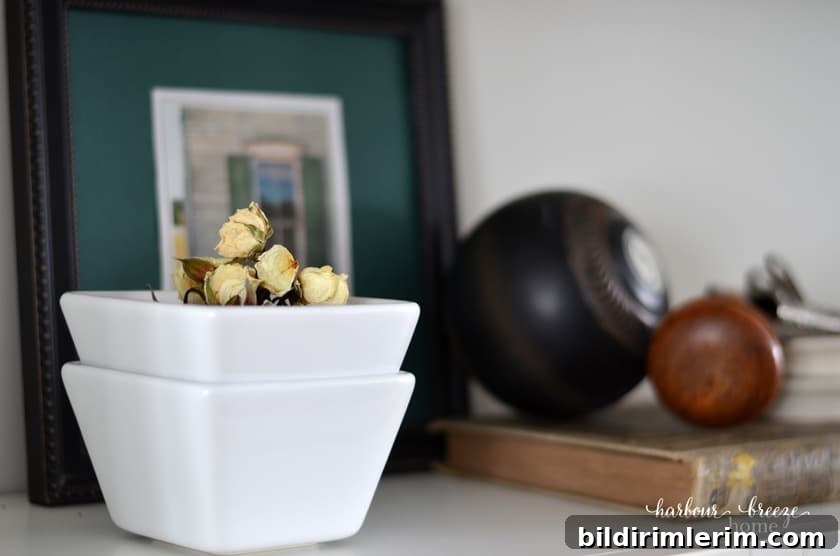
- Vases, bowls, or shallow dishes
- Candles or ceramic pieces
- Small pitchers or teacups
Well-chosen fillers make each shelf feel balanced and layered rather than empty or overstuffed.
3. Spillers: Add Movement and Life
Spillers bring softness and movement—usually greenery or trailing plants. They soften hard lines, introduce color, and give shelves a finished, welcoming feel.
A small trailing plant, a sprig of faux greenery in a vase, or a draped garland can make a shelf feel intentional and alive without cluttering it.
Step-by-Step Shelf Styling Workflow
With thrillers, fillers, and spillers in mind, arrange your shelves using this simple sequence:
1. Work top to bottom, one shelf at a time. Focus on a single shelf before moving down. This prevents overwhelm and helps the overall display feel cohesive.
2. Lean larger, darker items toward the back. Place heavier pieces at the rear to create depth, then layer lighter or smaller objects in front.
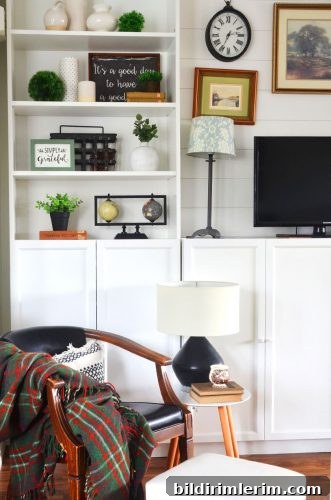
Following the inspiration image, I used darker pieces like our chalkboard sign and metal basket as backdrops, then added books, ceramics, and plants up front for contrast and warmth.
Shop Your Home First
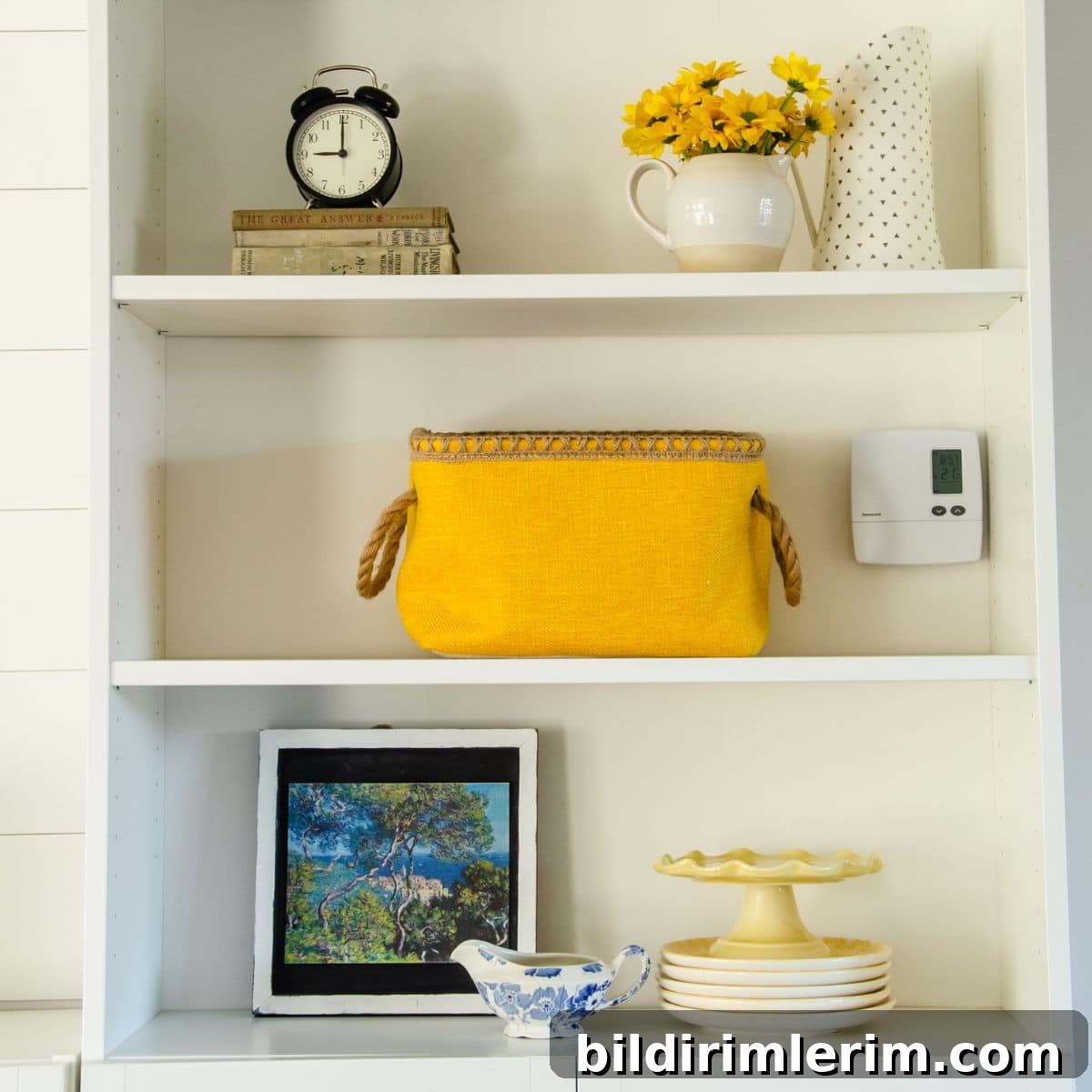
One of the most surprising discoveries was how many great decor pieces were hiding in plain sight—especially in the kitchen. Modern bowls, shallow serving dishes, and simple vessels make beautiful fillers on shelves even if they were designed for the table.
Mixing unexpected items from other rooms prevents a “matchy” look and adds interest without spending a dime.
Budget-Friendly Art Ideas for Shelves
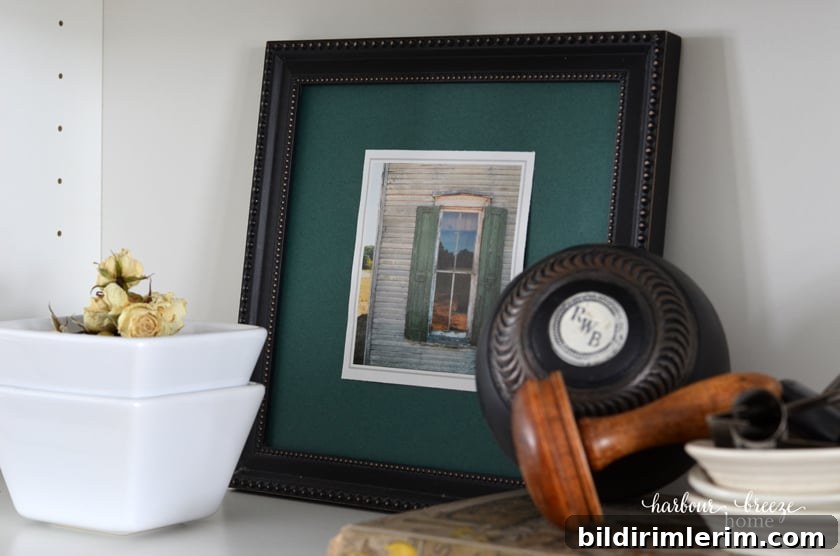
If a shelf needs a large visual anchor, you don’t need to buy new art. I flipped through a magazine, found an image I liked, trimmed and mounted it on cardstock, and placed it in a frame. It filled the space perfectly.
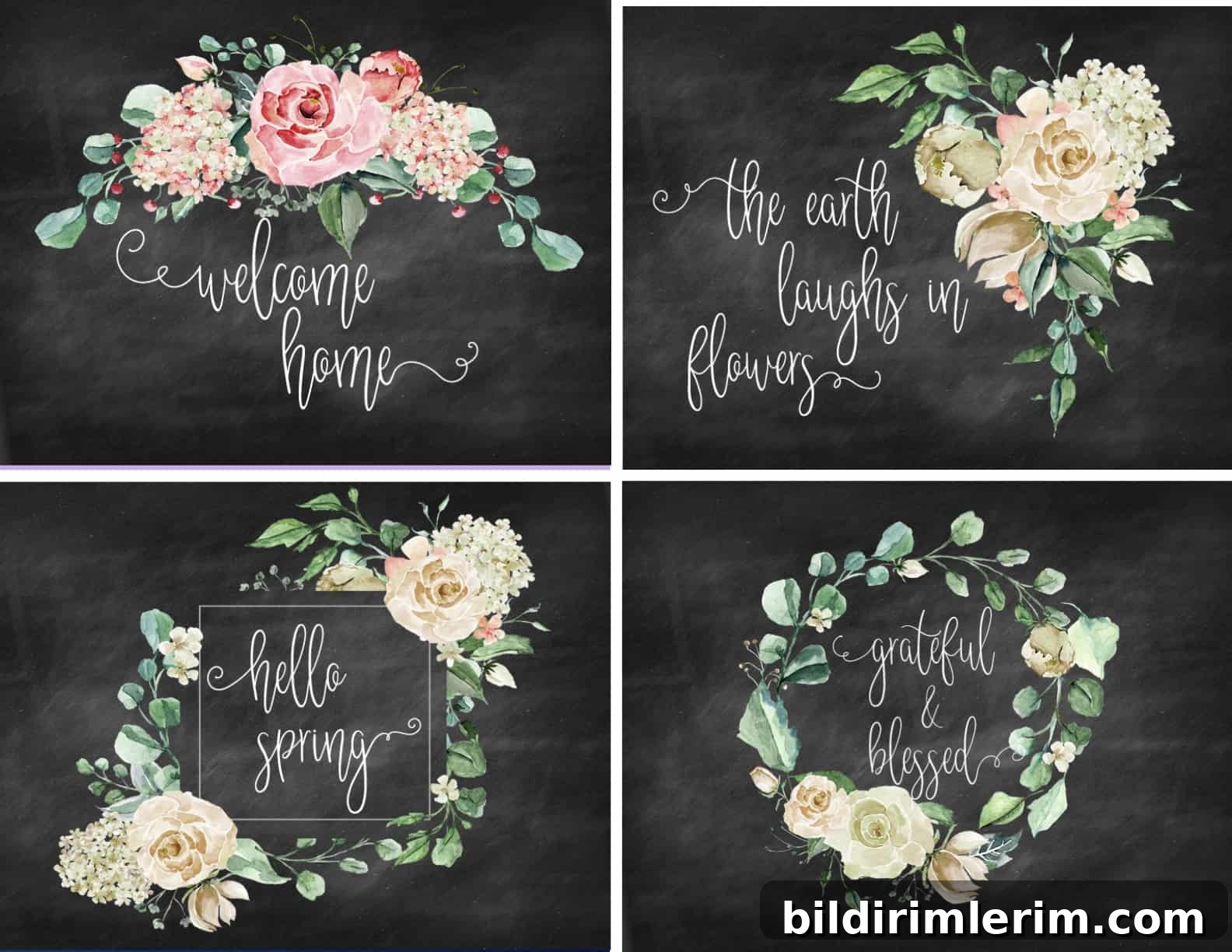
Free printables or clipped magazine images are an easy, budget-friendly way to introduce art into shelf displays. They allow you to scale and style artwork to suit your shelves without added cost.
Display Small Items with Character
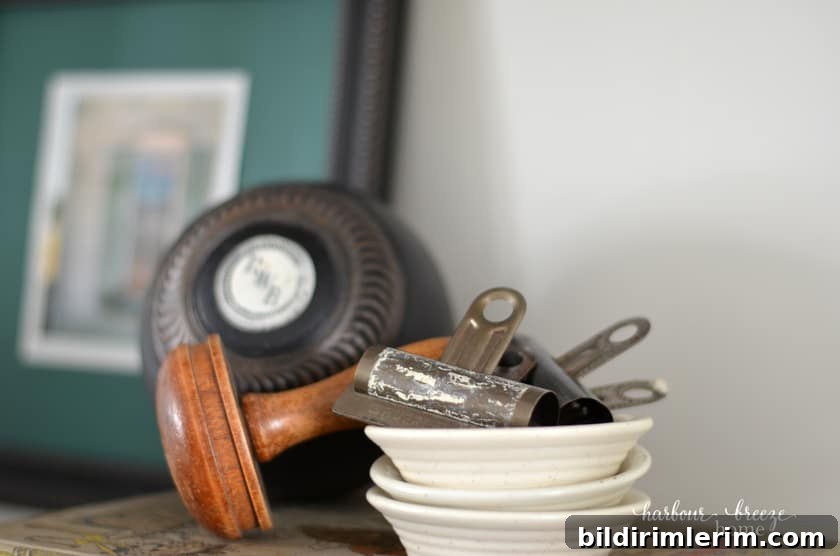
Small treasures deserve a thoughtful home. Group tiny items in a bowl, tray, or small dish to keep them from looking cluttered. Vintage hardware, old keys, or keepsakes look charming when intentionally displayed; modern pieces can tell a quieter story when grouped together.
The Final Result
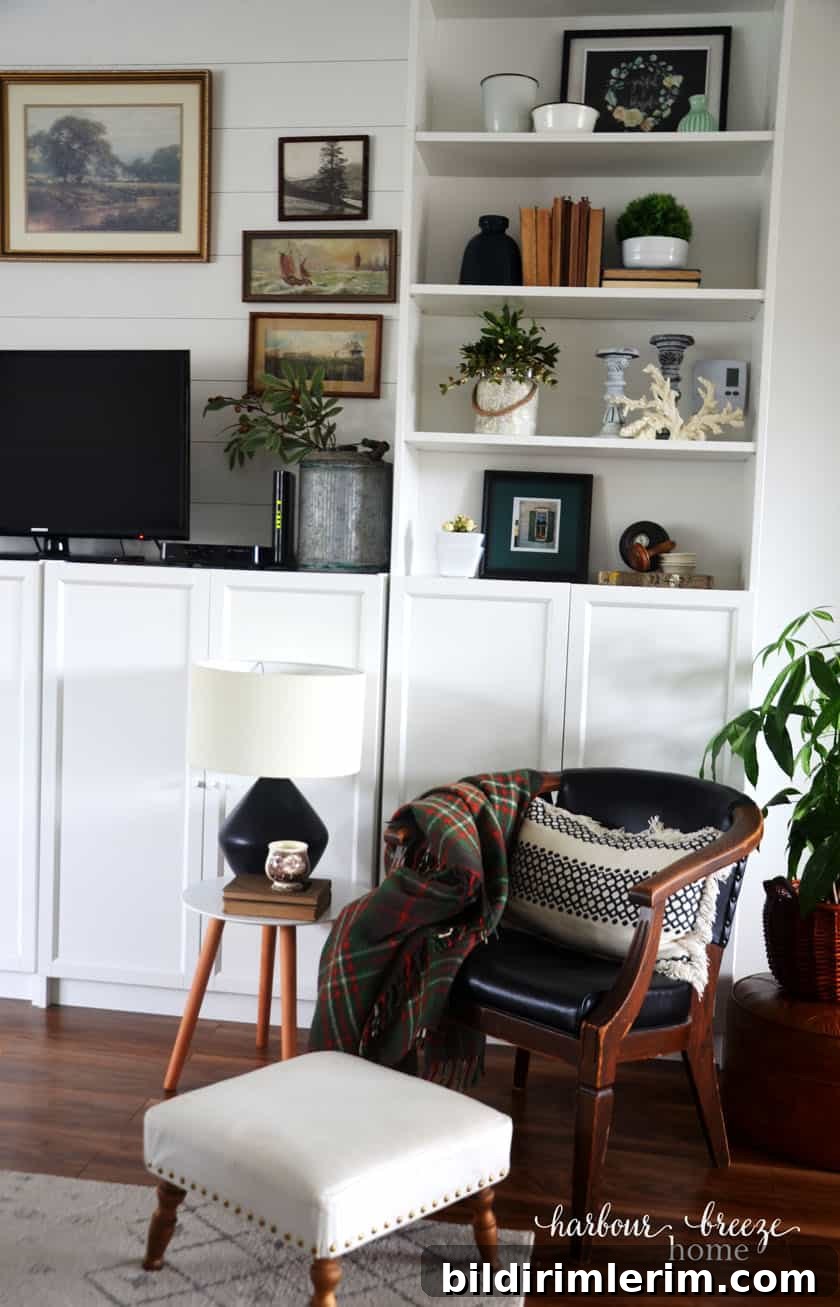
Using one inspiration photo and the three-part framework helped me style a shelf display that feels warm, personal, and cohesive—without buying a lot of new items. Our finished shelves lean more farmhouse than ultra-modern, but they feel completely authentic to our home.
If shelf styling has felt intimidating, start small: pick an inspiration image, shop your home, and assemble one shelf at a time using anchor pieces, supporting fillers, and a little greenery for movement.
Below is our version of the inspiration—same mood, adapted to what we already owned.
Pin this to remember later