
It hit me yesterday that almost exactly one year ago I went to a local clothing shop to buy a new outfit.
I found a great pre-Christmas sale and even wrote a post about my cozy new look that chased the winter chill away.

I liked that outfit, but I didn’t share the real reason I bought it: my clothes were getting tight and uncomfortable. That shopping trip coincided with some goal-setting work I was doing for my blog. As I mapped out blog plans, I also reflected on personal goals and decided to tackle my gradual weight gain with a focused plan.
Now, a year later, I returned to the store—this time to buy smaller jeans. That felt a lot more exciting.

Looking back is powerful. Small, consistent changes over the past (almost) 365 days added up: the scale shows I’m 28 pounds lighter than I was on January 1st. I’m not sharing this to boast, but to encourage anyone facing similar struggles and to explain what worked for me. If even one tip helps you, I’ll be glad.
Here’s How a New Year’s Goal Helped Me Lose 28 Pounds
I named a clear, sustainable goal.
Instead of setting a temporary target like “lose X pounds by Y date,” I committed to “develop healthy habits in my daily life.” I’d tried many short-lived diets—Weight Watchers, the Military Diet, juicing, cabbage soup—and none stuck. This time I focused on long-term habits rather than quick fixes.
I defined the real reason—my “why.”
Wanting to fit into smaller sizes is motivating, but it wasn’t enough for me. I strongly believe beauty isn’t defined by clothing size. My deeper motivation was health: several immediate family members developed diabetes later in life, and I wanted to reduce my risk. Learning to eat and live more healthfully now felt worth the effort.
I built a specific, measurable game plan.
I spent time researching healthy habits on Google and Pinterest and distilled what I learned into three daily actions. I tracked progress in a bullet journal so the new habits became routine. My three daily habits were:
- Drink two large cups of water (I used Starbucks cups as a reference) every day.
- Weigh myself every morning to stay aware and accountable.
- Log everything I eat in the MyFitnessPal app to track calories and patterns.
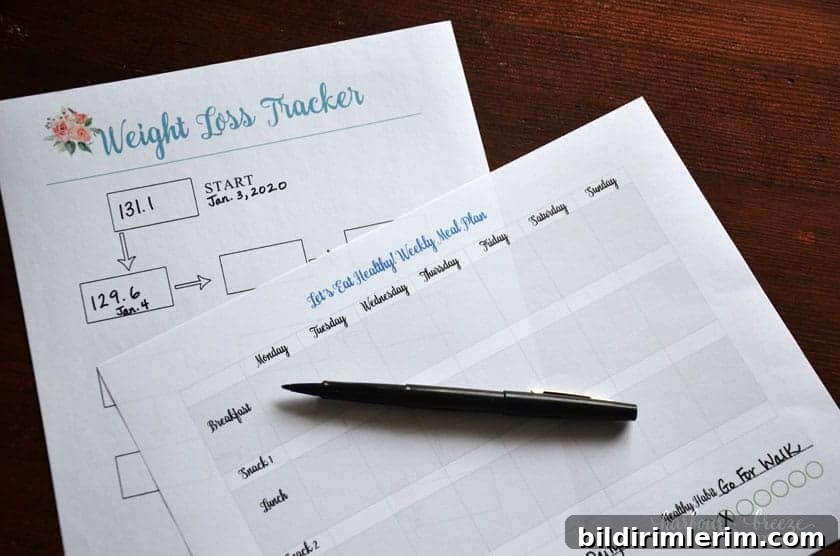
Update: I created printable trackers to help you follow daily healthy-habit goals and log meals. You can find these in my printables library.
I learned to plan meals and recipes around my daily calorie target.
MyFitnessPal suggested a daily calorie target for me—about 1,200 calories. Early on I learned that choosing calories wisely mattered. Small, calorie-dense treats (like fudge) use up a lot of calories without keeping you full. In contrast, large salads loaded with vegetables and lean protein fill you up for far fewer calories.
I planned my meals before hunger struck.
Planning was essential. I wrote daily meal plans so I knew how to hit my calorie goal without feeling deprived. I discovered that eating breakfast, lunch, dinner, plus morning, afternoon, and evening snacks helped prevent bingeing—basically, I ate throughout the day to stay satisfied.
A turning point was deciding to eat the same breakfast and lunch every day. That won’t suit everyone, but it simplifies choices and reduces decision fatigue. My typical breakfast became one scrambled egg, one slice of turkey bacon, and half an English muffin. Lunch was a very large spinach and veggie salad with deli turkey—filling, low-calorie, and easy to repeat.
I didn’t ban entire food groups.
I don’t have food allergies, so I never labeled foods “off limits.” Instead, I focused on the best choices overall. I love sweets, so I let myself enjoy one small square of high-quality chocolate daily. It satisfies cravings without wrecking my calorie budget or my momentum.
I surrounded myself with encouragement.
Support matters. My husband had been tracking his food and exercise with MyFitnessPal for years and lost nearly 40 pounds; his example and support were invaluable. Pictures from a past trip to Hawaii were a motivating turning point for him—and for us both.


Co-workers and friends also offered encouragement that made sticking with new habits easier.
I view this as an ongoing lifestyle, not a temporary challenge.
That mindset helps and challenges me. I want these habits to last indefinitely, not just until I reach a goal weight. Lately I’ve hit plateaus and found holiday treats tempting, but I remind myself that habits evolve over time—some days will be better than others.
Exercise is an area I still need to strengthen; perhaps that will be my next big goal.
A few months ago I hosted a short workshop about organization and goal setting and explained how I use a bullet journal to track weight-loss habits. If you have questions about developing healthy eating habits or want to share your experience, please leave a comment—I’d love to learn from you.