

The other day I wrote about the power of paint in transforming a room, and our recent bedroom project is a perfect example of how a little color can make a big difference.
Take this bedroom from our previous home, which we jokingly called “the coffin” when the walls were dark and dreary:

A fresh coat of paint—Benjamin Moore’s White Down in that case—completely changed the mood and turned it into one of our favorite spaces:
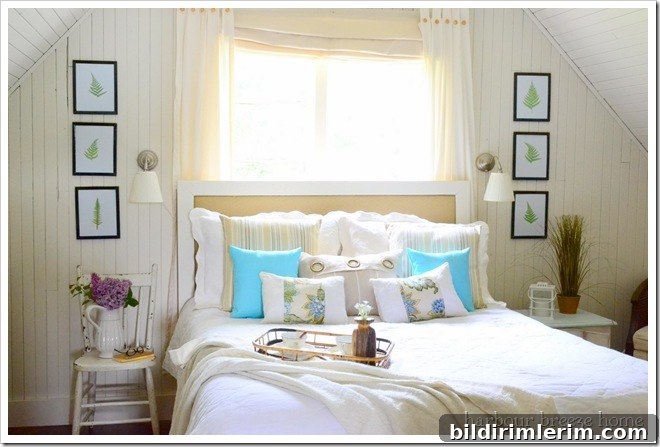
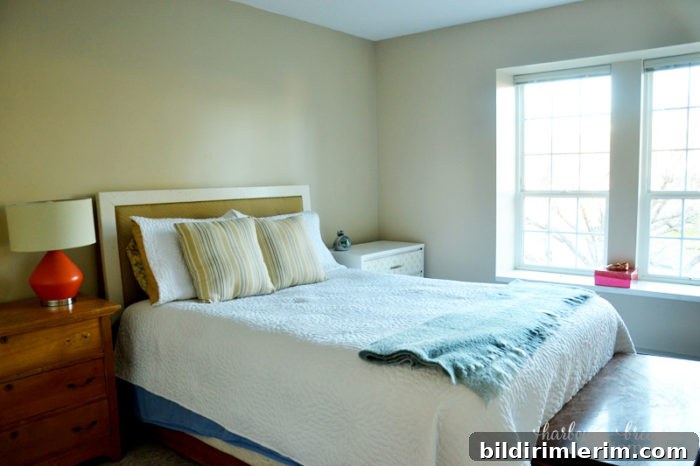
Now we’re in a new town and a new townhouse, and it was time to update the master bedroom that came to us as a very basic builder’s beige. I began the process the way I always do: collecting inspiration photos and studying the elements I loved most. Many of my favorite modern farmhouse bedrooms feature crisp white walls, so I decided to try the same approach here.
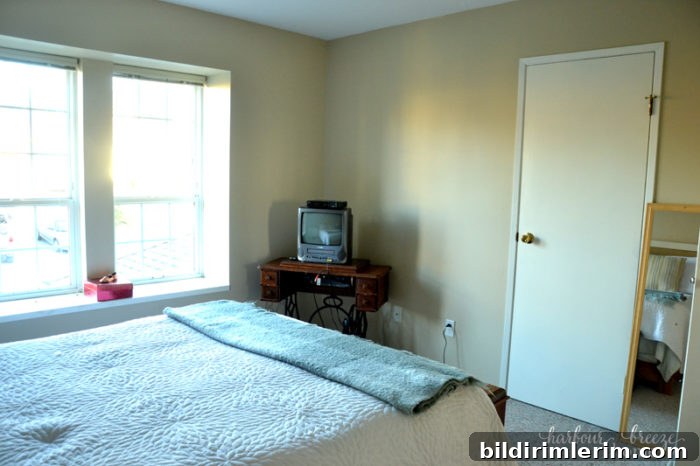
Because I had used Benjamin Moore’s Simply White in our living room with great results, choosing a white for the bedroom felt like a natural extension. I knew it would be a dramatic change from the warm beige, and I was excited to get started. What I didn’t expect was how many coats it would take—the beige required four coats of white to achieve full coverage.
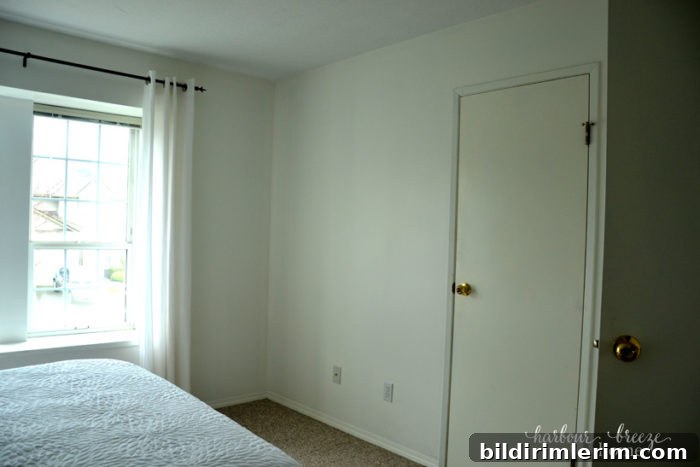
At first the space felt extremely white—so white that I questioned my decision—but after investing the time into painting, I committed to making it work. I studied my inspiration photos and noticed how black accents can look elegant and grounding against a crisp white backdrop. Adding a black curtain rod and long white curtains immediately gave the room more definition and contrast.
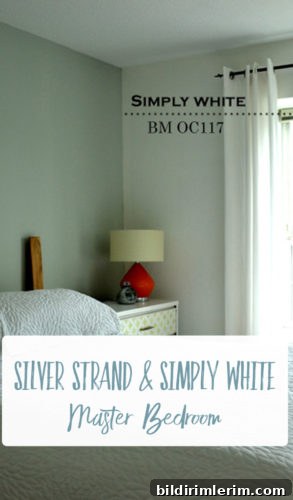
After living with the all-white look for a while, I began considering a feature wall to introduce a little warmth and depth. I sampled a variety of swatches and ultimately chose a soft gray-blue—Sherwin Williams’ Silver Strand—that Joanna Gaines has used often in her makeovers. Adding that single colored wall changed everything.

The subtle gray-blue softened the stark whites, bringing a calm, modern serenity to the room. It warmed the space without overpowering it, striking a balance that makes the bedroom feel inviting and restful.
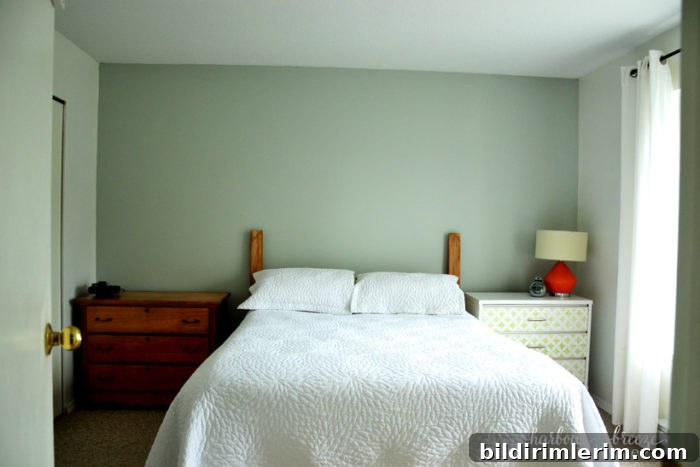
Before: a bland beige that felt generic and uninspired. After: a modern, serene palette that reads fresh and intentional.
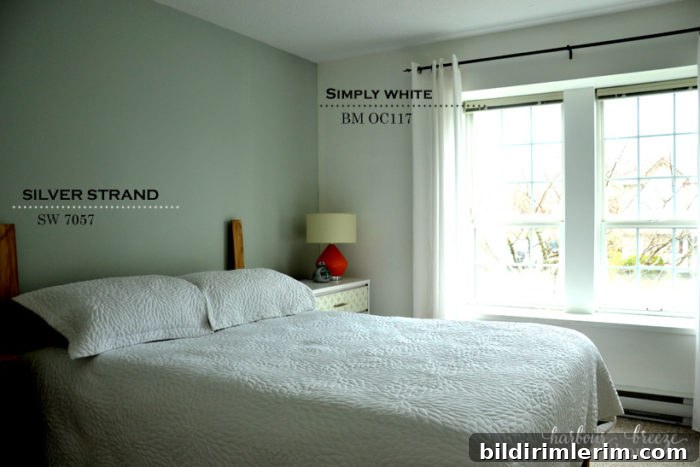
One question you might have when viewing the photos: why is the headboard off? It got a small transformation of its own during the refresh, which helped the entire bed area feel cohesive with the new palette.
Below are a couple of before shots from our master bedroom tour so you can see where the project began:

And a small sampling of the modern farmhouse bedrooms that inspired this look:

Quick tips from this project if you’re planning your own bedroom refresh:
- Start with inspiration photos to determine the overall style and mood you want to achieve.
- Test paint samples on the wall and view them at different times of day—lighting changes how a color reads.
- If you’re covering a warm or dark color with white, be prepared for additional coats; primer can help, but multiple top coats are sometimes unavoidable.
- Introduce contrast through hardware and accents—black curtain rods, picture frames, or lamps can add definition to a pale palette.
- Consider a single feature wall in a soft, complementary hue to add warmth and depth without overwhelming the room.
- Layer textiles—curtains, throw pillows, and bedding textures contribute as much to the final feeling as the paint itself.

When you combine careful color choices, a few strategic accents, and some patience during the painting process, a simple room can be transformed into a calm, modern retreat. This project reminded me that paint is one of the most powerful and cost-effective tools for changing a space—sometimes it just takes a little experimentation to get there.