
About a month ago, a reader asked me: “If you ever wrote a parenting book, what would it be called and what advice would you give?”
I laughed at first and answered honestly: “I don’t think I’d write a parenting book, and I’m not sure what I’d say.” But after several emails and a lot of reflection, I realized I do have something to share—just not the classic step-by-step manual. What I’d offer is a perspective that helped me enormously in those chaotic early years: big-picture parenting. It’s practical, flexible, and designed to keep your sanity as you grow into your role.
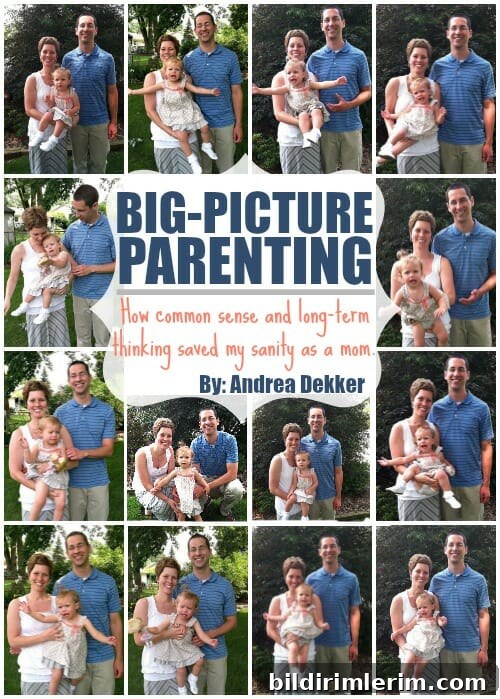
Big-Picture Parenting
How common sense and long-term thinking saved my sanity as a mom.
By: Andrea Dekker
Dedicated to:
Nora: For teaching me—often the hard way—that no parenting book holds every answer.
Simon: For reminding me how much more relaxed and enjoyable parenting can be the second time around.
And Dave: For reading every parenting book imaginable before our first child arrived, then quietly setting most of them aside when reality hit.
My imaginary intro would include my initiation into motherhood and how a big-picture mindset carried me through those early years. I’d emphasize one firm belief: no single book or set of rules fits every child, family, or situation. Many parenting books contain useful ideas, but they are not universal truths to be applied without thought—especially if they were written by people who haven’t been the primary caregiver.
There are many right ways to parent. You will do some things differently than others, and that’s okay. It may take time to discover your approach, and you won’t always get it perfect. Children are resilient; a single mistake rarely matters in the long run. What matters most is thinking long-term about your child’s well-being and your family’s health.
My Three-Year Crash Course
My toughest teacher was my highly sensitive, anxious, never-slept-through-the-night daughter. For the first three years, survival was the dominant theme. I tried countless tips from well-meaning friends and books, and most of them didn’t work for our situation. Eventually I learned to stop forcing a child into a mold that didn’t fit and to start thinking in terms of outcomes rather than strict rules.
I was trying to make a child fit into a plan designed for someone else. That caused needless stress for our whole family. Once I accepted that, I stopped worrying about breaking the rules and began doing what my instincts told me was best.
SLEEP
Nora refused her crib and would scream until she was sick. For months she slept on my chest or in my arms. She then slept in her car seat for a time and moved into a twin bed at ten months. From about ten to twenty-six months one of us often spent part of every night in her room. Eventually she began sleeping longer stretches on her own.
Big-picture thinking: Sleep is essential. How and where you get it matters less than getting it. If co-sleeping, rocking, or unconventional arrangements preserve everyone’s sanity and health, they’re worth it for a season. In fifteen years she’ll be sleeping through nights at someone else’s house—for now, rest is the priority.
EATING
Nora nursed every two hours for months, refused bottles and sippy cups, and rejected nearly every food other than breast milk. That meant limited outings and a feeling of being tethered to home. After many attempts and professional help, she gradually accepted other foods and therapies helped broaden her diet.
Big-picture thinking: Avoid food wars at the expense of peace. If your child is eating—even if it’s not the most nutritious option at first—you can work gradually toward a healthier variety. Long-term progress matters more than immediate perfection.
SCHEDULES AND ROUTINES
Books promised a predictable schedule: sleep, eat, play—always in that order and only at specific intervals. I tried to implement those plans and felt like a failure when nothing matched the script. Routine finally emerged only after years, and not primarily because of anything I did intentionally.
Big-picture thinking: A rigid schedule can be helpful, but it isn’t the only path to stability. If you know your child’s needs and can respond consistently, that responsiveness creates the structure a child needs. Over time routines will form; they don’t always need to be manufactured overnight.
What Big-Picture Parenting Means
Big-picture parenting taught me to prioritize well-being over rule-following, to trade fear for perspective, and to accept that different children require different approaches. The first years are messy, and that’s normal. If you’re exhausted and worried you’re doing everything wrong, you are very likely doing far better than you think.
Keep going: keep surviving, learning, and adapting. Think about outcomes—long-term emotional health, secure attachment, family harmony—more than short-lived compliance with someone else’s checklist.
One Last Tip
Get really good at smiling and nodding. You’ll need it when well-meaning people offer their advice. Listen politely, keep what helps, and discard the rest. And remember—yes, they do grow up fast, but you don’t have to enjoy every single moment to be a great parent. Be present, be patient, and focus on the big picture.