
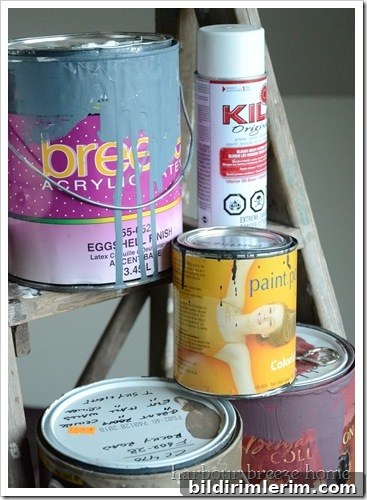
Some people collect fine furnishings. I collect paint.
Over the years I’ve assembled quite a stash. Even though I try to clear out things I don’t use, paint is the one item I can’t bring myself to part with. It’s not just about the cans themselves; it’s the possibilities they represent. Leftover paint means inexpensive experiments, quick touch-ups, and sometimes unexpectedly perfect colors.
When we started planning the attic room makeover, my goal was to use as much of what I already owned as possible. Not only does that save money, it’s a sustainable choice and a fun challenge. I had my eye on Benjamin Moore’s White Down for the walls—I love the warmth it brings to our bedroom and I knew there was a little left in my collection.
Unfortunately, the leftover White Down wasn’t nearly enough to cover the whole attic. Rather than buying a full new gallon, I decided to get creative with the paints I had on hand.
Early on in my homeowner life I discovered the thrill of mis-tints—cans mixed incorrectly at the store and then sold at a steep discount. I’ve picked up several over the years, and they’ve come in handy more times than I can count. One of those mis-tints was a creamy white that was attractive but slightly darker than I wanted. Instead of discarding it, I lightened it with another near-white from my stash and tested the blended result on the attic walls.
The outcome was a customized creamy white that felt fresh, warm, and just right for the space. It blended the softness I wanted with enough brightness to keep the attic feeling open and airy. I’m happy to report that the improvised color turned out better than I expected—I love it.
For those who like specifics, the closest commercially available match I can find is Benjamin Moore’s Acadia White OC-38. If you’re looking for a creamy white with subtle warmth—one that reads as neutral but avoids stark clinical white—Acadia White is a solid reference point. Of course, light and surrounding finishes will affect how any paint reads in your own room, so testing is essential.
If you’re inspired to try a similar approach, here are a few practical tips based on my experience:
- Test small blends before committing. Mix a cup at a time and apply samples to a board or an inconspicuous wall area to view across different times of day.
- Keep notes. Record the original colors and approximate ratios when you mix—this makes it much easier to recreate the shade if needed.
- Consider sheen. The finish you choose (flat, eggshell, satin, etc.) can change how color appears and performs on the wall.
- Use mis-tints strategically. They’re ideal for priming, painting trims, or creating custom hues when combined with other leftovers.
- Be patient. Colors evolve with light and furnishings, so live with a sample for a few days before deciding.
What started as a limitation—insufficient leftover paint—became an opportunity to invent a color that suits the attic perfectly. The result is a warm, custom creamy white that uses what I already had, reduces waste, and gives the room a cohesive, welcoming feel. If you love paint as much as I do, experimenting with your collection can be one of the most rewarding parts of decorating.