
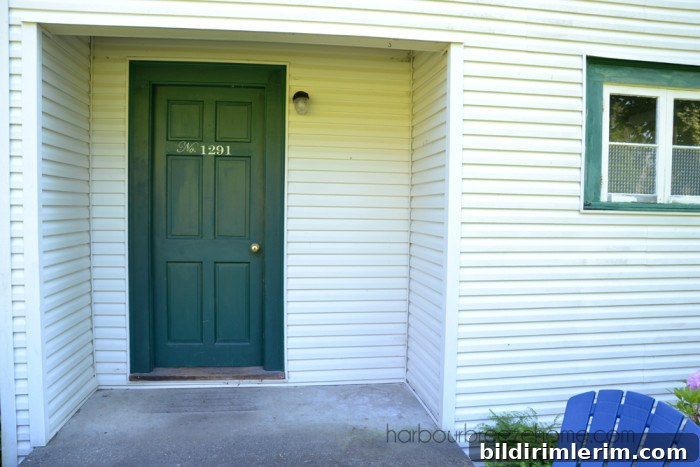
I remember when hunter green was everywhere. It looked beautiful in other people’s homes and in glossy magazine spreads, and for a while I loved it too.
That fondness evaporated about three minutes after I finished wallpapering the entire lower half of our master bedroom in hunter green. Once it was done, I realized the color simply wasn’t me.
To my surprise, that same color seemed to follow me around the property. I noticed hunter green trim, a hunter green deck, a hunter green front door, hunter green gutters on the garage, and even a hunter green roof on the guest cabin tucked into the yard. Each element made the color feel less like a design choice and more like an identity I hadn’t chosen.
At first I tried to ignore it. Out of sight, out of mind. But ignoring was only a temporary solution.
Look at that tired window on the right side of the photo—its trim is cracked and the paint is flaking. The thought of repainting the trim of the whole house makes me want to cry. I have memories of a summer spent with my sisters, painting our farm’s old barn; the prep work on sun-baked, flaking wood was exhausting. The memory is not entirely unpleasant—there were laughing fits between the long hours—but the work itself is not something I relish.
Still, if I’m going to pour time and energy into this job, I want the result to be a color I actually like. I decided I wouldn’t just paint over what was there for the sake of covering it up; I wanted a fresh choice that would feel right for our home and stand up to the architectural details and landscape.
So I went to the local Benjamin Moore store and talked to my favorite paint specialist. I showed her pictures and walked her through my hunter green dilemma: how to keep what works structurally while changing the overall tone so the house felt more like us.
“Do you have any other color suggestions that might work?” I asked.
She came back almost immediately with a small stack of swatches. That’s one of the reasons I love working with her—she listens and then offers options that make sense for the property, the light, and the existing materials.
I forced myself to take the swatches home before committing. Paint looks different in natural light, against siding, and next to vegetation, so I wanted to test the colors at different times of day. After living with the samples on the door and window trim for a couple of days, I returned to the store and bought the paint.
She warned me as she handed over the cans: prep is critical. “Missy, you must not skip a step,” she said with conviction. She explained the importance of scraping loose paint, sanding rough spots, cleaning the surface, and priming whenever bare wood is exposed. That kind of prep work is tedious, but it’s what keeps paint from peeling and ensures the new color looks smooth and lasts.
I agreed. To keep discouragement at bay, I decided to break the project into smaller, manageable pieces—starting with a section I could finish in a weekend.
The front door felt like the right place to begin. It’s a focal point for guests, and changing it would immediately alter the house’s curb appeal and our relationship to the facade. Plus, completing one visible element would give me a sense of momentum and confidence before tackling the entire trim.
I’ll share the front door transformation—what went well, what I would do differently, and a few practical tips for prep, primer, and brush selection—tomorrow. If you’re facing a similar paint dilemma or thinking about updating exterior colors, come back and I’ll walk you through the steps I took and the lessons I learned along the way.